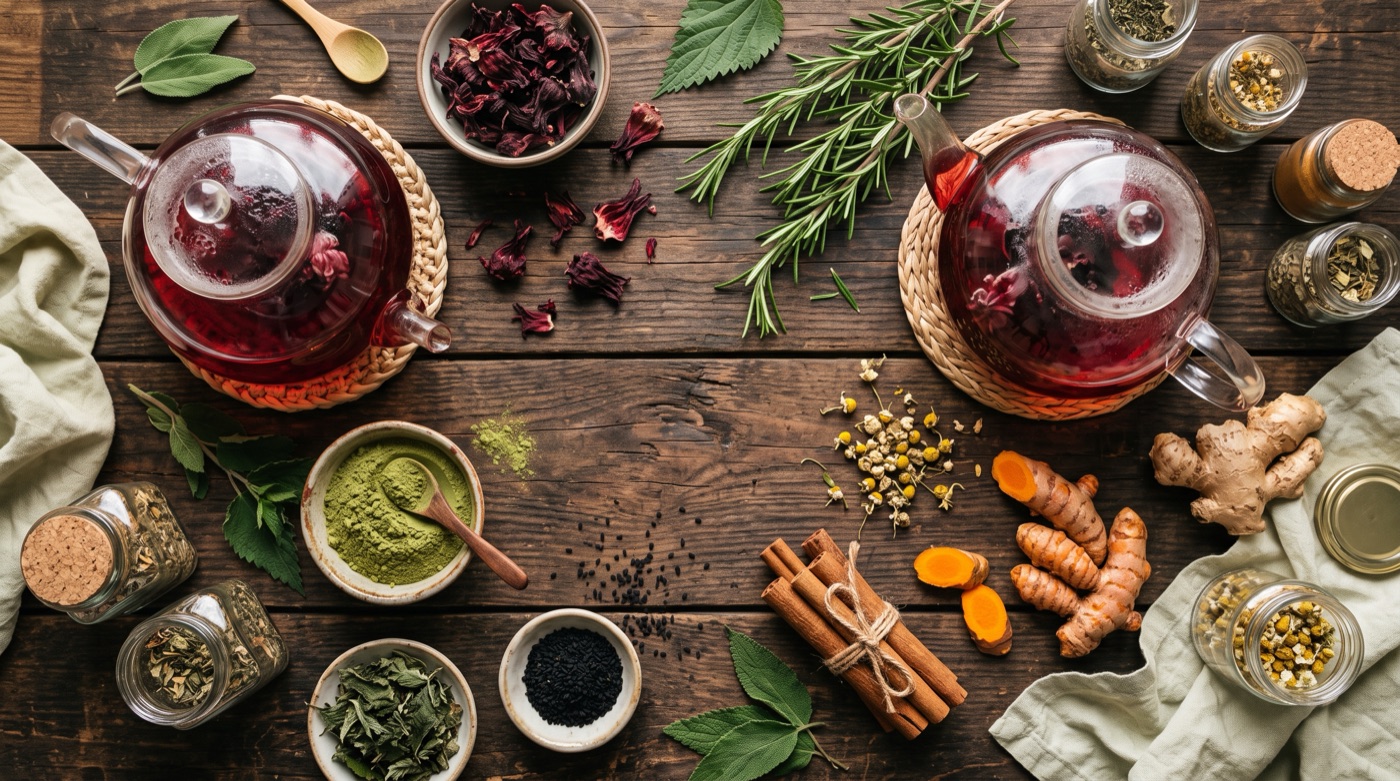
Herbs, Spices & Teas
The wisdom in the cupboard
Our grandmothers brewed, rubbed and simmered what they knew. Here is that knowledge, where each plant comes from, what science says today, and how to use it safely alongside your medicine.
Before you brew
Respect the plant, respect your body
Long before any American medical school existed, West and Central African women held deep plant knowledge: what to eat, what to rub into skin and hair, what to brew for a fever or a hard labor. Enslaved "doctor women" carried that knowledge across the ocean and adapted it to new soil, and Gullah Geechee root doctors and herbalists kept it alive along the coast. That is documented history, and it is ours.
Plants are also strong medicine. "Natural" does not mean "safe with everything." Many herbs change blood pressure, blood sugar, bleeding and how your prescriptions work.
- Food amounts (spices in cooking, a cup or two of tea) are safe for most people.
- Supplement amounts (capsules, extracts, tinctures) are where most side effects and interactions happen.
- In the U.S., supplements are not approved by the FDA before they are sold. Look for a USP or NSF seal.
- Take a list of every herb and supplement to your doctor and pharmacist.
My grandmother's tea cured a lot of worry. It did not cure her pressure. She needed both the tea and the pill, and so might you. Tell your pharmacist what is in your cup.
Sources: Sharla Fett, Working Cures (UNC Press) · National Park Service, Gullah · NCCIH, Using dietary supplements wisely
How to read the tags
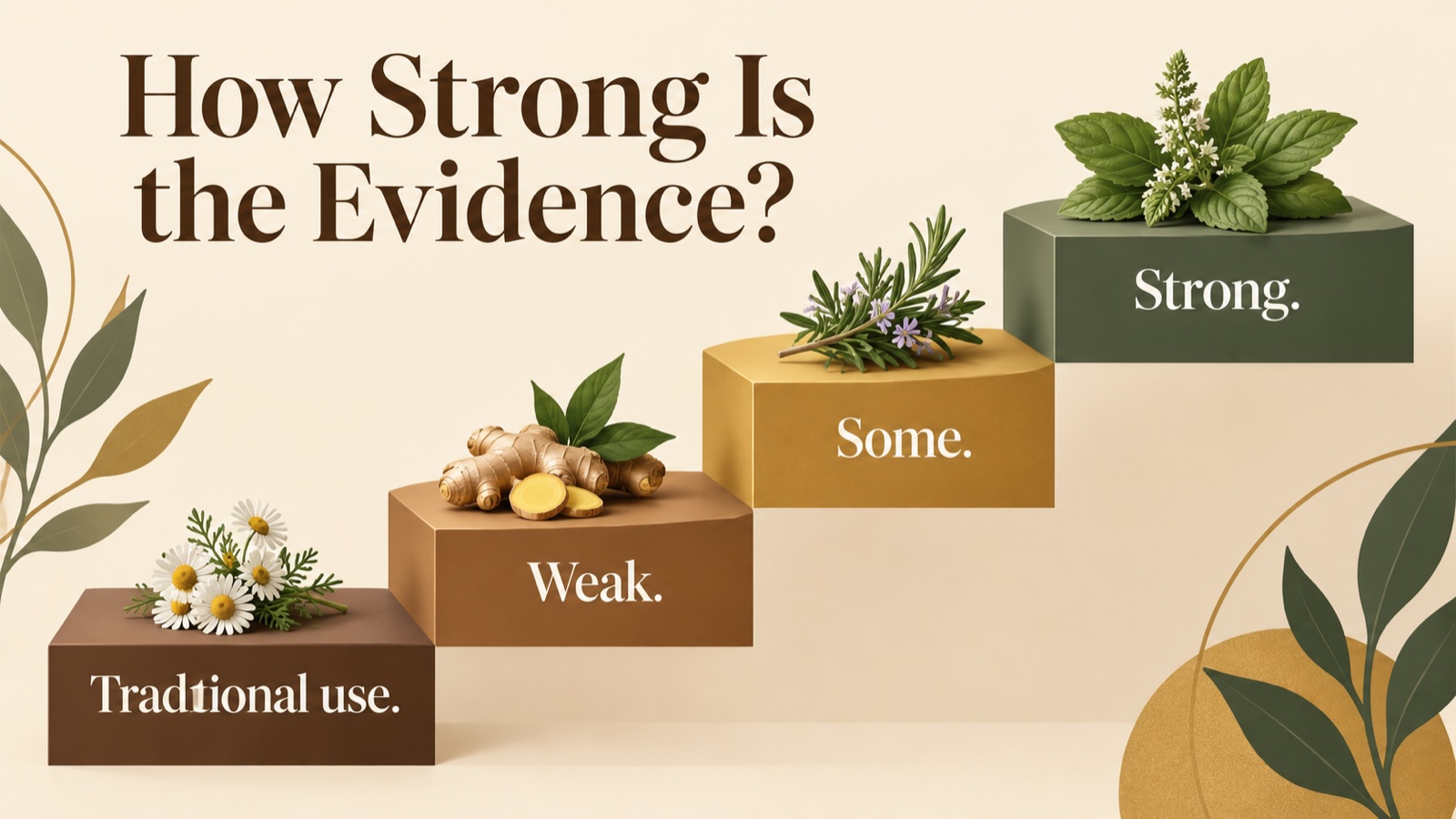
Honest evidence, every card
Several good human trials or official guidance agree.
At least one controlled human trial, but small, short, or not repeated.
Lab, animal or uncontrolled human data only.
Long cultural use, no real clinical testing. Still meaningful, just not proven.
The herb library
32 herbs, spices and teas
Tap a button to filter. "African roots" shows plants native to Africa or central to African and diaspora tradition. Every card says honestly where the plant comes from.
Hibiscus (bissap, zobo, sorrel)
Hibiscus sabdariffa, the calyx
Roots: grown and loved across West Africa: bissap in Senegal and Mali, zobo in Nigeria. Carried to the Caribbean, where it became Christmas sorrel.
Traditional use: the deep-red festive drink, hot or cold; hair rinses.
Science: in a 2010 trial of 65 adults with high-normal or mildly high pressure, three cups a day for six weeks lowered systolic pressure about 7 points vs about 1 with placebo. Small and short; does not replace medicine. Hair use is traditional only.
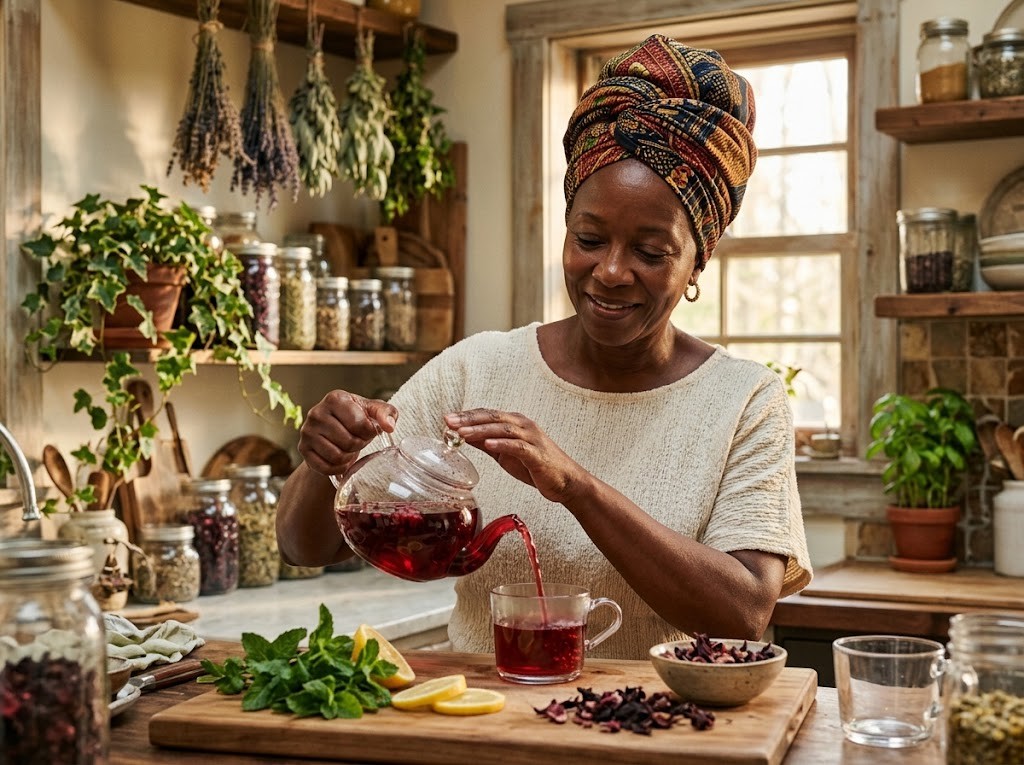
How: 1 to 2 teaspoons dried per cup, steep 5 to 10 minutes. Go light on sugar.
Safety: adds to blood pressure medicine and diuretics. Avoid in pregnancy.
Baobab
Adansonia digitata
Roots: the great tree of the Sahel and African savanna.
Traditional use: fruit pulp eaten and stirred into drinks; leaves cooked as greens; seed oil used on skin.
Science: the fruit powder is a food rich in vitamin C and fiber; health claims beyond nutrition are not proven.
How: a spoon of fruit powder in smoothies or porridge; baobab oil on skin.
Safety: a food. Its fiber can upset the stomach if you start with too much.
Kola nut
Cola nitida, Cola acuminata
Roots: the forest zone of West Africa.
Traditional use: chewed for alertness; offered as hospitality and in ceremony.
Science: contains caffeine, which explains the alertness. No proven health benefits beyond that.
How: as tradition and hospitality, in small amounts.
Safety: caffeine: can raise heart rate and blood pressure and disturb sleep. Limit in pregnancy.
Black seed (Nigella sativa)
"Black cumin," habbatul barakah
Roots: native to Southwest Asia and the Mediterranean; used for thousands of years in Egypt and North Africa, and in Muslim communities across Africa.
Traditional use: seeds on bread, oil for skin, hair and "everything."
Science: small human studies hint at modest effects on blood pressure and blood sugar; one tiny study of 20 women with shedding used a 0.5% lotion. Not enough to rely on.
How: seeds in cooking; diluted oil on scalp after a patch test.
Safety: topical allergy reported. By mouth may lower blood pressure and blood sugar; caution with those medicines and blood thinners; avoid supplement doses in pregnancy.
Rooibos (red bush)
Aspalathus linearis
Roots: South Africa's Cederberg mountains, where Khoi and San peoples brewed it long before it was sold worldwide.
Traditional use: everyday caffeine-free tea.
Science: rich in antioxidants; human research is limited.
How: 1 heaping teaspoon per cup, steep 5 to 7 minutes. Great swap for sweet tea or soda.
Safety: generally safe as a drink. Rare liver-injury reports with very heavy use.
Ashwagandha
Withania somnifera
Roots: grows wild from North and East Africa through the Middle East to India; best known from India's Ayurveda.
Traditional use: a tonic for strength and calm.
Science: small trials suggest it may ease stress and help sleep. No evidence for hair.
How: capsules or powder, only after checking with your doctor.
Safety: avoid in pregnancy and breastfeeding. Rare liver injury. Not with thyroid or autoimmune disease without your doctor. May interact with diabetes, blood pressure, sedative, anti-seizure and immune-suppressing medicines.
Aloe vera
Aloe barbadensis
Roots: likely from the Arabian Peninsula; hundreds of aloe species are African, and aloe is grown across the continent and the Caribbean.
Traditional use: burns, cuts, scalp and curls.
Science: gel has some evidence for minor burns and skin irritation.
How: clear gel on skin; in homemade curl gel.
Safety: do not drink aloe latex or whole-leaf aloe: harsh laxative, removed from over-the-counter laxatives; whole-leaf extract caused cancer in rats.
Fenugreek
Trigonella foenum-graecum
Roots: the Mediterranean and Near East; used in ancient Egypt and today in Ethiopian and Eritrean cooking (abish), as well as Indian and Caribbean kitchens.
Traditional use: spice, hair rinse, milk supply.
Science: may lower blood sugar after meals, but many studies were low quality. No strong evidence for hair.
How: as a spice; seed tea at most 1 cup a day, not for long stretches.
Safety: not safe in pregnancy above food amounts (birth-defect concern). Lowers blood sugar. Bleeding risk with blood thinners. Allergy if you react to peanuts or chickpeas. Maple-syrup smell in sweat.
Cayenne and hot peppers
Capsicum species
Roots: native to the Americas. Arrived in Africa through Atlantic trade and became central to West African pepper soups, stews and suya spice.
Traditional use: warming, circulation, colds.
Science: capsaicin creams have evidence for some nerve and joint pain. Claims as a heart cure are not proven.
How: in food; it can help you use less salt.
Safety: heartburn; burns eyes and skin. Capsules may interact with blood thinners and blood pressure medicines.
Moringa
Moringa oleifera
Honest roots: native to South Asia (India), not Africa. It became a staple across West Africa, the Caribbean and beyond, where it is eaten as a nutrient-dense green.
Traditional use: leaves in soups and stews; "miracle tree" tea.
Science: leaves supply vitamin C, provitamin A, calcium and iron. Bigger claims come from lab and animal studies.
How: leaf powder in soup or smoothies; leaf tea.
Safety: root and bark may cause uterine contractions: avoid moringa in pregnancy unless your doctor approves. May lower blood sugar and pressure and affect levothyroxine.
Rosemary
Salvia rosmarinus
Roots: the Mediterranean, including the North African coast.
Traditional use: cooking, hair rinses and oils.
Science: a 2015 trial of 100 men with pattern hair loss found rosemary oil and 2% minoxidil gave similar results at six months. Small, no placebo, men only.
How: diluted oil massaged into the scalp; rosemary water rinse; in food.
Safety: never undiluted, never swallow the oil. Large medicinal amounts not advised in pregnancy or with seizure disorders.
Stinging nettle
Urtica dioica
Roots: Europe, Asia and North Africa.
Traditional use: the classic mineral-rich "hair tea."
Science: no good trials showing nettle grows hair. A pleasant, mineral-rich drink.
How: 1 tablespoon dried leaf per cup, steep 10 to 15 minutes.
Safety: mild water pill; may lower pressure and sugar; interacts with blood pressure, diabetes medicines, diuretics, lithium; vitamin K affects warfarin. Avoid in pregnancy. Wear gloves with fresh nettle.
Ginger
Zingiber officinale
Roots: Southeast Asia. Today grown widely in West Africa and the Caribbean; a must in ginger beer and Nigerian and Ghanaian cooking.
Traditional use: stomach, colds, warmth.
Science: good evidence for easing nausea, including in pregnancy.
How: simmer sliced fresh ginger 10 minutes; add lemon and honey.
Safety: heartburn, gas. Supplement doses may add to bleeding risk with blood thinners. Pregnancy: ask your OB about amounts. No honey for babies under one.
Turmeric
Curcuma longa
Roots: South Asia. Common in Caribbean curries and in East African cooking.
Traditional use: inflammation, skin masks, golden milk.
Science: little reliable evidence for most uses; poorly absorbed on its own.
How: in cooking with black pepper and a little fat; golden milk.
Safety: supplements linked to liver injury cases. Bleeding risk with blood thinners. Gallstones: ask first. Stains skin and towels.
Cinnamon
Cinnamomum species
Roots: Sri Lanka and South Asia. Traded into Egypt and East Africa since ancient times.
Traditional use: warming spice, "blood sugar" tea.
Science: studies on blood sugar are mixed; it does not replace diabetes care.
How: in oatmeal, sweet potatoes, rooibos tea.
Safety: cassia cinnamon (most supermarket cinnamon) contains coumarin, which can harm the liver in large amounts. Keep supplement doses away unless your doctor agrees.
Garlic
Allium sativum
Roots: Central Asia. Fed the pyramid builders of ancient Egypt, according to long tradition, and seasons kitchens across Africa and the diaspora.
Traditional use: colds, pressure, "clean blood."
Science: may slightly lower blood pressure and cholesterol; evidence for colds is weak.
How: fresh, crushed into food. Lets you use less salt.
Safety: bleeding risk with blood thinners and before surgery; reduces the effect of some HIV medicines (saquinavir). Heartburn and breath.
Spearmint
Mentha spicata
Roots: Europe and the Mediterranean. Mint tea is a daily ritual across North and West Africa, from Moroccan tea to Senegal's attaya.
Traditional use: after-meal tea.
Science: a 2010 trial in 42 women with PCOS: two cups a day for 30 days lowered testosterone; doctor-measured hair growth did not change in that time.
How: 1 tablespoon fresh or 1 teaspoon dried, steep 5 to 7 minutes.
Safety: can worsen reflux. Have PCOS? Tell your doctor rather than self-treat.
Peppermint
Mentha x piperita
Roots: a European mint hybrid.
Traditional use: stomach aches, headaches.
Science: enteric-coated peppermint oil capsules may ease IBS symptoms. Tea is soothing; less studied.
How: tea after meals.
Safety: can worsen heartburn and GERD. Keep the oil away from babies' faces.
Chamomile
Matricaria chamomilla
Roots: Europe and Western Asia; Egypt is today one of the world's big growers.
Traditional use: bedtime, upset stomach, skin washes.
Science: evidence for sleep is mixed; low-risk for most people.
How: 1 tablespoon flowers, steep covered 5 to 8 minutes, 30 to 60 minutes before bed.
Safety: skip if allergic to ragweed, daisies, marigolds or chrysanthemums. May interact with warfarin and sedatives. Pregnancy: ask first.
Lavender
Lavandula angustifolia
Roots: the Mediterranean, including North Africa.
Traditional use: calm, sleep, linens.
Science: a specific oral lavender-oil product has some evidence for anxiety; evidence for smelling it (aromatherapy) is limited.
How: a pinch of food-grade buds in chamomile tea; diluted oil on a pillow, not skin, for sleep.
Safety: never drink lavender essential oil. Can irritate skin. May add to sedatives.
Lemon balm
Melissa officinalis
Roots: the Mediterranean and Western Asia.
Traditional use: calming tea, sleep, cold sores (cream).
Science: small studies, often mixed with other herbs. Promising for calm, not proven.
How: a teaspoon in your bedtime tea.
Safety: may reduce thyroid hormone activity: avoid medicinal doses with thyroid disease or levothyroxine. Adds to sedatives and alcohol. Pregnancy safety not established.
Holy basil (tulsi)
Ocimum tenuiflorum
Roots: India, where it is sacred. Related African basils are used in West African cooking and medicine.
Traditional use: stress, colds, blood sugar.
Science: a 2017 review of 24 small human studies suggested benefits for stress, blood sugar and blood pressure, but few studies were high quality.
How: tulsi tea, 1 to 2 cups.
Safety: may lower blood sugar; caution with diabetes medicine and blood thinners. Avoid in pregnancy or when trying to conceive.
Green tea
Camellia sinensis
Roots: China. The sweet green tea of North and West Africa (attaya, Moroccan mint tea) is made with Chinese gunpowder green tea.
Traditional use: energy, digestion, hospitality.
Science: safe as a drink; definite conclusions on most health uses are not possible.
How: 1 to 3 cups, not with iron-rich meals.
Safety: caffeine. Extract pills linked to rare liver injury. Lowers the effect of the beta-blocker nadolol and may affect atorvastatin.
Sea moss (Irish moss)
Chondrus crispus, Gracilaria
Roots: North Atlantic seaweed. The Caribbean sea moss drink (often made with Gracilaria) is a beloved Jamaican and Trinidadian tradition.
Traditional use: strength, "vitality," thickening drinks.
Science: no strong human trials.
How: occasionally, in small amounts, from a tested brand.
Safety: very high and variable iodine can upset the thyroid. Can carry arsenic, lead and mercury. Avoid with thyroid disease, other iodine supplements or pregnancy unless your doctor approves.
Horsetail
Equisetum arvense
Roots: Europe, Asia and North America.
Traditional use: silica for hair and nails.
Science: weak evidence.
How: we suggest skipping it for food-first hair care.
Safety: some products destroy vitamin B1 (thiamine). Avoid in pregnancy, kidney disease or alcohol use disorder. Diuretic.
Saw palmetto
Serenoa repens
Roots: the southeastern United States; berries used by Native peoples of Florida.
Traditional use: men's prostate; hormone-related thinning.
Science: small positive trials for pattern hair loss, mostly in men. NCCIH says evidence is not enough for any condition.
Safety: may act on hormones: avoid in pregnancy or when trying to conceive. Bleeding caution with blood thinners.
Red raspberry leaf
Rubus idaeus
Roots: Europe and North America; a long-time "midwife's tea."
Traditional use: to tone the womb before labor.
Science: limited and mixed; some studies suggest no harm late in pregnancy, but quality is low.
Safety: in pregnancy, only with your OB or midwife's OK, usually later in pregnancy.
Sage
Salvia officinalis
Roots: the Mediterranean, including North Africa.
Traditional use: hot flashes, sore throat gargle.
Science: limited evidence for menopause symptoms.
How: in cooking; a mild tea.
Safety: some sage contains thujone, which can cause seizures in large amounts. No supplement doses in pregnancy, breastfeeding or with seizure disorders.
Oregano
Origanum vulgare
Roots: the Mediterranean, including North Africa.
Traditional use: digestion, coughs, "oil of oregano" for germs.
Science: safe in food; little evidence for health claims.
Safety: medicinal amounts possibly unsafe in pregnancy. Large doses may raise bleeding risk.
Thyme
Thymus vulgaris
Roots: the Mediterranean, including North Africa. Essential in Caribbean and Creole cooking.
Traditional use: cough and chest-cold tea.
Science: human evidence on its own is thin.
Safety: food amounts are fine. Avoid medicinal amounts in pregnancy; never swallow thyme oil.
Dandelion
Taraxacum officinale
Roots: Europe and Asia; the bitter greens were foraged by Southern families as spring "pot greens."
Traditional use: liver tonic, water pill, salad greens.
Science: little human evidence.
Safety: allergy if you react to ragweed. May act as a diuretic; caution with lithium, diuretics, diabetes medicines and some antibiotics.
Elderberry
Sambucus nigra
Roots: Europe and North America.
Traditional use: flu and cold syrup.
Science: a few small studies suggest it may shorten flu symptoms; not a replacement for a flu shot.
Safety: raw or unripe berries, leaves and stems can cause nausea and vomiting; use cooked berries or tested products. Ask first with autoimmune disease or immune-suppressing medicines, and in pregnancy.
When the card says "Traditional use," that is our foremothers talking. Honor it. When it says "Strong," that is the scientists agreeing. The best kitchens have room for both.
Sources: McKay 2010, hibiscus tea · Grant 2010, spearmint in PCOS · Panahi 2015, rosemary · MSK, Nigella sativa · MSK, Rooibos · MSK, Moringa · MSK, Cayenne · MSK, Nettle · NCCIH, Ashwagandha · Aloe vera · Fenugreek · Ginger · Turmeric · Cinnamon · Garlic · Peppermint oil · Chamomile · Lavender · Green tea · Saw palmetto · Sage · Dandelion · European elder · NIH LiverTox, Lemon balm · European Medicines Agency, Lemon balm · RxList, Lemon balm · Jamshidi & Cohen 2017, tulsi review · NIH LiverTox, Oregano · NIH LactMed, Oregano · European Medicines Agency, Thyme · MedlinePlus, Herbs (horsetail) · NIH LactMed, Raspberry leaf · Northwestern Medicine, Sea moss · CHOP, Sea moss · Crowned & Rooted history brief (African roots: shea, baobab, kola, hibiscus, moringa origin)
Tea for every need
Your tea chart
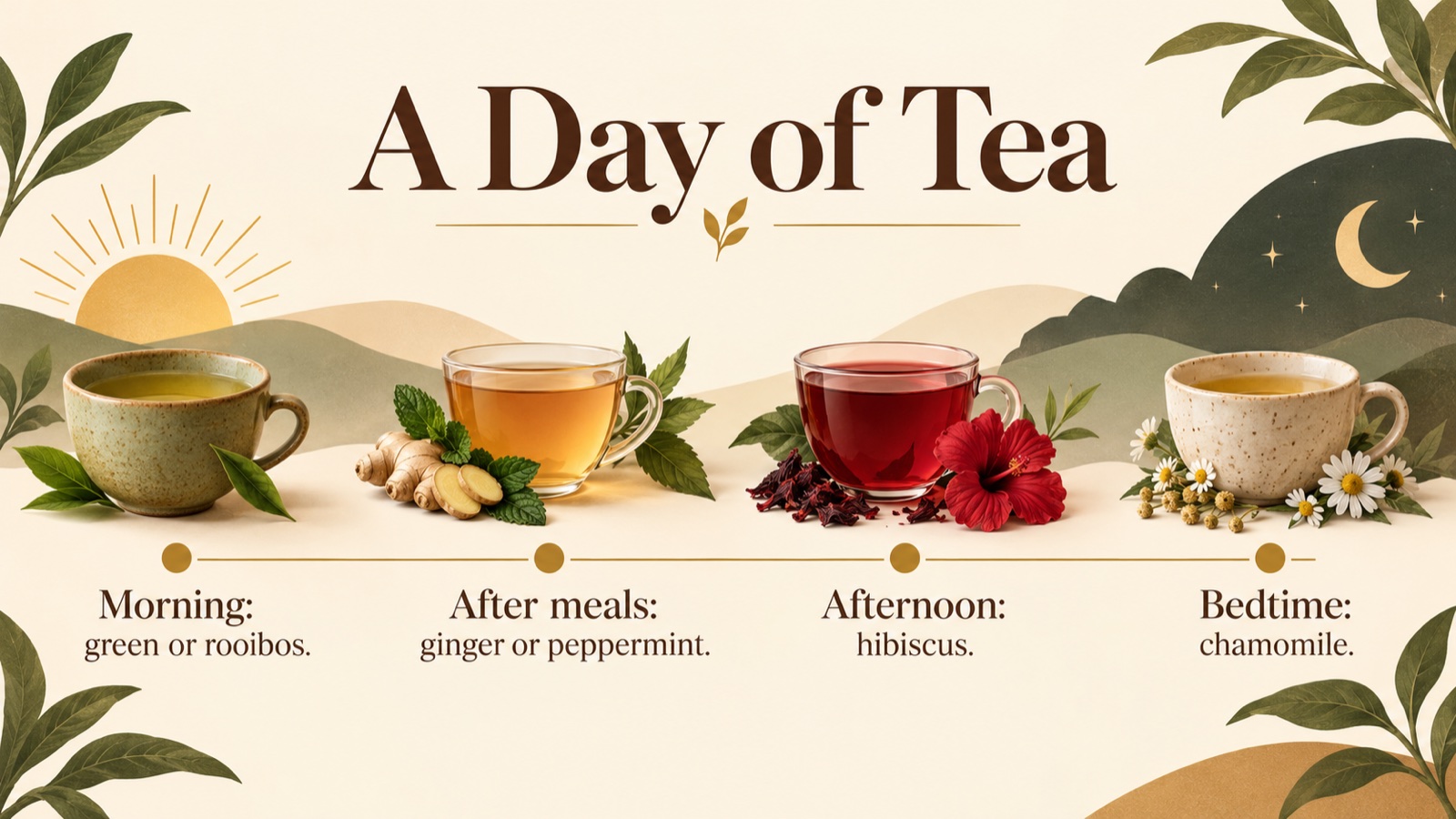
Food-level is 1 to 3 cups a day. Standard method: just-boiled water over the herb, cover the cup to keep the oils in, steep, strain.
| Tea | Helps with | When to drink | Evidence | Caution |
|---|---|---|---|---|
| Hibiscus / bissap / sorrel | Blood pressure (alongside care) | Afternoon, hot or iced; 1 to 3 cups | Some | BP medicines, diuretics; not in pregnancy |
| Rooibos | Caffeine-free swap for sweet tea | Any time, even evening | Weak | Generally safe |
| Green tea | Gentle energy, antioxidants | Morning, between meals | Weak | Caffeine; not with iron-rich meals; nadolol |
| Ginger-lemon | Nausea, colds, digestion | Morning or when queasy | Some | Blood thinners at big doses; ask in pregnancy |
| Peppermint | Gas, bloating, IBS | After meals | Some | Worsens heartburn |
| Spearmint | PCOS (androgens), after meals | Twice a day | Some | Reflux; tell your doctor if PCOS |
| Chamomile-lavender | Winding down, sleep | 30 to 60 minutes before bed | Weak | Ragweed allergy; warfarin; sedatives |
| Lemon balm | Calm | Evening | Weak | Thyroid medicine; sedatives |
| Tulsi (holy basil) | Stress | Afternoon | Some | Diabetes medicine; not in pregnancy |
| Nettle | Mineral-rich "hair tea" | Daytime | Weak | BP and diabetes medicines, lithium, warfarin; not in pregnancy |
| Moringa leaf | Nutrient boost | Morning | Traditional | Not in pregnancy; levothyroxine |
| Thyme | Chest colds and cough (comfort) | When sick | Traditional | Food-level only in pregnancy |
| Rosemary-mint | A warming, herby cup | Daytime | Traditional | Large amounts in pregnancy or seizures |
| Fenugreek seed | Blood sugar (low-quality studies) | 1 cup, not daily for long | Weak | Not in pregnancy; diabetes medicine; blood thinners |
| Red raspberry leaf | Late-pregnancy "womb tea" | Only with OB or midwife's OK | Weak | Ask first, always |
Sources: McKay 2010 · Grant 2010 · NCCIH, Chamomile · NCCIH, Peppermint · NCCIH, Ginger · NCCIH, Green tea · NIH ODS, Iron · American Heart Association, High blood pressure and African Americans
Read this before you mix
Herb and medicine interactions
These are the combinations that send people to the emergency room. Mostly at supplement doses, sometimes with daily strong teas. If you take any of these medicines, show this table to your pharmacist.
| If you take... | Be careful with | What can happen |
|---|---|---|
| Blood thinners (warfarin, apixaban, rivaroxaban, clopidogrel, daily aspirin) | Garlic, ginger and turmeric supplements, fenugreek, high-dose fish oil, vitamin E, chamomile, saw palmetto, black seed. Nettle, greens and sea moss contain vitamin K (keep amounts steady on warfarin) | Bleeding and bruising, or warfarin working less well |
| Blood pressure medicines and water pills | Hibiscus, nettle, black seed, ashwagandha, moringa, dandelion, cayenne capsules; kola and caffeine push the other way | Pressure drops too low (dizzy, faint), or pressure goes up |
| Diabetes medicines (metformin, insulin, sulfonylureas, GLP-1) | Fenugreek, cinnamon supplements, moringa, holy basil, black seed, nettle, ashwagandha | Blood sugar drops too low (shaky, sweaty, confused) |
| Thyroid medicine (levothyroxine) or thyroid disease | Sea moss and kelp (iodine), lemon balm, ashwagandha, moringa. High-dose biotin skews thyroid tests | Thyroid swings; wrong lab results |
| Sedatives and sleep aids, anxiety medicines, alcohol | Chamomile, lavender, lemon balm, ashwagandha | Too sleepy, slowed breathing |
| Lithium | Nettle, dandelion and other "water pill" herbs | Lithium builds up to toxic levels |
| Beta-blocker nadolol; atorvastatin | Green tea (especially extracts) | Medicine works less well |
| Immune-suppressing medicines (transplant, lupus, RA) | Elderberry, ashwagandha, echinacea-type "immune boosters" | May work against your medicine |
| Some HIV medicines | Garlic supplements | Lower medicine levels |
| Liver disease or many daily medicines | Turmeric, green tea extract and ashwagandha supplements; cassia cinnamon in large amounts | Rare but serious liver injury |
| Upcoming blood tests | High-dose biotin (hair, skin and nail gummies) | False heart-attack (troponin) and thyroid results |
| Antidepressants, birth control and many others | St. John's wort (not in our library for this reason) | Makes many medicines, including birth control, work less well |
Sources: NCCIH, Herb-drug interactions · NCCIH, St. John's wort · Garlic · Green tea · Ashwagandha · Fenugreek · Chamomile · MSK, Nettle · MSK, Herbal remedies and treatment · NIH ODS, Omega-3 · FDA, Biotin

Pregnant or trying
Herbs to avoid in pregnancy
Unless your OB or midwife says yes, skip these beyond normal food amounts:
- Fenugreek (birth-defect concern, may stimulate the uterus)
- Moringa, especially root and bark (uterine contractions)
- Hibiscus in medicinal amounts
- Ashwagandha
- Saw palmetto (hormone effects)
- Horsetail
- Nettle tea
- Sea moss (iodine, heavy metals)
- Holy basil
- Sage, oregano, thyme and rosemary in medicinal amounts or oils (cooking is fine)
- Black seed supplements
- High-dose vitamin A and retinoid creams
- Red raspberry leaf only with your provider's OK, usually later in pregnancy
- Essential oils by mouth, ever
Sources: NCCIH, Fenugreek · MSK, Moringa · NCCIH, Ashwagandha · NCCIH, Saw palmetto · MedlinePlus, Horsetail · CHOP, Sea moss · NIH ODS, Vitamin A · NIH LactMed, Raspberry leaf · NCCIH, Ginger
Building a starter herb pantry
Ten jars to start with
You do not need a hundred bottles. Start with these: safe at food level for most people, cheap, and useful in both the pot and the cup.
Dried hibiscus
Bissap, sorrel, iced tea. Skip in pregnancy.
Rooibos
Your caffeine-free everyday tea.
Fresh ginger
Tea, stir-fries, soups, ginger beer. Keep in the freezer and grate frozen.
Dried peppermint or spearmint
After-meal tea; attaya-style with green tea.
Chamomile flowers
Bedtime cup. Not if you have ragweed allergy.
Thyme
Caribbean and Creole cooking; a warm cup for a cough.
Garlic
Flavor that lets you cut the salt.
Ceylon cinnamon sticks
Ceylon has much less coumarin than cassia.
Turmeric and black pepper
Curries, rice, golden milk.
Salt-free seasoning blend
Onion, garlic, paprika, thyme, black pepper. See Recipes.
Buy smart
- Small amounts, so they stay fresh.
- Organic where you can; from shops that turn stock over fast.
- Supplements: USP or NSF seal.
- Skip products promising to "cure," "detox" or "melt fat."
Store right
- Airtight glass jars, away from the stove and sunlight.
- Label with name and date.
- Leaves and flowers: about a year. Whole spices last longer than ground.
- Lost its smell and color? Compost it.
Start slow
- One new herb at a time, for a week or two.
- Write down how you feel.
- Stop if you get a rash, stomach upset, palpitations or dizziness.
- Bring your list to every doctor visit.
Grow your own
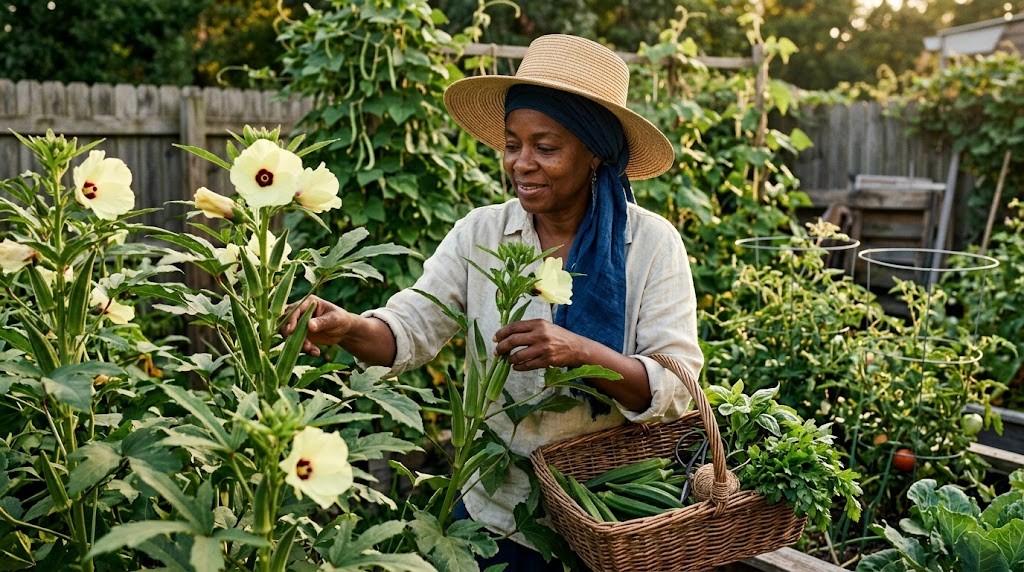
Mint, thyme, rosemary, basil, lemon balm and chamomile grow happily in pots on a Philadelphia stoop or windowsill. Okra, collards and hot peppers do well in community gardens. Our foremothers kept provision gardens with African seeds, rice, okra, yams, black-eyed peas, so their families could eat and heal. A pot of mint on the windowsill is a small piece of that line.
Sources: Carney & Rosomoff, In the Shadow of Slavery (review) · Crowned & Rooted history brief
Where to buy in Philadelphia
Shop the apothecaries
Loose herbs, custom blends and people who know their plants, several of them Black-owned.
Rise & Ritual
1439 N. 52nd St, West Philadelphia
Tea house and apothecary: 50+ herbs, custom blends, herbal consults and wellness events.
Dope Botanicals
257 S. 20th St, Rittenhouse
Tinctures, tonics and teas from organic and ethically foraged herbs.
Herbiary
1136 Arch St, Center City
Bulk herbs, teas, salves, essential oils and books. Open daily.
Sources: Crowned & Rooted Philly places brief (verified October 2026). Call ahead for hours.