
Every Age, Every Stage
From puffs to silver crowns
What's happening in your body at each season of life, what to eat, how to care for hair and skin, how to move, what to get checked, and a simple day from morning to night.
I've been every one of these ages except the last, and I'm working on that one. Each season asks something different of us. Find yours, then read the one before and after. It helps to know where you came from and where you're headed.
At a glance
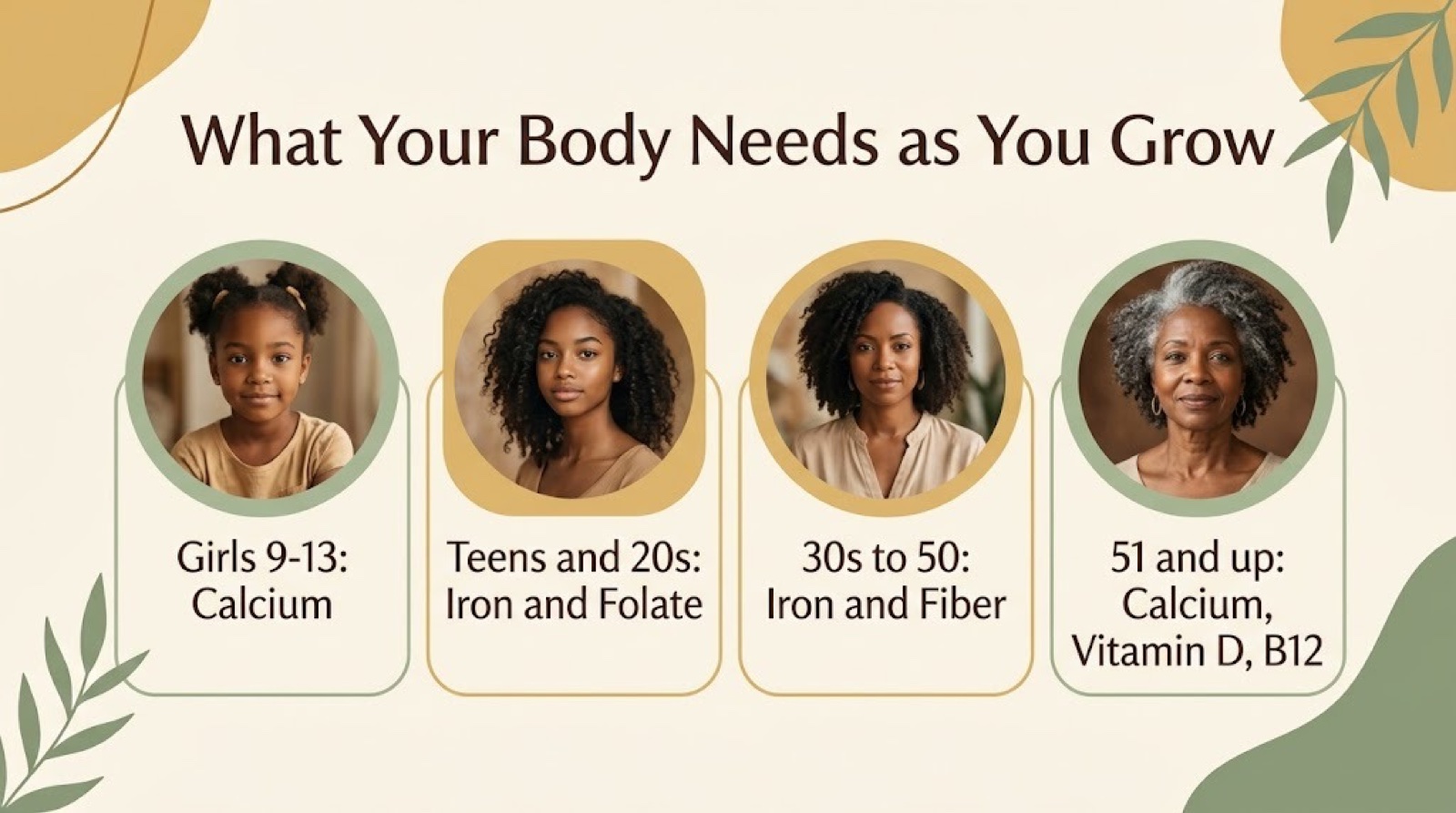
Daily nutrient needs by age
These are U.S. daily amounts (RDA) from the NIH Office of Dietary Supplements. Food first. Take supplements only on a clinician's advice.
| Nutrient | Girls 4–8 | Girls 9–13 | Teens 14–18 | Women 19–50 | Women 51–70 | Women 71+ | Pregnant | Breastfeeding |
|---|---|---|---|---|---|---|---|---|
| Iron | 10 mg | 8 mg | 15 mg | 18 mg | 8 mg | 8 mg | 27 mg | 9 mg |
| Calcium | 1,000 mg | 1,300 mg | 1,300 mg | 1,000 mg | 1,200 mg | 1,200 mg | 1,000 mg | 1,000 mg |
| Vitamin D | 600 IU | 600 IU | 600 IU | 600 IU | 600 IU | 800 IU | 600 IU | 600 IU |
| Folate (DFE) | 200 mcg | 300 mcg | 400 mcg | 400 mcg | 400 mcg | 400 mcg | 600 mcg | 500 mcg |
| Vitamin B12 | 1.2 mcg | 1.8 mcg | 2.4 mcg | 2.4 mcg | 2.4 mcg | 2.4 mcg | 2.6 mcg | 2.8 mcg |
| Magnesium | 130 mg | 240 mg | 360 mg | 310–320 mg | 320 mg | 320 mg | 350–360 mg | 310–320 mg |
| Iodine | 90 mcg | 120 mcg | 150 mcg | 150 mcg | 150 mcg | 150 mcg | 220 mcg | 290 mcg |
| Choline (AI) | 250 mg | 375 mg | 400 mg | 425 mg | 425 mg | 425 mg | 450 mg | 550 mg |
| Protein | 19 g | 34 g | 46 g | 46 g | 46 g | 46 g | 71 g | 71 g |
Sources: ODS iron · ODS calcium · ODS vitamin D · ODS folate · ODS B12 · ODS magnesium · ODS iodine · ODS choline · National Academies DRI tables · FDA biotin warning
Rooted at every age
The plate our foremothers carried
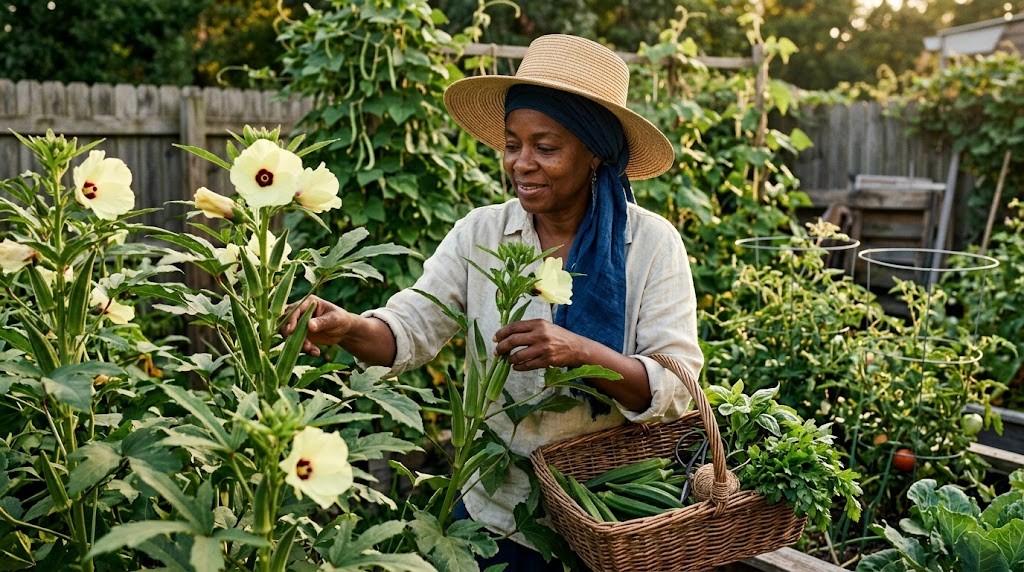
Many of the best foods for every stage of life came across the Atlantic with African women, in memory and sometimes in seed. Historians Judith Carney and Richard Rosomoff show how enslaved Africans planted okra, black-eyed peas, rice, millet and Guinea yams in the provision gardens that kept families alive. Documented
Soul food grew from that kitchen. Much of the everyday diet was greens, beans and grains, with meat used mostly as seasoning. So "going back to our roots" means going back to the greens, beans, grains and garden our foremothers actually lived on.
- Black-eyed peas (domesticated in West Africa): protein, folate, iron
- Okra (an African crop; "gumbo" traces to Bantu languages): fiber, folate, magnesium
- Collards and other greens, slow-cooked in the African one-pot way: calcium, folate, vitamin K
- Sweet potatoes: vitamin A. Honest note: these are American in origin. The true African yam is a different plant.
Sources: Carney & Rosomoff, In the Shadow of Slavery · NYBG, Judith Carney · Crowned & Rooted history brief: soul food roots

Girls 6–12
Building a strong foundation
What's happening: steady growth, then the start of puberty. Breast buds and a growth spurt usually come before the first period. This is when habits are born: how she eats, moves, sleeps, and how she talks about her hair and her body.
Bone bank: the teen years are when most bone is built, and the deposits start now. Jumping, running and calcium-rich food are investments she'll cash in at 70.
First period: ACOG says cycles in the first years after periods start can range from 21 to 45 days. Talk about it before it happens.
Read more: Puberty & growing up · Periods & your cycle
Nutrients
- Calcium: 1,000 mg (4–8) rising to 1,300 mg (9–13): milk or fortified plant milk, yogurt, collards, canned salmon with bones
- Vitamin D: 600 IU. Darker skin makes less from the sun.
- Iron: 10 mg (4–8), 8 mg (9–13): beans, greens, fortified cereal, plus an orange for vitamin C
- Protein: 19–34 g
Hair & skin
- Gentle, loose styles: no tight ponytails or heavy extensions on little edges (traction alopecia can start young)
- Wash day as bonding time, not a battle. Detangle with conditioner and patience.
- Satin bonnet or pillowcase at night
- Hold off on relaxers. The NIH Sister Study linked frequent straightener use to higher uterine cancer risk in women (an association, not proof).
- Sunscreen on sunny days; fragrance-free lotion for ashy or eczema-prone skin
Movement, checks & heart
- 60 minutes of play a day, bone-building jumps 3 days a week: Double Dutch, tag, dance, bike
- Sleep: 9–12 hours
- HPV vaccine at 11–12 (can start at 9)
- Yearly well-child visit; ask about her sickle cell newborn result
- Mind: praise what she does, not only how she looks. Depression screening starts at 12.
Start-young habits
A day for a girl
| When | What |
|---|---|
| Morning | Wake at the same time. Breakfast with protein and calcium: eggs, yogurt, or fortified cereal with milk. Sunscreen if outdoors. Bonnet off, quick puff refresh. |
| School day | Water bottle. Recess: run, jump, play. |
| After school | Fruit snack, homework, outside play or a dance class. |
| Dinner | Half the plate vegetables. Talk about the best and hardest part of the day. |
| Night | Bath, lotion, hair twisted or braided loosely, bonnet on, a story. Lights out for 9–12 hours of sleep. |
Sources: CDC children's activity · AASM pediatric sleep · ACOG first period · CDC HPV · CDC sickle cell · AAD traction alopecia · NIH Sister Study · ODS calcium

Teens 13–19
Big changes, big feelings
What's happening: periods settle into a rhythm, the body builds most of its bone, skin gets oilier, and the brain is still wiring itself until the mid-20s. Teens also need more sleep than adults, not less.
Periods: see a clinician if a period lasts over 7 days, soaks a pad every hour for several hours, or cramps keep her home. Heavy periods can drain iron. More on our Periods page and Puberty page.
I taught teenagers for years. The ones who did best had one grown woman they could tell anything to. Be that woman for a girl in your life, even if she isn't your own.
Nutrients
- Iron: jumps to 15 mg at 14 because of periods
- Calcium: 1,300 mg, the highest of any age
- Vitamin D: 600 IU
- Folate: 400 mcg
- Protein: 46 g
- Lactose trouble? Fortified plant milk, calcium-set tofu, sardines, collards
Hair & skin
- Gentle cleanser twice a day; don't scrub or pick. Dark marks after pimples are common in darker skin.
- Ingredients with evidence for dark marks: niacinamide, azelaic acid, vitamin C. See a dermatologist for stubborn acne.
- SPF 30+ daily: sun makes dark marks darker
- Never use bleaching creams: FDA has found mercury in some
- Rotate styles; give edges a rest between braids and sew-ins
Movement, checks & mind
- 60 minutes a day; strength 3 days a week (team, step, dance, walking)
- Sleep 8–10 hours
- Yearly checkup; depression screening; HIV test from 15; HPV catch-up
- Track periods in an app or notebook
- Mind: down for two weeks or more? Tell a trusted adult or school nurse. 988 takes texts.
A day for a teen
| When | What |
|---|---|
| Morning | Same wake time daily. Wash face, moisturize, sunscreen. Breakfast with protein and calcium. Water bottle in the bag. |
| Lunch | Iron foods (beans, greens, lean meat) with vitamin C fruit. |
| Afternoon | Movement: practice, gym, a walk with friends. 10 minutes outside in daylight. |
| Evening | Dinner with family when possible. Homework. Phone on the charger outside the bedroom 30–60 minutes before bed. |
| Night | Wash face, edges protected (loose styles), bonnet on. 8–10 hours of sleep. |
Sources: ODS iron · ACOG heavy bleeding · CDC sleep · AAD dark spots · AAD acne & diet · FDA skin lighteners · USPSTF HIV

20s and 30s
The building years
What's happening: bone reaches its peak around now. Career, school, maybe babies, maybe caring for parents. It's easy to put yourself last. This is also when early warnings show up: blood pressure creeping up, fibroid symptoms, heavy periods, PCOS signs.
Why it matters: high blood pressure before 35 was linked to about 3 times the stroke risk by middle age in the Black Women's Health Study. Catch it now.
Nutrients
- Folic acid 400 mcg a day if you could get pregnant, starting at least a month before (CDC)
- Iron 18 mg through age 50
- Calcium 1,000 mg; vitamin D 600 IU
- Magnesium 310–320 mg: beans, nuts, seeds, greens
- Fatty fish twice a week for omega-3s
Hair & skin
- Rotate protective styles; never let edges hurt
- Limit heat and chemical straighteners
- Daily SPF 30+; tinted sunscreen with iron oxides helps against visible light that darkens melasma
- Treat acne early to prevent dark marks and keloids
- Crown thinning? See a dermatologist early (CCCA scars permanently)
Movement, checks & mind
- 150 minutes a week + strength 2 days
- BP check; cholesterol from 20; Pap from 21
- Breast cancer risk assessment by 25
- Know your sickle cell trait status before pregnancy
- Blood sugar test from 35 if overweight
- Mind: Strong Black Woman load peaks here. Find your therapist and your circle (Mind & Sleep).
A day in your 20s and 30s
| When | What |
|---|---|
| Morning | Water, then a protein breakfast. Multivitamin with 400 mcg folic acid if you could get pregnant. Sunscreen. |
| Workday | Stand and stretch every hour. Packed lunch with greens and beans. |
| After work | 30-minute walk or workout most days; strength 2 days. Plan sweaty workouts around wash day. |
| Evening | Dinner, then wind down: three lines in a journal or a prayer. Screens away. |
| Night | Skin routine, hair twisted or pineappled, bonnet or satin pillowcase. 7+ hours of sleep. |
Sources: CDC folic acid · USPSTF folic acid · Black Women's Health Study (Healio) · ACR 2023 · USPSTF cervical · AAD CCCA · AAD skin of color

Pregnancy & postpartum
Two lives, one body: protect it
What's happening: blood volume rises, the baby draws on your iron, iodine and choline, and blood pressure needs watching through the whole year after birth.
The hard truth: in 2024 the CDC counted 44.8 maternal deaths per 100,000 live births for Black women, versus 14.2 for white women, about three times higher. CDC says most pregnancy-related deaths are preventable. Speaking up saves lives.
Our roots: into the early 1900s, most babies in Black Southern communities were caught by "granny" midwives, older women who learned by apprenticeship, prayer and "motherwit" and stayed with families for days after a birth. Laws and hospital funding pushed them out by the 1980s. Today's Black doulas and midwives carry that tradition forward. Documented
Nutrients
- Folic acid 400–800 mcg (USPSTF); total folate 600 mcg
- Iron 27 mg (drops to 9 mg while breastfeeding)
- Iodine 220 mcg (290 breastfeeding)
- Choline 450 mg (550 breastfeeding): eggs are a top source
- Protein 71 g
- 2–3 servings a week of low-mercury fish (ACOG)
- Read your prenatal label: some have no iodine or little choline
Hair & skin
- Hair often feels fuller in pregnancy, then sheds 2–3 months after birth (telogen effluvium). It usually recovers. If it lasts over 6 months, see a doctor.
- Avoid retinoids (tretinoin) and high-dose vitamin A
- Melasma (the "mask") darkens with sun: tinted SPF daily
- Skip sea moss, fenugreek above food amounts, ashwagandha and large amounts of hibiscus unless your OB approves
Movement, checks & mind
- 150 minutes a week if healthy (ACOG): walking, swimming, prenatal yoga
- Blood pressure checks through the year after birth
- Postpartum depression is common and treatable. Tell someone.
- Know the Hear Her warning signs (below)
A day while pregnant or postpartum
| When | What |
|---|---|
| Morning | Prenatal vitamin with breakfast (eggs for choline). Water. Note any swelling or headache. |
| Midday | Small, frequent meals: beans, greens, lean protein, fruit. A gentle walk. |
| Afternoon | Feet up. Rest is part of the work. Postpartum: sleep when the baby sleeps, and let people help. |
| Evening | Low-mercury fish twice a week. Check your blood pressure if your provider asked you to. |
| Night | Sleep on your side later in pregnancy, pillows between knees. Bonnet on. Text a friend how you're really feeling. |
Sources: CDC NCHS maternal mortality 2024 · CDC Hear Her · ODS pregnancy · ACOG nutrition · ACOG exercise · Cleveland Clinic telogen effluvium · ODS vitamin A · Reckon: Black Southern midwives · Nursing Clio
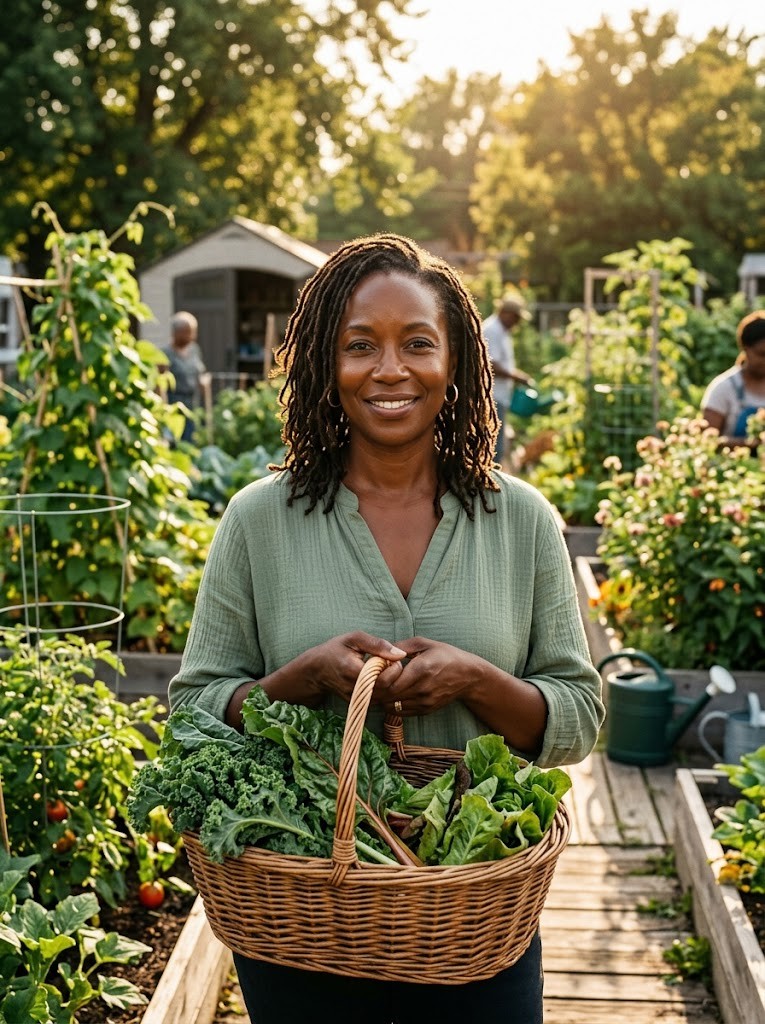
40s and 50s
Perimenopause and menopause
What's happening: estrogen starts to swing, then falls. Periods get irregular, then stop (the U.S. average is about 52). Bone loss speeds up and heart risk rises.
What SWAN found for Black women: hot flashes and night sweats lasted a median of about 10 years, the longest of any group, and started earlier in the change.
Stroke alert: a Women's Health Initiative study found Black women in their 50s had about 3.5 times the stroke risk of white women the same age. Know your blood pressure.
Nutrients
- Calcium rises to 1,200 mg at 51
- Vitamin D 600 IU
- Iron drops to 8 mg after menopause (still 18 mg while periods continue)
- B12 2.4 mcg; absorption falls with metformin or acid reducers
- Protein spread through the day to protect muscle
- Magnesium 320 mg
Hair & skin
- Widening part or thinning on top may be female-pattern hair loss. Treatments like minoxidil exist; see a dermatologist.
- Crown thinning: rule out CCCA early
- Skin gets drier: richer creams, shea butter, lukewarm showers
- Daily SPF still matters for dark spots and skin cancer
- Check palms, soles and nails: acral melanoma is the most common type in Black people
Movement, checks & mind
- Strength training 2–3 days is non-negotiable for bone
- Mammogram every 2 years from 40; colon screening from 45
- BP yearly; cholesterol; blood sugar
- Ask about perimenopause symptoms by name. Hot flash treatments exist.
- Mind: notice when "strong" has turned into "tired all the time"
Nobody told me "the change" could start in my forties. I thought I was losing my mind, waking up drenched at 3 a.m. Tell your doctor the words "hot flashes" and "night sweats." Don't just suffer through ten years of it.
A day in your 40s and 50s
| When | What |
|---|---|
| Morning | Protein breakfast (eggs, Greek yogurt, beans). Calcium and vitamin D foods. Medicines at the same time daily. |
| Midday | Brisk walk with a buddy or GirlTrek. Greens and beans at lunch. |
| Afternoon | Strength training 2–3 days a week; a few minutes of stretching. |
| Evening | Lighter dinner. Limit alcohol and spicy food if hot flashes hit at night. |
| Night | Cool room, fan, breathable sheets, moisture-wicking sleepwear, bonnet. 7+ hours. |
Sources: NIA menopause · Avis et al. 2015 (SWAN) · SWAN · AHA/WHI stroke · NIH osteoporosis · ODS B12 · AAD female-pattern hair loss · USPSTF breast · USPSTF colorectal · Sleep Foundation
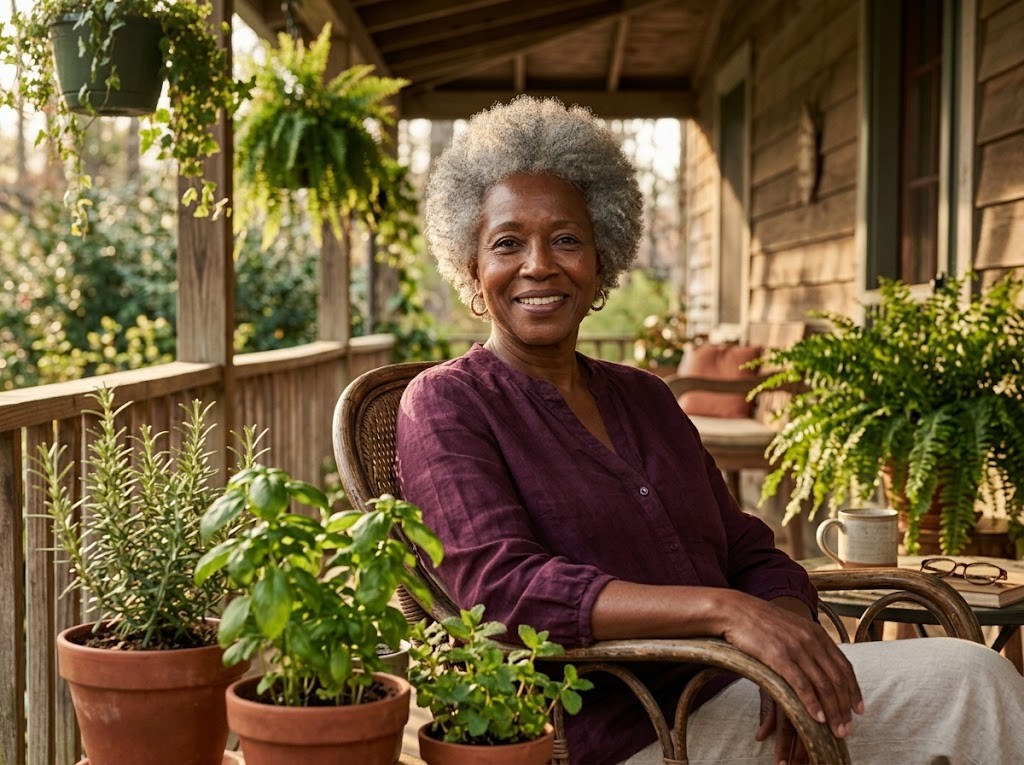
60s and beyond
The silver crown
What's happening: muscle and bone thin unless we use them, balance gets shakier, thirst signals fade, and the stomach absorbs B12 less well. Many of us are also raising grandbabies.
Brain health: older Black Americans are about twice as likely as older white Americans to have Alzheimer's or other dementias. Heart health is brain health: controlling blood pressure, sugar and cholesterol is recommended to protect memory.
Thinning hair: some thinning is normal with age, but crown thinning, a widening part or patches deserve a dermatologist visit. Gentle styles, light oils on the scalp, a satin bonnet, and checking iron, thyroid and B12 can all matter.
Nutrients
- B12 2.4 mcg, mostly from fortified foods or a supplement after 50 (ODS). Ask about B12 if you take metformin or acid reducers.
- Vitamin D 800 IU at 71+
- Calcium 1,200 mg
- Protein at every meal to keep muscle
- Water through the day, even when not thirsty
Hair & skin
- Loose, low-tension styles; skip heavy wigs glued at the edges
- Moisturize scalp and skin daily; skin gets thinner and drier
- Check feet, palms and nails for dark streaks or sores
- Wear your silver proudly, or color gently; avoid relaxer and color on the same day
Movement, checks & mind
- Walk most days; strength 2 days; balance practice (stand on one foot at the counter, tai chi, chair yoga)
- Bone density scan at 65
- Mammogram through 74, then decide with your doctor; colon through 75
- BP, blood sugar, kidney function
- Mention memory changes early
- Mind: loneliness hurts health. Call or visit someone every day.
A day at 60 and beyond
| When | What |
|---|---|
| Morning | Glass of water. Protein plus fortified foods (B12, vitamin D). Medicines from a weekly pill box. |
| Midday | Walk, water aerobics or a senior-center class. Balance moves while the kettle boils. |
| Afternoon | Call or visit someone: church, friends, family, a class. Short nap only if needed, before 3. |
| Evening | Light dinner with greens and beans. Night-lights on the path to the bathroom. |
| Night | Same bedtime nightly. Scalp oil, bonnet. 7–8 hours of sleep. |
My grandmother walked to market every single day until she was ninety. She didn't call it exercise. She called it living. Keep living, and keep your people close.
Sources: ODS B12 · ODS vitamin D · CDC older adults · USPSTF osteoporosis · Alzheimer's Association · NIA brain health · AAD hair care · CDC social connectedness
Talk with your own doctor or nurse about what's right for you.