

Crowned & Rooted
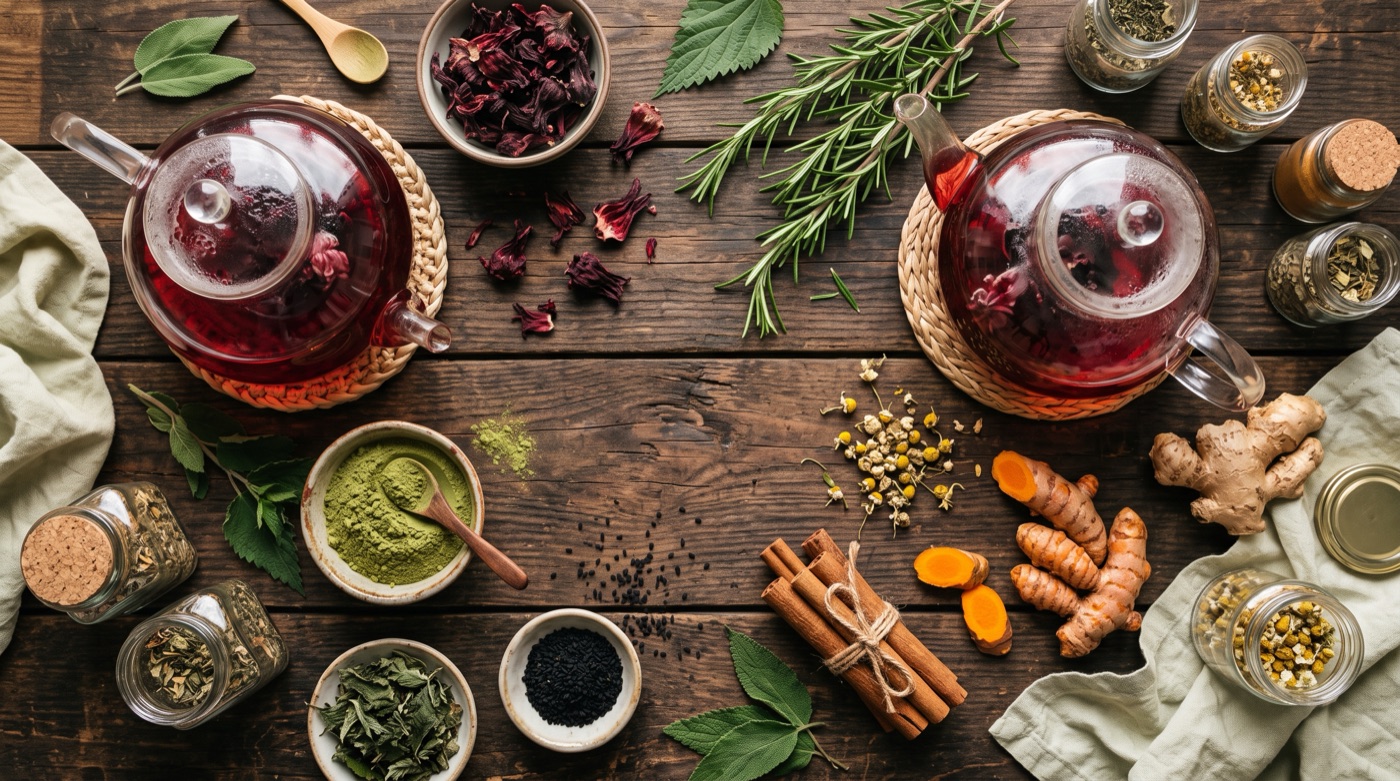
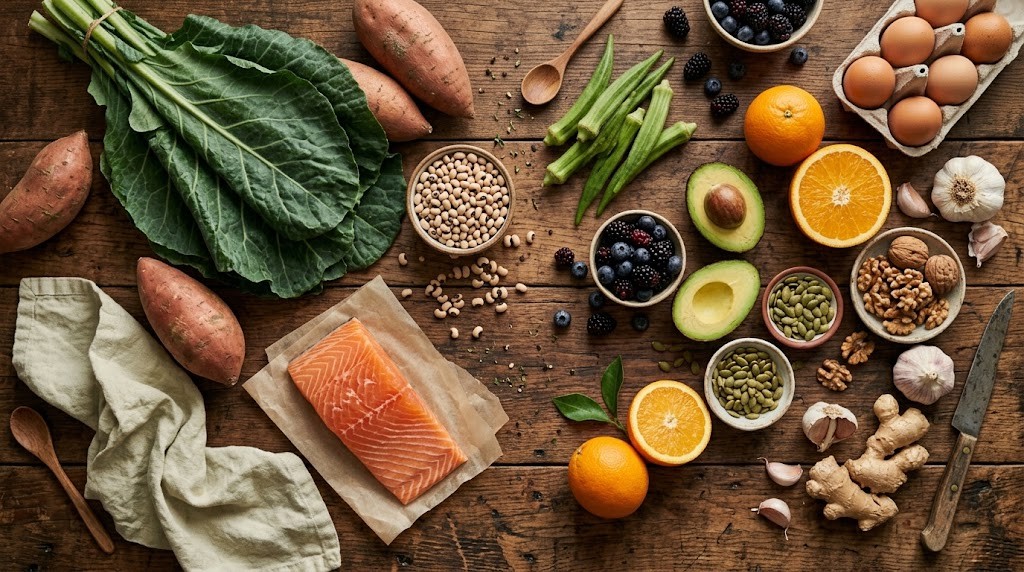
Overhead view of healthy soul-food ingredients: greens, sweet potatoes, beans, okra and spices

Recipes & Remedies

From our kitchen to your crown

Juices, herbal teas, hair and skin recipes, food-based blends and heart-smart soul meals. Plus every card from Mrs. Revell's own family kitchen. Search it, filter it, print it.

Browse recipes7-day meal planGrocery list
Woman with silver locs cooking in a kitchen full of herbs

Read this first

Everyday food and self-care, not medicine

These recipes are everyday food and self-care ideas. They do not cure, treat or prevent any disease. Hair, skin, nail and heart health come from the whole picture: sleep, stress, genes, hormones, medicines and regular checkups.

Talk with your doctor, nurse or pharmacist before adding herbs, big amounts of tea, or anything "supplement-style," especially if you are pregnant, trying to get pregnant or breastfeeding, or you take blood pressure medicine, blood thinners (like warfarin), diabetes medicine, thyroid medicine (like levothyroxine), lithium or water pills. Kidney disease? Ask before eating lots of high-potassium foods (beets, bananas, sweet potatoes, avocado, leafy greens, coconut water).

  • Food amounts are not supplement amounts. A cup of tea or a spoon of seeds is not a capsule. Most warnings get stronger as the dose goes up.
  • Herbs can stack with medicines. Hibiscus, nettle, garlic and black seed may lower blood pressure. Fenugreek, cinnamon, moringa and black seed may lower blood sugar. Turmeric, ginger, fenugreek and black seed in large amounts may add to bleeding risk.
  • Patch test anything that touches your skin or scalp (how-to below).

Before you mix

Patch test and oil-strength guide

How to patch test (every new hair or skin recipe)

  1. Mix a small amount of the finished recipe exactly as you will use it.
  2. Dab a coin-sized amount on the inside of your forearm or behind your ear. Cover with a bandage.
  3. Leave it 24 hours (48 is better for anything with essential oils). Keep it dry.
  4. Any redness, itching, burning, bumps or swelling: wash off with mild soap and do not use it. Stop sooner if it burns.
  5. Even after passing, stop if your scalp gets itchy, flaky or tender after use.

Essential oil strength

UseStrengthDrops per 1 oz (2 Tbsp) carrierDrops per 1 Tbsp
Face, sensitive skin, older adults0.5–1%3–61–3
Scalp and body, daily1–2%6–123–6
Short-term, small areaup to 3%189
  • Never put essential oils straight on skin or scalp. Never swallow them.
  • Pregnancy, breastfeeding, asthma, epilepsy, or for children: ask a doctor first and use 1% or less (or skip).
  • Citrus oils (lemon, bergamot, lime) can burn or darken skin in sunlight.
Infographic of how many drops of essential oil to add per ounce of carrier oil
Oil-strength guide at a glance. Numbers match the table above.
Mrs. Revell
Mrs. Revell says

Baby, I learned the hard way: a little goes a long way. My grandmother used a dab of oil, not the whole bottle. Patch test, go slow, and if your scalp says "no," you listen.

Sources: NCCIH Herbs at a Glance · Memorial Sloan Kettering About Herbs · NIH ODS Iodine · Mayo Clinic on essential oils

The recipe box

Search or filter every recipe

Type an ingredient ("okra," "hibiscus," "shea") or a need ("blood pressure," "hair," "pregnancy"), or tap a button. Each card says what it is good for, how strong the evidence is, the safety notes, and where it comes from.

Strong good human trials or official guidance Some small or mixed studies Weak / traditional lab, animal or cultural use only

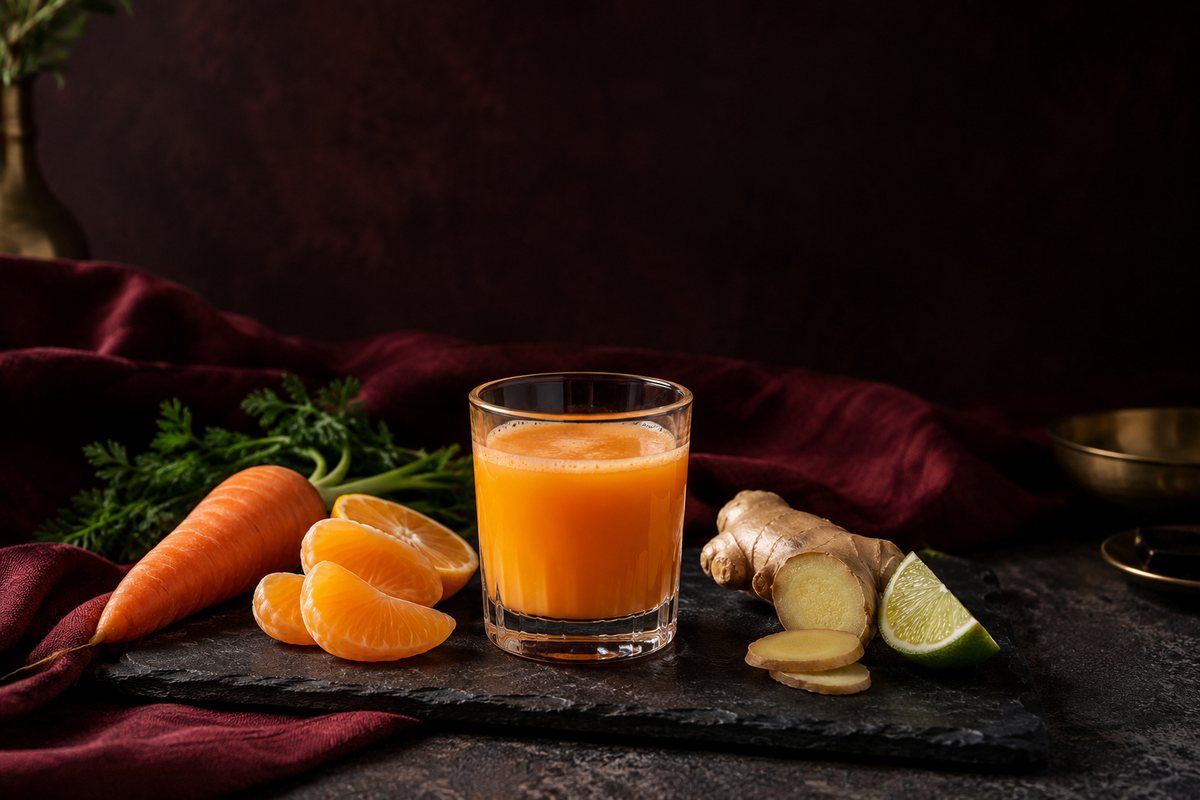
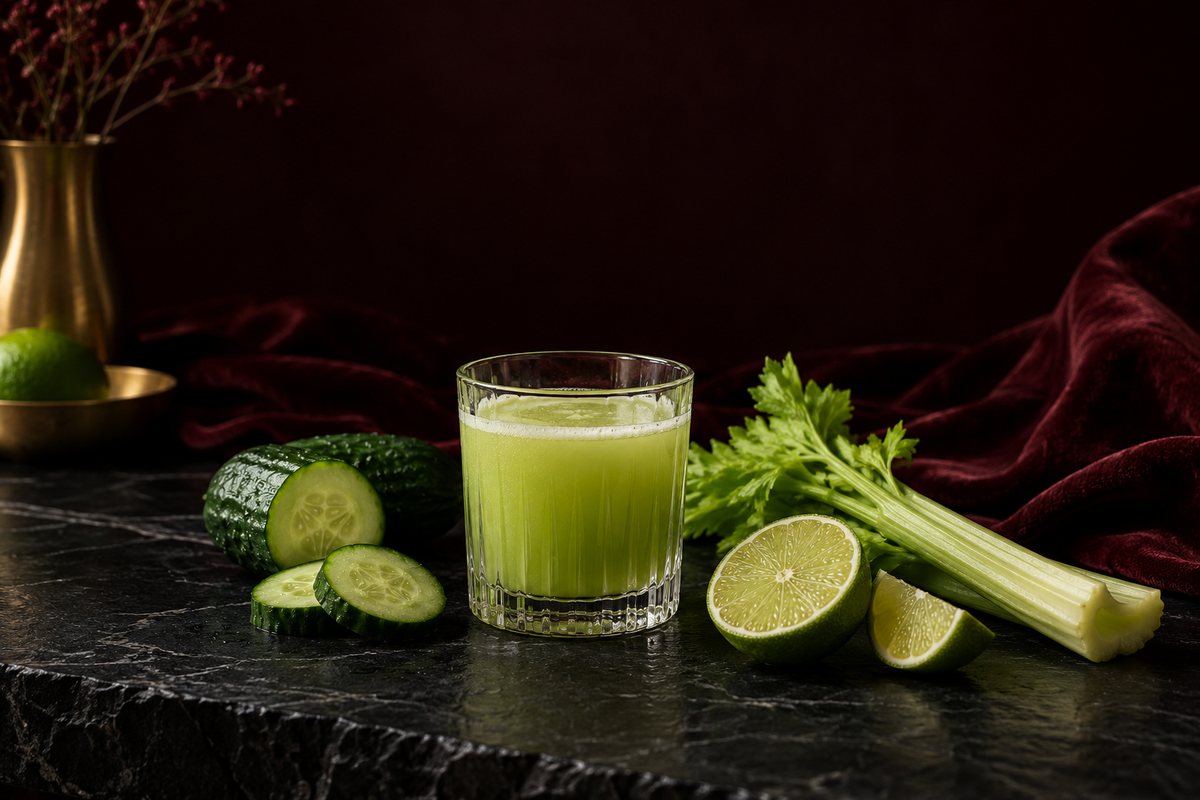
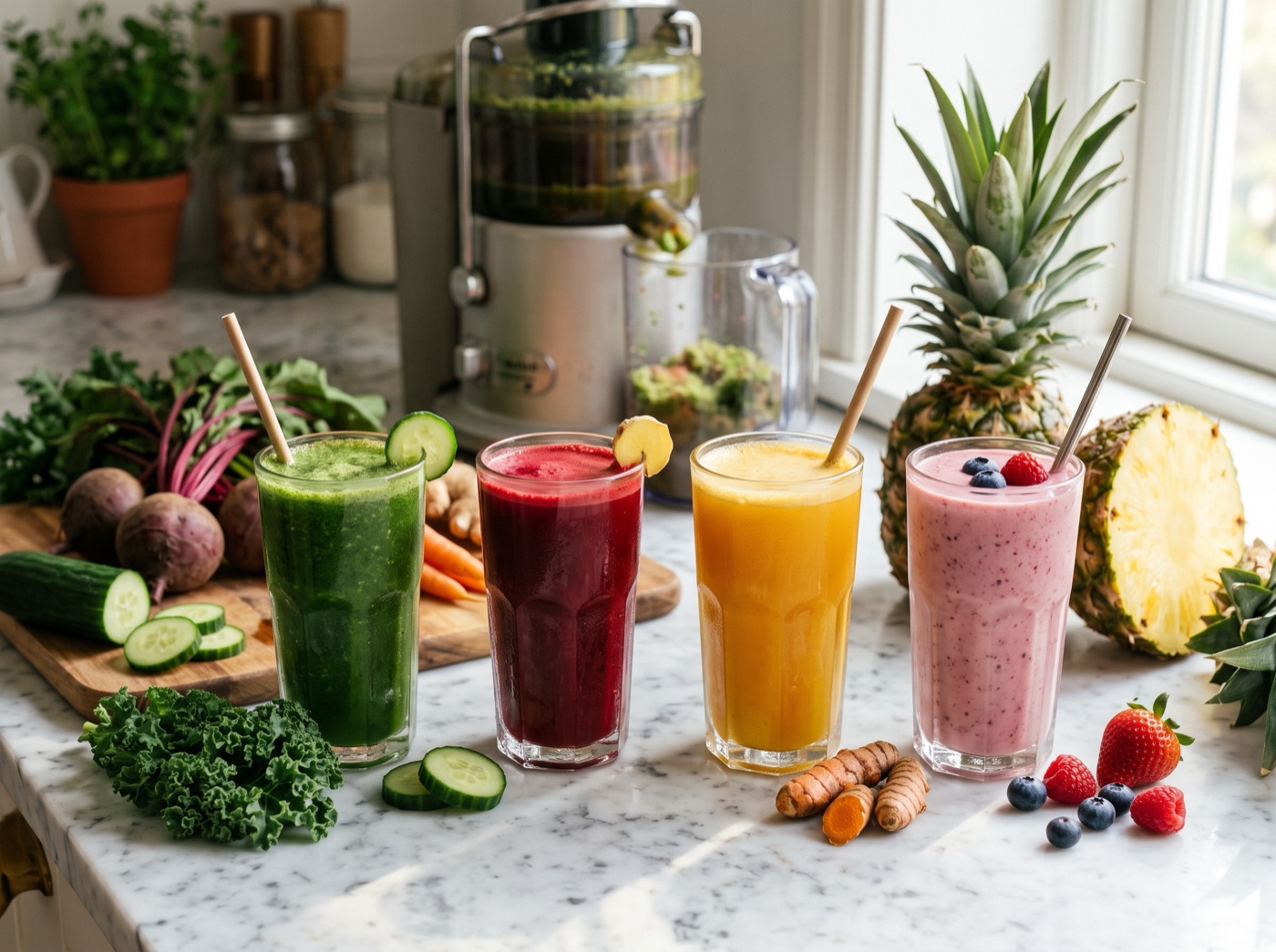
Glasses of fresh green, red and orange juices on a kitchen counter
JuiceFood-level

"Morning Crown" Green Juice

10 min · 1 large or 2 small

Good for: An easy way to get leafy greens, folate, vitamin C and potassium in one glass. Vitamin C helps your body build collagen, which skin and hair rely on.

Ingredients

  • 2 cups packed kale or spinach (or 1 cup each)
  • 1 medium cucumber, chopped
  • 2 celery stalks
  • 1 green apple, cored
  • ½ lemon, peeled
  • 1-inch piece fresh ginger
  • ½ cup cold water (blender method)

Steps

  1. Juicer: feed the greens between the harder pieces (apple, celery) so they push through. Stir in the lemon.
  2. Blender: blend everything with the water on high for 60 seconds. Drink as-is for the fiber, or strain through a nut-milk bag.

Safety: On warfarin? Kale and spinach are high in vitamin K. You do not have to avoid them, but keep the amount steady week to week and tell your doctor. Oxalate kidney stones: go easy on spinach and use kale or romaine.

African roots: Ginger is native to Southeast Asia, not Africa, but it has been grown in West Africa for centuries; Nigeria is now one of the world's biggest ginger growers. Leafy-green drinks and pot likker carry the same idea our foremothers lived by: drink your greens, waste nothing.
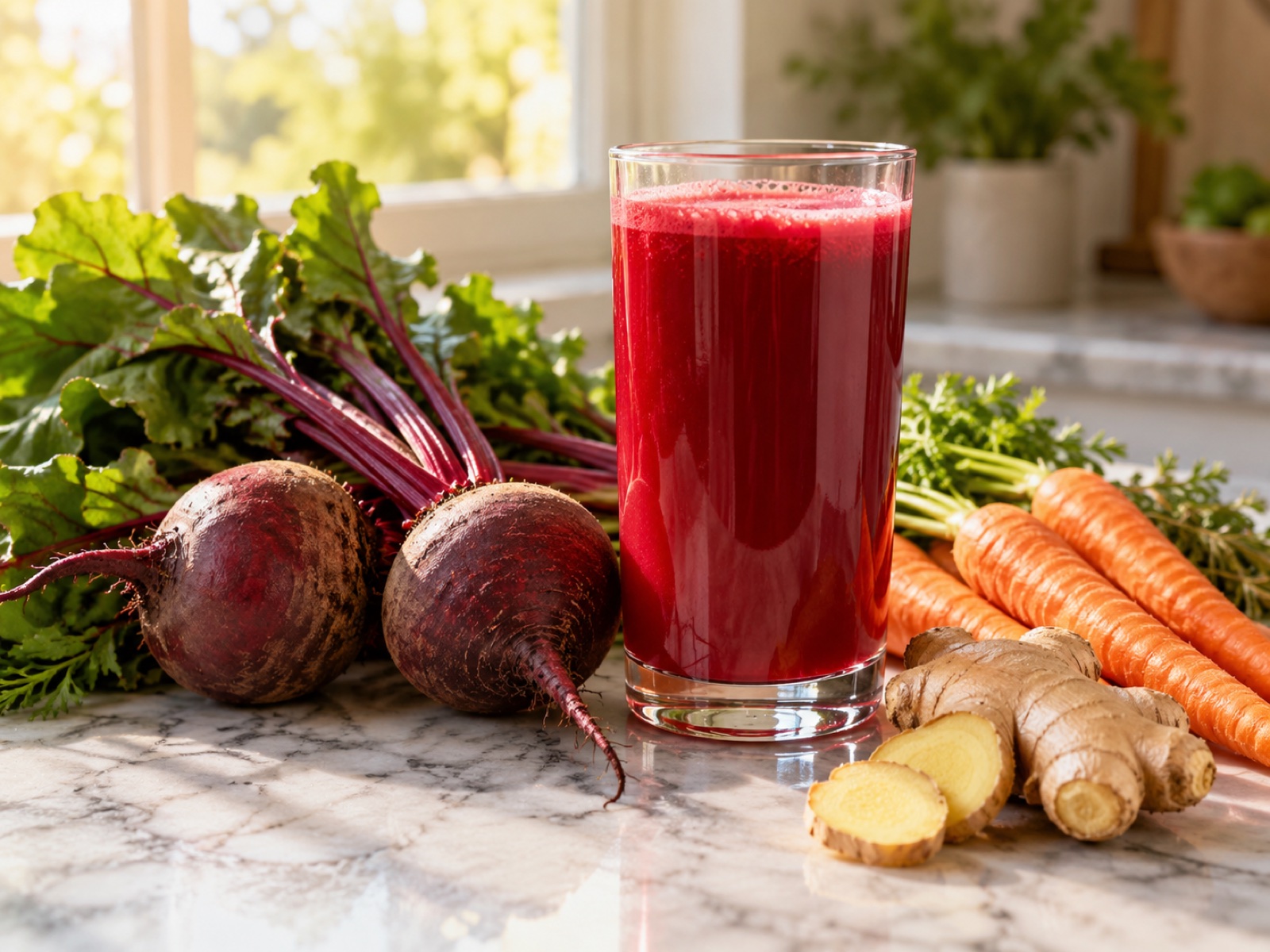
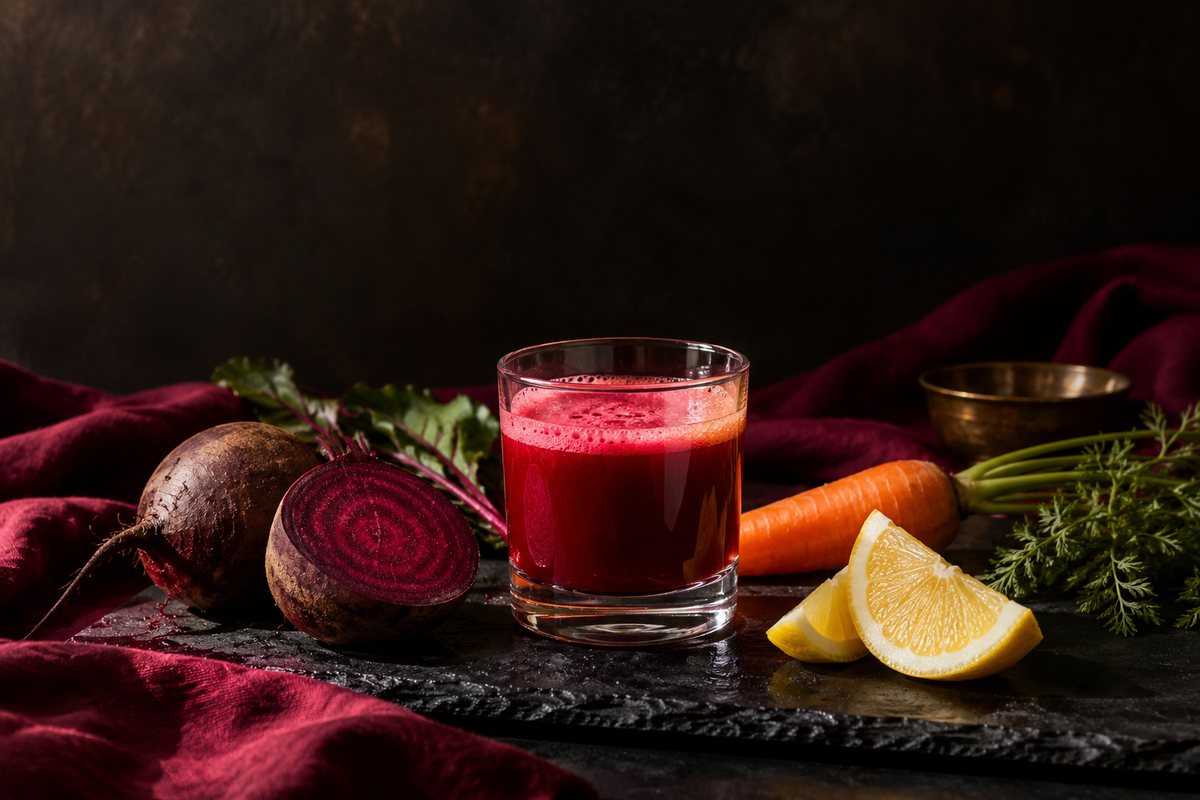
Deep red beet, carrot and ginger juice in a glass with whole beets
JuiceSome evidence (BP, short-term)

Beet-Carrot-Ginger "Ruby Root"

10 min · 1 large or 2 small

Good for: Beets are rich in natural nitrates, which the body turns into nitric oxide, a compound that helps blood vessels relax. Small studies show modest, short-term blood pressure effects. Carrots supply beta-carotene for skin.

Ingredients

  • 1 medium raw beet, scrubbed and chopped
  • 2 medium carrots
  • 1 orange, peeled
  • 1-inch fresh ginger
  • ½ cup water or ice (blender method)

Steps

  1. Juice or blend everything. If blending, blend 90 seconds and strain if you like it thinner.
  2. Serve over ice.

Safety: Pink urine or stool after beets is harmless ("beeturia"). Beets are high in oxalate and potassium: ask first if you have kidney stones or kidney disease. On blood pressure medicine? Enjoy it, but never use it in place of your medicine.

African roots: Beets and carrots came from the Mediterranean and Central Asia, not Africa. The orange and ginger make this taste like a cousin of the spiced drinks sold at West African and Caribbean stands.

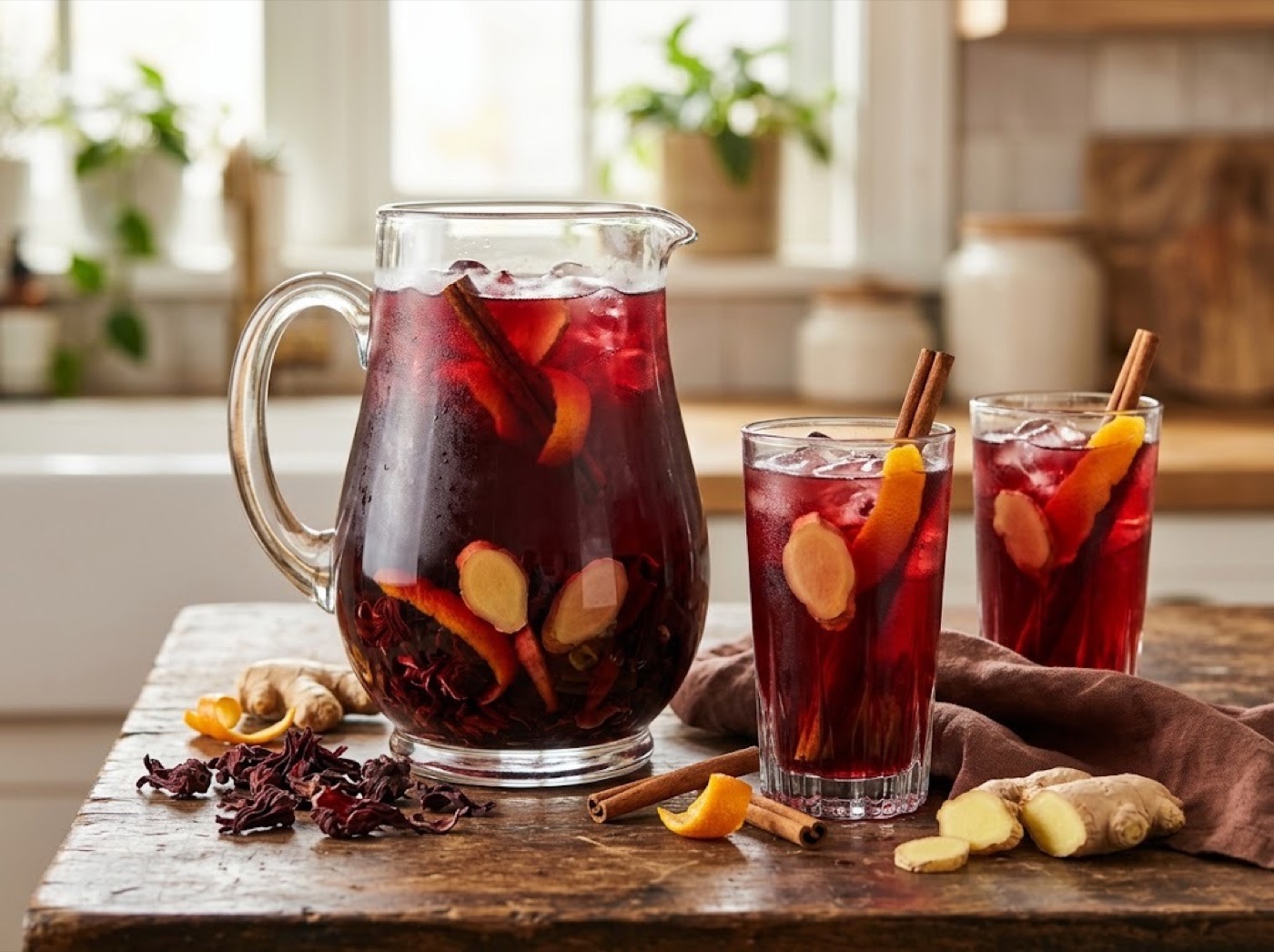
Pitcher of deep red sorrel drink with ginger, cinnamon sticks and orange peel
JuiceSome evidence (BP)

Caribbean Sorrel (Hibiscus) Cooler, Lightly Sweet

15 min + 30–60 min steep · About 6 cups

Good for: The holiday favorite made with a fraction of the sugar. Hibiscus is one of the more studied food-herbs for blood pressure; small trials show a modest drop in some adults. Naturally caffeine-free.

Ingredients

  • 1 cup dried sorrel/hibiscus calyces (flor de Jamaica)
  • 6 cups water
  • 2-inch piece ginger, sliced
  • 1 cinnamon stick, 4 whole cloves, 2 strips orange peel
  • 2–3 tablespoons honey or maple syrup (traditional sorrel uses much more sugar)
  • Optional: juice of 1 lime

Steps

  1. Bring the water, ginger, cinnamon, cloves and orange peel to a boil. Turn off the heat.
  2. Stir in the hibiscus. Cover and steep 30–60 minutes (or overnight in the fridge for deeper flavor).
  3. Strain. Stir in the honey while slightly warm. Add lime. Chill. Keeps 4 days in the fridge.

Safety: May add to the effect of blood pressure medicines (ACE inhibitors, ARBs, water pills) and diabetes medicines, so readings could drop too low. If you take these, ask your prescriber and watch for dizziness. Not recommended in pregnancy or while breastfeeding. Stick to 1–2 cups a day. It may also interact with some medicines (for example simvastatin and diclofenac); ask your pharmacist.

African roots: Straight from Africa. Hibiscus sabdariffa is drunk as bissap in Senegal and Mali and zobo in Nigeria, and it crossed the Atlantic to become Caribbean sorrel and Mexican agua de Jamaica. [Documented]

Mango smoothie in a glass beside fresh fruit
SmoothieClaims not proven

Sea Moss Tropical Smoothie (use with caution)

5 min · 1

Good for: Sea moss (Irish moss, Chondrus crispus) adds a thick texture and small amounts of minerals. Honest note: most popular claims (thyroid "support," "92 minerals," hair growth) are not backed by human studies. Enjoy it as a food, not a fix.

Ingredients

  • 1 tablespoon prepared sea moss gel (no more)
  • 1 cup frozen mango
  • ½ banana
  • ½ cup plain Greek yogurt or unsweetened coconut yogurt
  • ¾ cup unsweetened almond or oat milk
  • Squeeze of lime

Steps

  1. Blend everything until smooth, about 45 seconds.
  2. Taste; add a splash more milk if it is too thick.

Safety: Iodine in sea moss varies a lot between products and can push you past the adult safe upper limit (1,100 mcg a day). Too much iodine can throw the thyroid off either way. Skip it or ask first if you have any thyroid condition (Hashimoto's, Graves', nodules), take levothyroxine or other thyroid medicine, or take lithium. It may have blood-thinning effects: ask if you use blood thinners. Seaweed can carry heavy metals, so buy only brands with third-party testing (USP, NSF or a published lab test). Pregnant or breastfeeding: talk to your doctor first. Limit to 1–2 tablespoons a day, and not every day.

African roots: Not African. Chondrus crispus is an Irish and North Atlantic seaweed. In Jamaica and Trinidad, "Irish moss" became a beloved thick drink, often made with Caribbean Gracilaria seaweeds, so its Black food history is Caribbean.

Purple berry and spinach smoothie
SmoothieFood-level

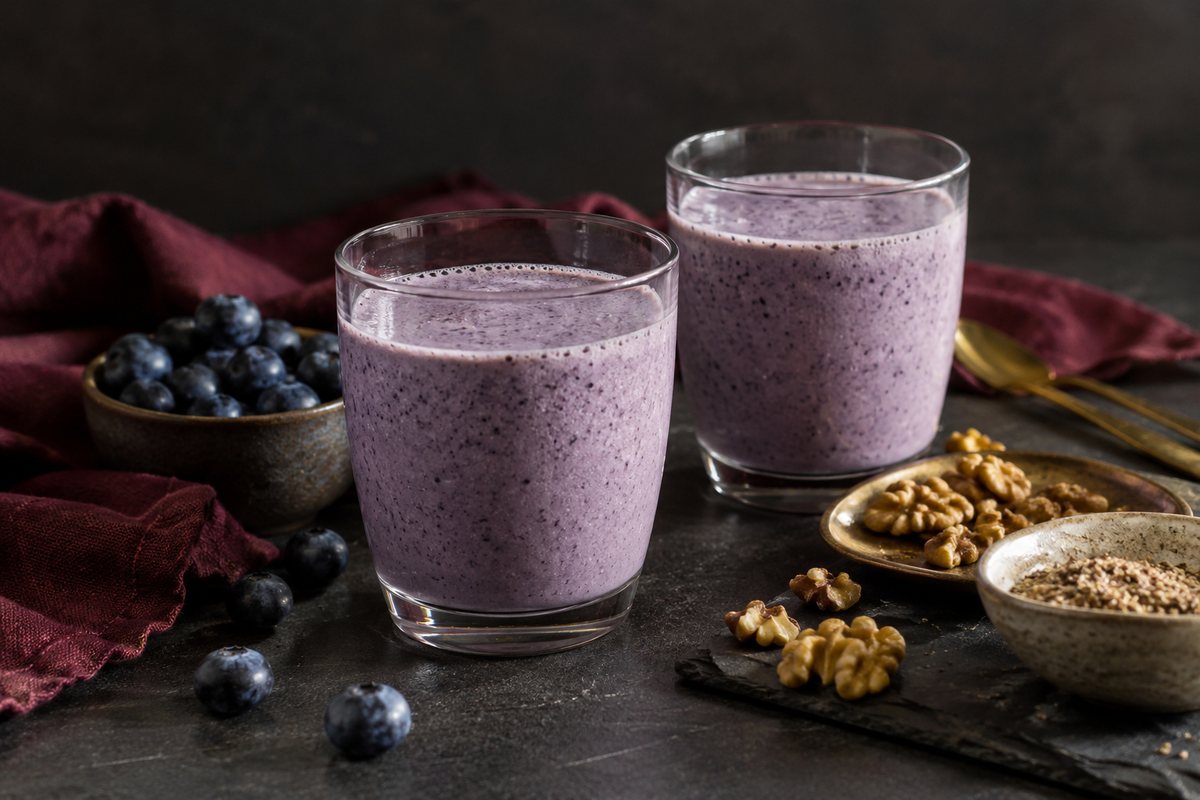
Berry-Spinach "Deep Purple" Smoothie

5 min · 1

Good for: Berries bring antioxidants and vitamin C; flax adds omega-3 (ALA) and fiber; yogurt adds protein, which hair is made from (keratin is a protein).

Ingredients

  • 1 cup frozen mixed berries
  • 1 cup baby spinach
  • 1 tablespoon ground flaxseed
  • ½ cup plain Greek yogurt
  • ¾ cup unsweetened milk of choice

Steps

  1. Blend the spinach and milk first until smooth.
  2. Add the rest and blend 45 seconds.

Safety: Warfarin users: keep vitamin K (spinach) steady. Flax: drink plenty of water and take oral medicines 1–2 hours apart from it, since fiber can slow absorption.

Bright yellow pineapple turmeric smoothie
SmoothieEarly evidence

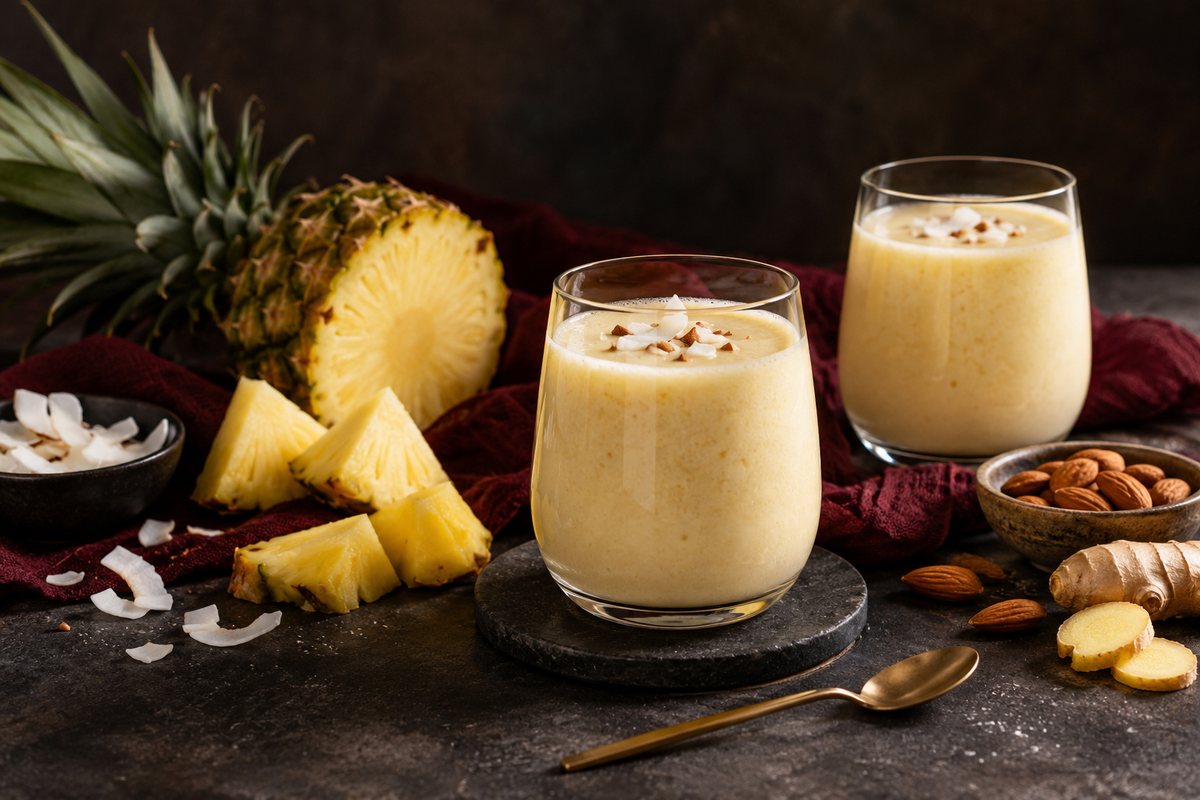
Pineapple-Turmeric Sunshine

5 min · 1

Good for: A bright, anti-inflammatory-leaning food pattern. Pineapple supplies vitamin C and the enzyme bromelain. The pinch of pepper helps the body absorb turmeric's curcumin.

Ingredients

  • 1 cup fresh or frozen pineapple
  • ½ cup unsweetened coconut water
  • ½ cup water or ice
  • ½ teaspoon ground turmeric (or 1-inch fresh, peeled)
  • Pinch of black pepper
  • ½-inch fresh ginger
  • 1 tablespoon hemp hearts (optional, for protein)

Steps

  1. Blend everything on high for 60 seconds.

Safety: Turmeric as a spice is considered safe. In larger amounts it may add to bleeding risk with blood thinners and can bother people with gallbladder problems or reflux. Turmeric supplements have been linked to liver injury, so keep it in the kitchen, not in a pill, unless your doctor okays it. Coconut water is high in potassium: kidney patients ask first. Turmeric stains.

African roots: Turmeric is South Asian, and pineapple is South American. Both are now everyday foods across West and East Africa and the Caribbean.

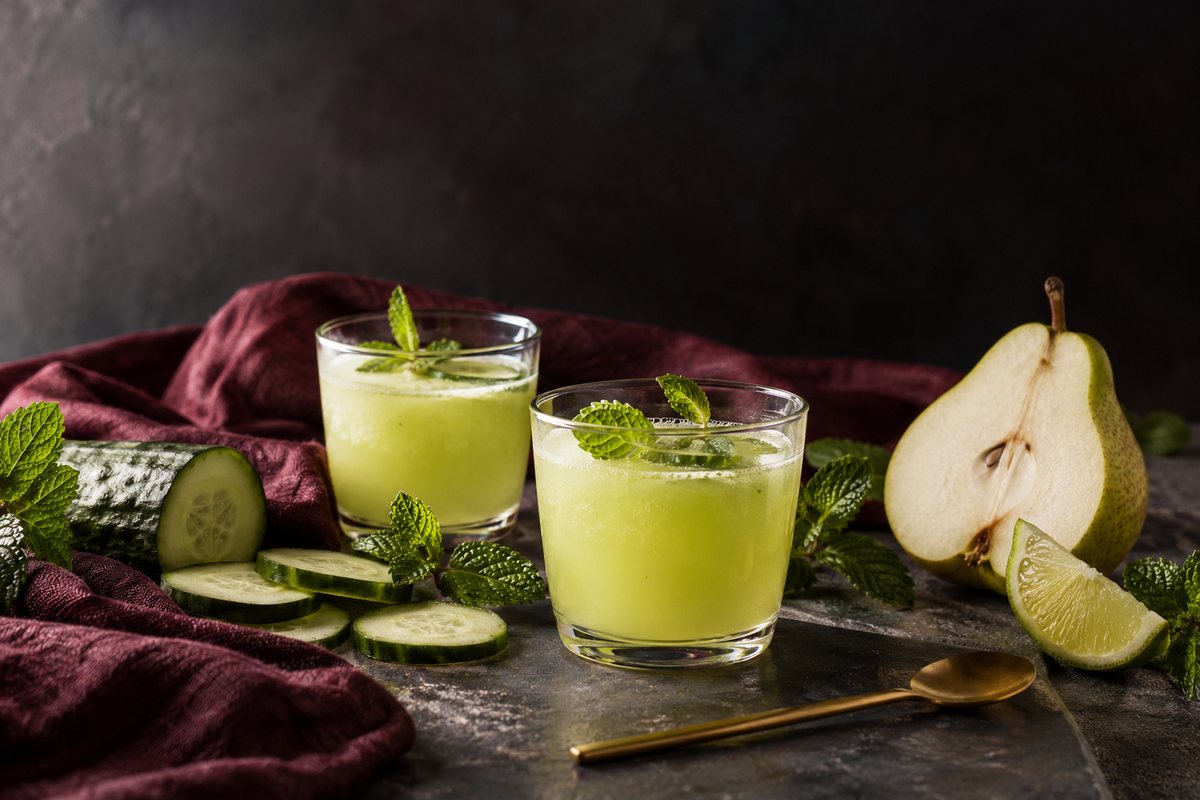
Pitcher of cucumber mint spa water with lime
DrinkHydration

Cucumber-Mint Spa Water / Slush

5 min (or 2 hr chill) · 2–4

Good for: Hydration. Skin, hair and nails all look better when you drink enough, and this is a low-sugar way to drink more water.

Ingredients

  • 1 large cucumber, chopped
  • 10–12 fresh mint leaves
  • Juice of 1 lime
  • 1 cup cold water + 1 cup ice
  • Optional: 1 teaspoon honey

Steps

  1. Blend until slushy.
  2. Or slice cucumber and mint into a pitcher of water and chill 2 hours for spa water.

Safety: Mint can make heartburn worse for some people.

African roots: Cucumber is thought to come from South Asia. Mint drinks are a North African hospitality tradition: Moroccan mint tea (atay) is poured for every guest.

Creamy green avocado banana shake
SmoothieFood-level

Avocado-Banana Protein Shake

5 min · 1

Good for: A meal-style shake with heart-friendly monounsaturated fat, potassium and protein. Good for busy mornings or after a workout.

Ingredients

  • ½ ripe avocado
  • 1 small frozen banana
  • 1 tablespoon natural peanut or almond butter
  • ½ cup plain Greek yogurt (or 1 scoop unflavored or vanilla protein powder)
  • 1 cup unsweetened milk of choice
  • ½ teaspoon cinnamon

Steps

  1. Blend 60 seconds until creamy.

Safety: High in potassium (kidney disease: ask first). Choose protein powders with third-party testing; some carry added sugar or heavy metals.

African roots: Peanuts started in South America, went to Africa with Portuguese traders, and came back to North America with enslaved Africans. The Southern word "goober" comes from the Kikongo word nguba. [Documented]

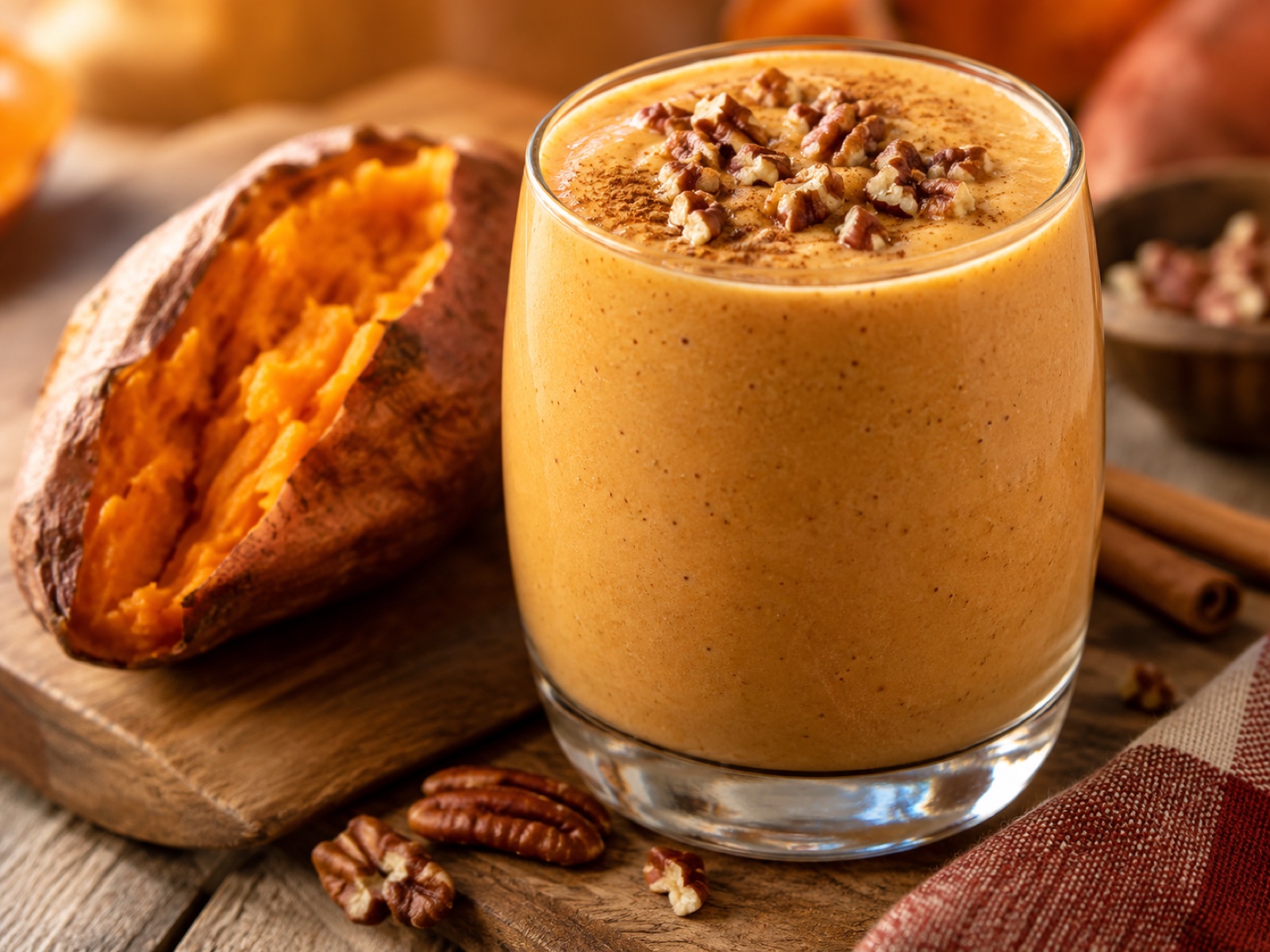
Orange sweet potato pie smoothie topped with crushed pecans
SmoothieFood-level

Sweet Potato Pie Smoothie

5 min (with cooked potato) · 1

Good for: All the flavor of the holiday pie, with fiber and beta-carotene instead of a crust and a cup of sugar. Beta-carotene becomes vitamin A, which skin needs.

Ingredients

  • ¾ cup cooked, cooled sweet potato (skin removed)
  • 1 small frozen banana
  • ½ cup plain Greek yogurt
  • ¾ cup unsweetened milk
  • ½ teaspoon cinnamon, ¼ teaspoon nutmeg, pinch of ginger, ½ teaspoon vanilla
  • 1 teaspoon maple syrup (optional)
  • Topping: 1 tablespoon crushed pecans

Steps

  1. Blend everything except the pecans until silky.
  2. Top with pecans.

Safety: Nothing special for most people. High in potassium for kidney patients.

African roots: Sweet potatoes are American in origin. Enslaved Africans cooked them the way they had cooked West African yams, which is why Southerners still call them "yams." The nutmeg came from Indonesia; Grenada, a Black Caribbean nation, is now called the Isle of Spice for it.

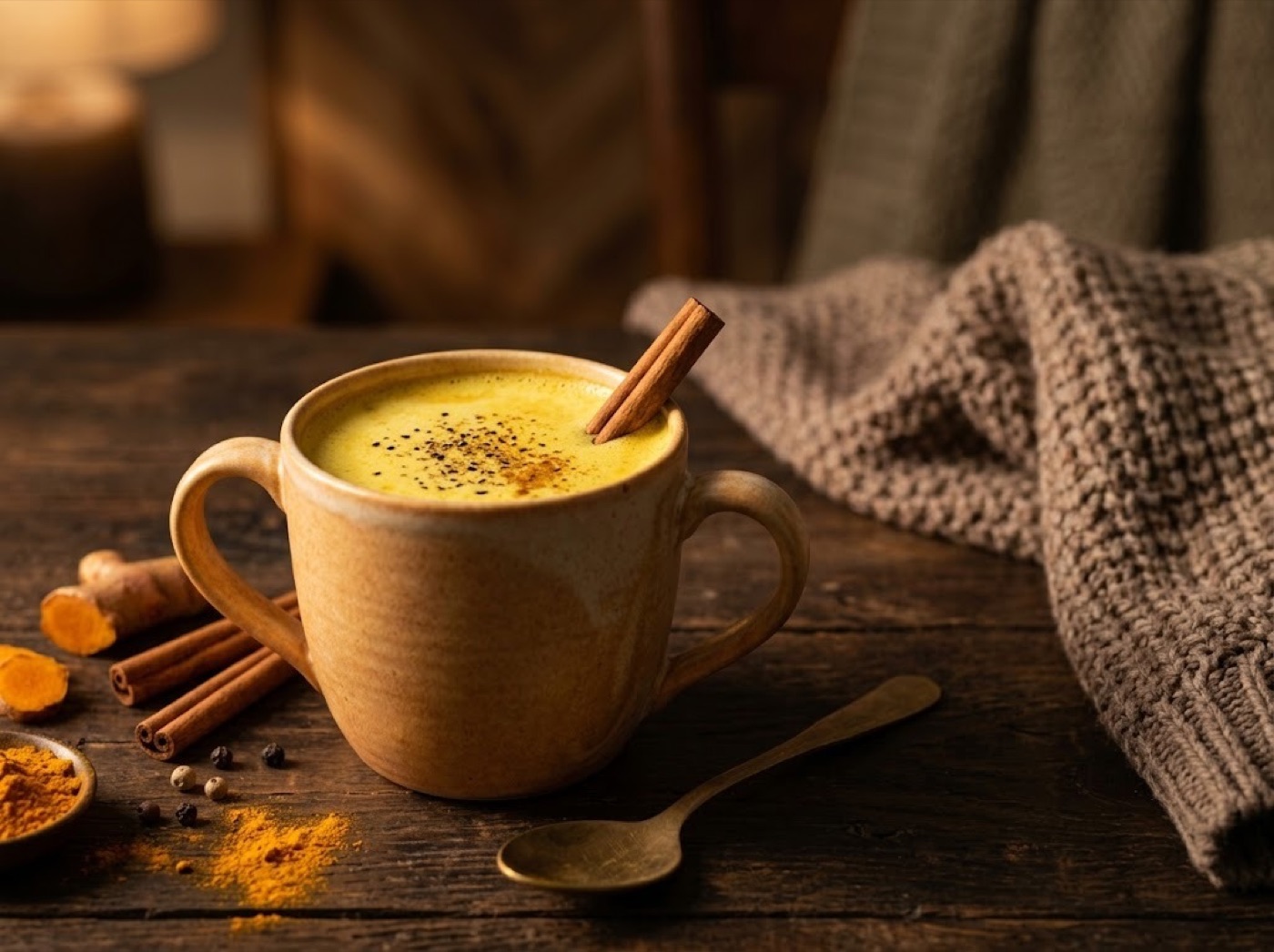
Mug of warm golden turmeric milk with a cinnamon stick
Warm drinkComfort drink

Golden Milk (Warm Turmeric Latte)

8 min · 1

Good for: A calming, caffeine-free evening drink.

Ingredients

  • 1 cup unsweetened milk (oat, almond or dairy)
  • ½ teaspoon ground turmeric
  • ¼ teaspoon cinnamon
  • ⅛ teaspoon ground ginger (or a few fresh slices)
  • Pinch of black pepper
  • 1 teaspoon honey or maple syrup
  • Optional: ½ teaspoon coconut oil

Steps

  1. Whisk everything except the honey in a small pot over medium-low heat until steaming, 4–5 minutes. Do not boil.
  2. Take off the heat, whisk in the honey, and pour through a fine strainer.

Safety: Same turmeric notes as the Sunshine smoothie. Large daily amounts of cassia cinnamon contain coumarin, which can stress the liver; ¼ teaspoon is fine, or use Ceylon cinnamon.

African roots: Golden milk is a South Asian drink (haldi doodh). It is not African, and we say so plainly.

Dried nettle leaf and hibiscus flowers beside a teacup
TeaTraditional use

Nettle-Hibiscus "Crown Tea"

15 min (or overnight) · 1 cup (or 4 cups overnight)

Good for: Nettle leaf is naturally rich in minerals (including iron, calcium and magnesium) and has long been used as a "hair tea." Honest note: no good studies show nettle tea grows hair. It is a pleasant, mineral-rich drink.

Ingredients

  • 1 tablespoon dried nettle leaf
  • 1 teaspoon dried hibiscus
  • ½ teaspoon dried spearmint
  • Optional: ½ teaspoon honey

Steps

  1. Steep covered 10–15 minutes.
  2. For a stronger overnight infusion, use 4 tablespoons nettle in 4 cups water, steep 4–8 hours, strain and refrigerate (up to 2 days).

Safety: Nettle may lower blood pressure and blood sugar and act like a mild water pill: ask first if you take blood pressure medicine, water pills, diabetes medicine or lithium. Nettle leaf has vitamin K (warfarin users: keep it steady and tell your doctor). Hibiscus cautions apply. Avoid in pregnancy. Handle fresh nettle with gloves; it stings.

African roots: Stinging nettle grows across Europe, Asia and North Africa, and the hibiscus is West African. Nettle as a hair rinse is a European folk tradition, not an African one.

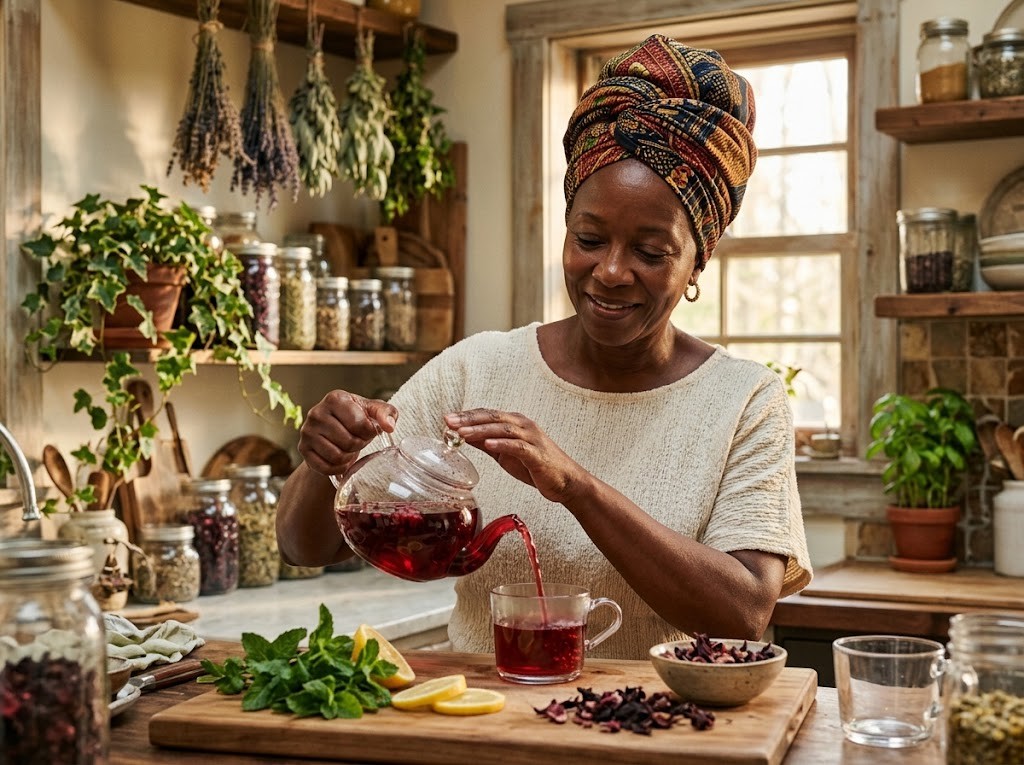
Woman pouring red rooibos tea into a cup
TeaGood swap

Rooibos-Cinnamon Tea

7 min · 1

Good for: A caffeine-free, naturally sweet red tea with antioxidants. A good swap for sweet tea or soda.

Ingredients

  • 1 heaping teaspoon rooibos
  • ½ cinnamon stick (or ¼ teaspoon ground)
  • 1 thin orange slice
  • Optional splash of milk

Steps

  1. Steep 5–7 minutes. Rooibos does not turn bitter, so longer is fine.
  2. Add milk if you like.

Safety: Generally well tolerated at food amounts. Rare liver-injury reports exist with very heavy use; stop and see a doctor if you notice yellow skin or dark urine. Ask first if you have a hormone-sensitive condition and plan to drink large amounts every day.

African roots: Purely African. Rooibos grows only in the Cederberg mountains of South Africa's Western Cape. Khoikhoi and San peoples were drinking it long before it was sold as tea. [Documented]

Fresh spearmint leaves and a cup of mint tea
TeaEarly evidence (PCOS)

Spearmint Tea

7 min · 1

Good for: Refreshing after meals. Small studies (2 cups a day for about a month) suggest spearmint tea may lower androgen (male hormone) levels in women with PCOS and extra facial or body hair. The evidence is early and small.

Ingredients

  • 1 tablespoon fresh spearmint leaves (or 1 teaspoon dried)

Steps

  1. Steep 5–7 minutes.

Safety: Can make heartburn or reflux worse. If you have PCOS or a hormone condition, tell your doctor instead of treating yourself. Pregnancy: normal food amounts are likely fine; ask before drinking a lot.

African roots: Spearmint is from Europe and West Asia. In North Africa it is the heart of Moroccan and Algerian mint tea, poured high for guests.

Ginger lemon tea in a mug with fresh ginger slices
TeaGood evidence (nausea)

Ginger-Lemon Tea

12 min · 1

Good for: Ginger has good evidence for easing nausea (NCCIH). It is also a warming, soothing drink for colds and digestion.

Ingredients

  • 1-inch fresh ginger, thinly sliced
  • 1½ cups water
  • Juice of ½ lemon
  • 1 teaspoon honey

Steps

  1. Simmer the ginger in the water 10 minutes (longer is spicier).
  2. Strain into a mug. Add lemon and honey off the heat.

Safety: Can cause heartburn or gas. Large amounts may add to bleeding risk with blood thinners. Pregnancy: ginger for nausea is common, but ask your OB how much. Never give honey to babies under 1 year.

African roots: Ginger came from Southeast Asia but has been grown in West Africa for centuries. Nigerian ginger drinks and Ghanaian "ginger beer" are close cousins of this tea.

Dried chamomile flowers and lavender buds beside a teacup
TeaMixed evidence

Chamomile-Lavender Sleep Tea

8 min · 1

Good for: A calming bedtime ritual. Good sleep matters for skin repair, stress and blood pressure. Evidence that chamomile improves sleep is mixed, but it is low-risk for most people.

Ingredients

  • 1 tablespoon dried chamomile flowers
  • ¼ teaspoon dried culinary lavender buds
  • Optional: ½ teaspoon lemon balm

Steps

  1. Steep covered 5–8 minutes (lavender turns soapy if steeped too long).
  2. Drink 30–60 minutes before bed.

Safety: Skip chamomile if you are allergic to ragweed, daisies, marigolds or chrysanthemums. It may interact with warfarin and sedatives; ask your pharmacist. Use only food-grade lavender buds and never drink lavender essential oil. Pregnancy: ask first.

African roots: Chamomile comes from Europe and West Asia. Egypt grows much of the world's chamomile today, and it is often said ancient Egyptians prized it [Oral tradition / popular history, not confirmed here].

Green moringa leaf powder and a cup of moringa tea
TeaNutritious green; claims early

Moringa Leaf Tea

6 min · 1

Good for: Moringa leaves are a nutrient-dense green with vitamin C, vitamin A building blocks, calcium and iron. Claims beyond "nutritious leafy green" mostly come from lab and animal studies.

Ingredients

  • 1 teaspoon dried moringa leaf powder or 1 tablespoon dried leaves
  • ½ teaspoon honey
  • Squeeze of lemon
  • Mint or ginger to soften the grassy taste

Steps

  1. Use water just off the boil (about 185 °F).
  2. Steep 5 minutes. Whisk well if using powder.

Safety: Leaves eaten as food appear safe for most adults. Moringa root and bark are NOT safe in pregnancy (they may cause contractions), so pregnant women should avoid moringa products unless their doctor approves. May lower blood sugar and blood pressure (ask if you take those medicines) and may affect levothyroxine absorption. Buy tested products.

African roots: Honest roots: moringa is native to South Asia (India), not Africa. It became a beloved staple across West Africa much later, where it is cooked as a green and called "the never-die tree." Do not call it indigenous African.

Fresh rosemary sprig and mint leaves in a teacup
TeaFood-level

Rosemary-Mint Tea

7 min · 1

Good for: An herby, warming drink. Rosemary is best known for scalp use, not as a drink; as a tea it is a pleasant food-level herb.

Ingredients

  • 1 fresh rosemary sprig (about 3 inches) or 1 teaspoon dried
  • 5 fresh mint leaves

Steps

  1. Steep covered 5–7 minutes.

Safety: Food amounts are safe. Large medicinal amounts are not advised in pregnancy, and people with seizure disorders should avoid large amounts and rosemary essential oil. Never drink rosemary essential oil.

African roots: Rosemary is a Mediterranean herb that grows wild in North Africa too; Morocco and Tunisia are major rosemary growers.

Fenugreek seeds and a cup of golden fenugreek tea
TeaLow-quality evidence

Fenugreek Seed Tea (read cautions)

15 min · 1

Good for: Some studies suggest fenugreek may help lower blood sugar after meals, but NCCIH notes many of those studies were low quality. It is also popular in hair rinses; there is no strong human evidence it grows hair. Tastes like maple and celery.

Ingredients

  • 1 teaspoon whole fenugreek seeds
  • 1½ cups water
  • Optional: cinnamon stick and honey

Steps

  1. Lightly crush the seeds.
  2. Simmer 8–10 minutes, then steep 5 more. Strain.

Safety: Do not use in pregnancy beyond normal food amounts; NCCIH links larger amounts to birth defects, and it may stimulate the uterus. May lower blood sugar (risk of lows on diabetes medicine). May add to bleeding risk with warfarin and other blood thinners. Can cause gas, bloating and a maple smell in sweat and urine. Allergy possible if you react to peanuts, chickpeas or other legumes. Limit to 1 cup a day, not daily for long stretches, unless your doctor says otherwise.

African roots: Fenugreek grew first around the Mediterranean and Near East, and Ethiopia and Eritrea have used it for a very long time (abish), including in berbere spice blends and fasting dishes. It is also common in Indian and Caribbean cooking.

Woman with a big afro massaging rosemary oil into her scalp
HairSome evidence (small trial)

Rosemary Oil Infusion (warm-infused)

2–3 hr (mostly hands-off) · 1 cup oil

Good for: A small 2015 trial (about 100 men, 6 months) found rosemary oil worked about as well as 2% minoxidil for pattern hair loss, with less itching. It was small, men only, and has not been widely repeated. Think "promising," not "proven," and expect any change to take months.
Ingredients

  • 1 cup carrier oil (jojoba, grapeseed, sweet almond or light olive oil)
  • 4–5 sprigs fresh rosemary, washed and completely dried (water causes mold), or ¼ cup dried rosemary

Steps

  1. Put the rosemary and oil in a heat-safe jar. Set the jar in a pot of water on the lowest heat for 2–3 hours, keeping the oil warm, not hot (under 120 °F, no bubbling).
  2. Cool, then strain through cheesecloth into a clean dark glass bottle.
  3. Label with the date. Store cool and dark; use within 3 months (1 month if made with fresh herbs). Throw it out if cloudy, fuzzy or sour-smelling.
  4. To use: massage 5–10 drops into the scalp 2–3 times a week. Leave a few hours or overnight, then wash.

Safety: Patch test first: dab a coin-sized amount inside your forearm, cover, wait 24–48 hours. Any redness, itching, burning or bumps: wash off and do not use. Nut allergy: skip sweet almond oil. Stop if itching or flaking increases. Sudden shedding, crown thinning or a receding hairline needs a dermatologist (CCCA and traction alopecia can scar for good).

African roots: Rosemary is Mediterranean, also grown in North Africa. Oiling the scalp, though, is an old African and diaspora practice: West African women have long used shea and palm kernel oil on hair. [Documented for shea]

Spray bottle of rosemary water beside fresh rosemary
HairNo direct evidence

Rosemary Water Rinse

1 hr 15 min · 3 cups

Good for: A light, oil-free choice for people who find oils heavy. Note: the minoxidil comparison used rosemary oil, not water. Evidence for rosemary water itself is lacking.
Ingredients

  • 3 cups water
  • 3 fresh rosemary sprigs (or 2 tablespoons dried)
  • Optional: 1 tablespoon dried mint

Steps

  1. Boil the water, add the herbs, cover and simmer on low 10 minutes.
  2. Steep covered until cool, about 1 hour.
  3. Strain into a spray bottle. Refrigerate; use within 7 days.
  4. To use: after washing, spray onto the scalp and massage in. Leave in or rinse. Or use as a light daily refresher.

Safety: Homemade water mixes spoil fast; toss after 7 days or if cloudy. Patch test first: dab a coin-sized amount inside your forearm, cover, wait 24–48 hours. Any redness, itching, burning or bumps: wash off and do not use.

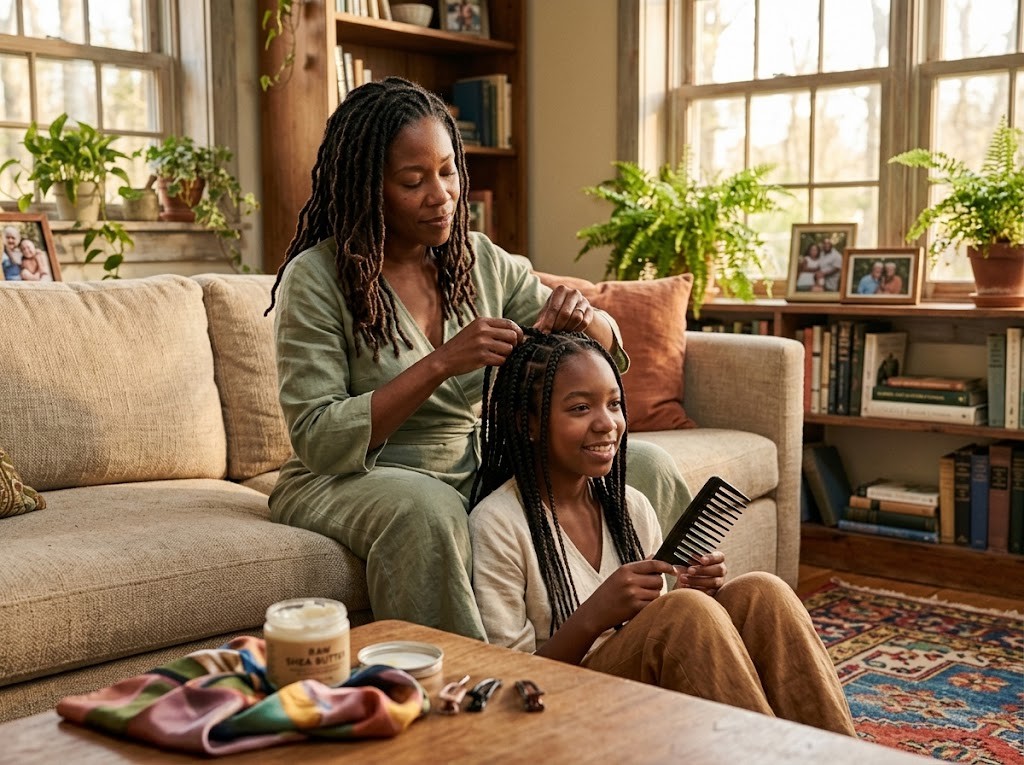
Mother applying warm oil to her daughter's hair before braiding
HairSome evidence (coconut oil)

Classic Hot Oil Treatment

35 min · 1 treatment

Good for: Coconut oil can soak into the hair shaft and reduce protein loss during washing; olive and castor oil add softness and shine. Helps dry, coily hair feel more manageable. Use every 1–2 weeks.

Ingredients

  • 2 tablespoons extra-virgin olive oil
  • 1 tablespoon coconut oil
  • 1 tablespoon castor oil (optional; thick, adds slip)
  • Use more for long or thick hair, same ratio

Steps

  1. Warm the oil by setting a small jar of it in a bowl of hot tap water for 5 minutes. Test on your wrist: warm, never hot. Do not microwave (hot spots burn).
  2. Apply to damp, sectioned hair, focusing on the ends and scalp.
  3. Cover with a plastic cap and a warm towel for 20–30 minutes.
  4. Shampoo (it may take 2 rounds) and condition as usual.

Safety: Burns are the main risk; always wrist-test. Coconut oil can cause bumps or flaking in some scalps (seborrheic dermatitis can get worse with oils); stop if that happens.

African roots: Castor is native to East Africa (the Ethiopia region), and castor oil was used in ancient Egypt. Jamaican black castor oil is the Caribbean version, roasted before pressing. [Documented: castor origin; Egyptian use]
Clear homemade flaxseed and aloe curl gel in a jar
HairTraditional / practical

Aloe-Flax Curl Gel

15 min · About 1½ cups

Good for: Soft hold and definition without the crunchy alcohol in some gels. Aloe adds moisture.
Ingredients

  • ¼ cup whole flaxseeds
  • 2 cups water
  • 2 tablespoons pure aloe vera gel (store-bought, no alcohol)
  • Optional: 3 drops rosemary or lavender essential oil (about 0.5%)

Steps

  1. Simmer the flaxseed and water, stirring, 6–8 minutes until it trails off the spoon like egg white.
  2. Strain right away while hot through a mesh bag or knee-high stocking (it gets hard to strain when cool).
  3. Cool, then stir in the aloe and essential oil. Store in a clean jar in the fridge; use within 7 days.
  4. To use: apply to wet hair for wash-and-gos, twist-outs or edges.

Safety: No preservative means a short shelf life. Throw it out if the smell changes or mold appears. Some people react to aloe. Patch test first: dab a coin-sized amount inside your forearm, cover, wait 24–48 hours. Any redness, itching, burning or bumps: wash off and do not use.

African roots: Aloe vera likely came from the Arabian Peninsula, but Africa is home to hundreds of aloe species, and aloe has long been used on skin across East and Southern Africa.

Fingertips massaging oil along a part in natural hair
HairSome evidence (massage)

Scalp Massage Oil Blend

5 min · 1 oz bottle

Good for: Scalp massage itself shows some benefit in small studies (thicker-looking hair after months of daily massage), and it is relaxing. The oils add slip and moisture.

Ingredients

  • 1 tablespoon jojoba oil (closest to the scalp's own oil)
  • 2 teaspoons grapeseed oil
  • 1 teaspoon castor oil
  • 4 drops rosemary essential oil
  • 2 drops peppermint essential oil (skip if sensitive; it tingles)
  • 2 drops lavender essential oil
  • Total: 8 drops in 1 oz, about 1.3%, a safe daily scalp strength

Steps

  1. Add the carrier oils to a 1-oz dark glass dropper bottle. Add the essential oils. Cap and roll to mix.
  2. Label with ingredients and date. Use within 6 months.
  3. To use: part your hair, put a few drops along the parts, and massage with your fingertips (not nails) in small circles for 4–5 minutes, 3–4 times a week.

Safety: Patch test for 48 hours. Peppermint oil: keep away from eyes, not on broken skin, not for young children. Pregnancy: use lavender only at 1% or ask first. Never swallow essential oils.

Braided sections of hair coated with a chebe paste
HairTraditional use only

Chebe-Style Length-Retention Mix

10 min + days in braids · 1 application

Good for: Coats and protects fragile ends, plus the benefit of low-manipulation protective styling. It does not make hair grow from the root; it helps you keep the length you already have.

Ingredients

  • 1 tablespoon chebe powder (from a seller who lists ingredients)
  • 2 tablespoons shea butter, softened
  • 1 tablespoon jojoba or olive oil
  • 1–2 tablespoons water or aloe gel (for a creamier paste)

Steps

  1. Mix the shea and oil until smooth. Stir in the chebe, then water or aloe a little at a time until you have a soft paste. Use within 1 week if water or aloe is added (refrigerate), or 3 months without water.
  2. On damp, clean hair, apply to the length of each section, avoiding the scalp. Braid or twist the section.
  3. Leave in a few days up to a week, then wash out well.

Safety: Patch test. Powder builds up and is hard to rinse; clarify fully. Keep it off the scalp (itching, buildup). Do not braid tight: tight styles are a leading cause of traction alopecia. Some unregulated powders may be contaminated, so buy only from sellers who list ingredients.

African roots: Straight from Chad. Basara Arab women apply chebe (ground seeds generally identified as Croton zambesicus, mixed with oils) to braided hair, not the scalp. The shea in this mix is West African. Benefits are traditional and anecdotal; no clinical trials exist. [Documented practice; benefits untested]

Bowl of oat and honey face mask beside a jar of honey
SkinOatmeal: recognized protectant

Oat-Honey Calming Mask

20 min · 1

Good for: Colloidal oatmeal is a recognized skin protectant that soothes dry, itchy skin. Honey is a natural humectant (it draws in moisture).

Ingredients

  • 2 tablespoons finely ground plain oats (blend old-fashioned oats to a powder)
  • 1 tablespoon raw honey
  • 1 tablespoon plain yogurt (or water for dairy-free)

Steps

  1. Mix to a paste.
  2. Apply to a clean face, avoiding the eyes. Leave 10–15 minutes.
  3. Rinse with lukewarm water, pat dry, moisturize.

Safety: Skip if allergic to oats or bee products. Gluten-sensitive skin: use certified gluten-free oats. For acne, dark spots, eczema or keloids, see a dermatologist; irritating masks can make dark spots worse. Patch test first: dab a coin-sized amount inside your forearm, cover, wait 24–48 hours. Any redness, itching, burning or bumps: wash off and do not use.

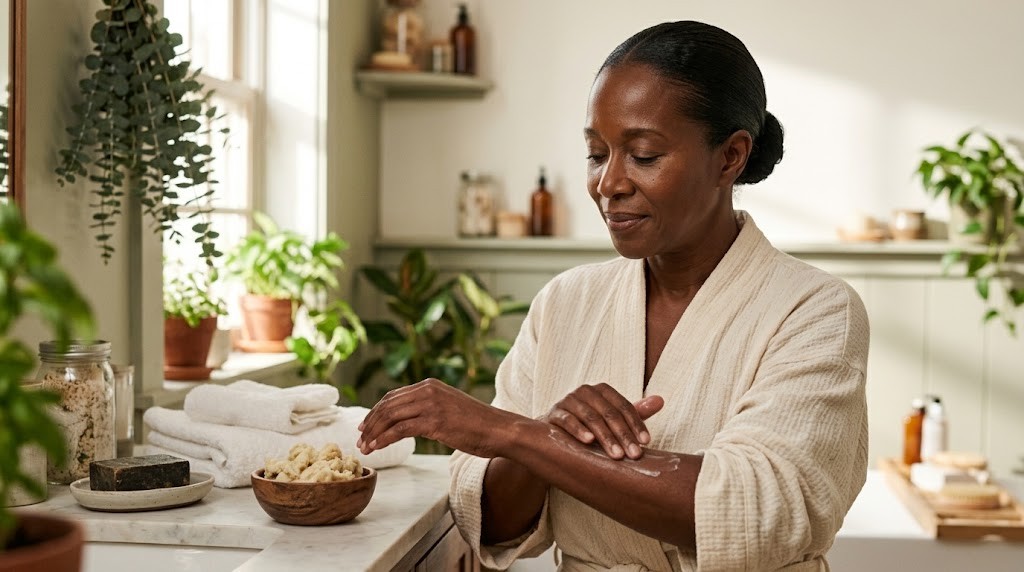
Woman in her 40s scooping whipped shea body butter from a jar
SkinTraditional use, low risk

Whipped Shea Body Butter

45 min · About 5 oz

Good for: Softens dry skin and helps prevent ashiness. Best on damp skin right after a shower, and on elbows, knees, heels, cuticles and nails.

Ingredients

  • ½ cup raw unrefined shea butter
  • 2 tablespoons coconut oil
  • 2 tablespoons jojoba or sweet almond oil
  • 1 teaspoon vitamin E oil (optional; slows the oils going rancid)
  • Optional: 12–18 drops lavender or frankincense essential oil (about 1–1.5%)

Steps

  1. Melt the shea and coconut oil gently in a double boiler on low.
  2. Take off the heat and stir in the liquid oils (and vitamin E). Chill 20–30 minutes until it starts to firm but is still soft.
  3. Add the essential oil. Whip with a hand mixer 3–5 minutes until fluffy.
  4. Spoon into a clean jar. Store cool (it melts above about 76 °F). Use within 6 months.

Safety: Shea comes from a tree nut, but true shea allergy is rare; nut-allergy users patch test and skip sweet almond oil. It can clog pores on the face for some people; best for the body.

African roots: Pure West African heritage. Shea (Vitellaria paradoxa) grows across the savanna belt from Senegal to Uganda, and women gather the nuts and make the butter, often in cooperatives. Frankincense comes from Boswellia trees in Somalia, Ethiopia and Arabia. [Documented]

Jar of brown sugar body scrub with a wooden spoon
SkinPractical

Brown Sugar Body Scrub

5 min · About ¾ cup

Good for: Gentle exfoliation for smoother body skin; the oil leaves skin moisturized. Use once or twice a week.

Ingredients

  • ½ cup brown sugar
  • ¼ cup jojoba or olive oil
  • 1 tablespoon honey
  • Optional: 6 drops essential oil
  • Optional: 1 teaspoon ground coffee

Steps

  1. Stir everything together. Store in a jar with a lid; keep water out (use a clean spoon). Use within 1 month.
  2. To use: on wet skin in the shower, rub gently in circles for 1 minute and rinse.

Safety: Body only, never the face: sugar crystals are too rough for facial skin and can worsen dark spots. Not on freshly shaved or waxed skin, broken skin or active eczema. The shower floor gets slippery.

African roots: Coffee was first found in the highlands of Ethiopia, where the coffee ceremony (buna) is still a daily family ritual. [Documented: coffee origin]

Small bowl of golden turmeric and yogurt face mask
SkinLab evidence only

Turmeric Brightening Mask (it stains)

15 min · 1

Good for: Turmeric's curcumin has antioxidant and anti-inflammatory effects in lab studies; evidence for visible brightening on human skin is limited.

Ingredients

  • ½ teaspoon ground turmeric
  • 1 tablespoon plain yogurt
  • 1 teaspoon honey
  • 1 teaspoon chickpea flour (besan) to thicken

Steps

  1. Mix to a paste.
  2. Apply a thin layer to clean skin. Leave 10 minutes, no longer than 15.
  3. Rinse with lukewarm water, then wash with a gentle cleanser.

Safety: Turmeric stains skin, nails, towels, grout and clothes yellow-orange. Use an old towel and gloves. Any tint usually fades in a day; a cotton pad with a little milk or oil helps lift it. Patch test 24 hours (turmeric can cause allergic rashes). For dark spots, the AAD lists sunscreen, vitamin C, niacinamide, azelaic acid and retinoids as better-tested options.

African roots: A South Asian tradition (haldi), carried into the Caribbean by Indian communities in Trinidad, Guyana and Jamaica. Not African in origin.

Four labeled glass jars of homemade herbal tea blends
BlendFood-level

Homemade Herbal Tea Blend Jars

10 min · 12–16 cups per jar

Good for: Ready-made tea jars so the healthy choice is the easy one. Use 1 heaping teaspoon per cup. Store airtight, away from light; use within 6 months.

Ingredients

  • Crown Blend (hair-day ritual): ½ cup nettle leaf, 2 Tbsp hibiscus, 2 Tbsp spearmint, 1 Tbsp rosemary. Steep 10 min.
  • Heart Hearth: ½ cup rooibos, 2 Tbsp hibiscus, 2 Tbsp dried orange peel, 3 crushed cinnamon sticks. Steep 7 min.
  • Rest Easy: ½ cup chamomile, 2 Tbsp lemon balm, 1 Tbsp culinary lavender. Steep 6 min.
  • Warm Belly: ¼ cup dried ginger pieces, 2 Tbsp fennel seed, 2 Tbsp peppermint, 1 Tbsp lemon peel. Steep 8 min.

Steps

  1. Mix each blend in a bowl.
  2. Spoon into labeled airtight jars with the date and the caution written on the label.

Safety: Crown Blend: not in pregnancy; ask if on blood pressure, diabetes, water-pill, lithium or warfarin medicines. Heart Hearth: hibiscus plus BP medicines; not in pregnancy. Rest Easy: ragweed allergy; sedative or warfarin users ask first. Warm Belly: peppermint may worsen reflux.

African roots: Two of these jars are built on African plants: hibiscus (West Africa) and rooibos (South Africa).

Jar of mixed flax, pumpkin, sunflower and sesame seeds
BlendSeed cycling: no evidence

Daily Four-Seed Mix (instead of "seed cycling")

5 min · About 14 servings

Good for: Seed cycling (flax and pumpkin in the first half of your cycle, sesame and sunflower in the second) claims to "balance hormones." There are no good-quality studies showing it does. The seeds themselves are healthy (fiber, healthy fats, zinc, magnesium, vitamin E, selenium), so the simple choice is to eat all four every day.

Ingredients

  • ½ cup ground flaxseed
  • ½ cup raw pumpkin seeds
  • ½ cup raw sunflower seeds
  • ½ cup sesame seeds

Steps

  1. Stir together and store in a sealed jar in the fridge (ground flax goes rancid at room temperature). Use within 1 month.
  2. Serving: 2 tablespoons a day on oatmeal, yogurt, salads or in smoothies.

Safety: Sesame is a major allergen. Seeds are calorie-dense; 2 tablespoons is a serving. Flax: drink water and take medicines 1–2 hours apart.

African roots: Sesame came to the Carolinas with enslaved Africans and is still called "benne" in Gullah Geechee cooking (benne wafers), a word traced to West African languages. [Documented]

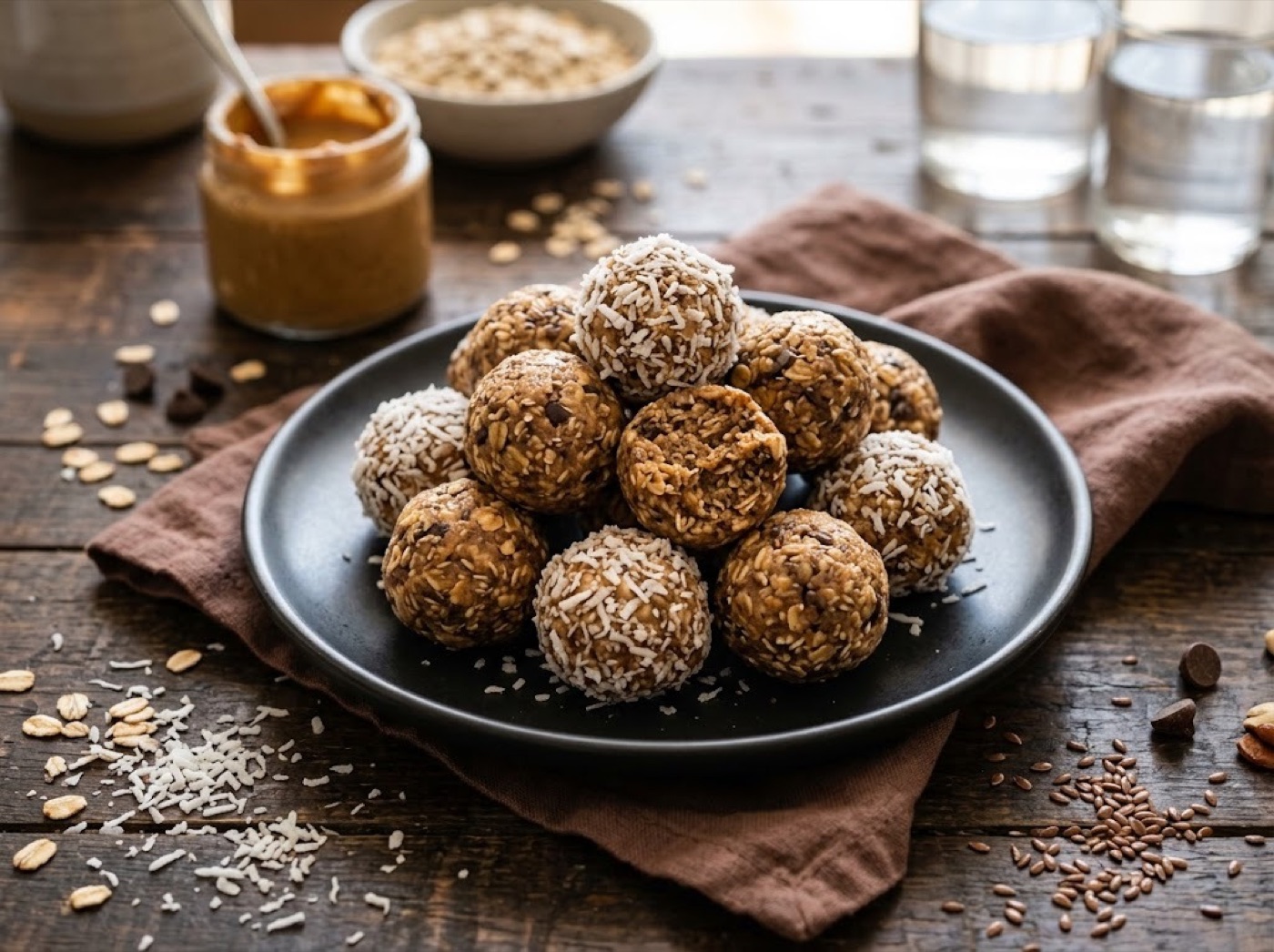
Plate of oat and peanut butter energy bites
BlendFood-level

No-Bake Energy Bites

30 min · 16 bites

Good for: A carry-along snack with fiber, protein and healthy fats that beats a pack of cookies. 2 bites = 1 snack.

Ingredients

  • 1 cup old-fashioned oats
  • ½ cup natural peanut or almond butter
  • ⅓ cup honey or date paste
  • ¼ cup ground flaxseed
  • ¼ cup unsweetened shredded coconut
  • ¼ cup dark chocolate chips (70%+) or chopped dates
  • 1 tsp vanilla, ½ tsp cinnamon, pinch of salt

Steps

  1. Stir everything together in a bowl.
  2. Chill 20 minutes.
  3. Roll into 1-inch balls. Keep in the fridge up to 1 week or the freezer up to 3 months.

Safety: Nut allergy: use sunflower seed butter. Contains honey; not for babies under 1.

African roots: Cocoa is from South America, but West Africa (Côte d'Ivoire and Ghana) now grows most of the world's cocoa. Dates have been grown in North Africa and Egypt for thousands of years.

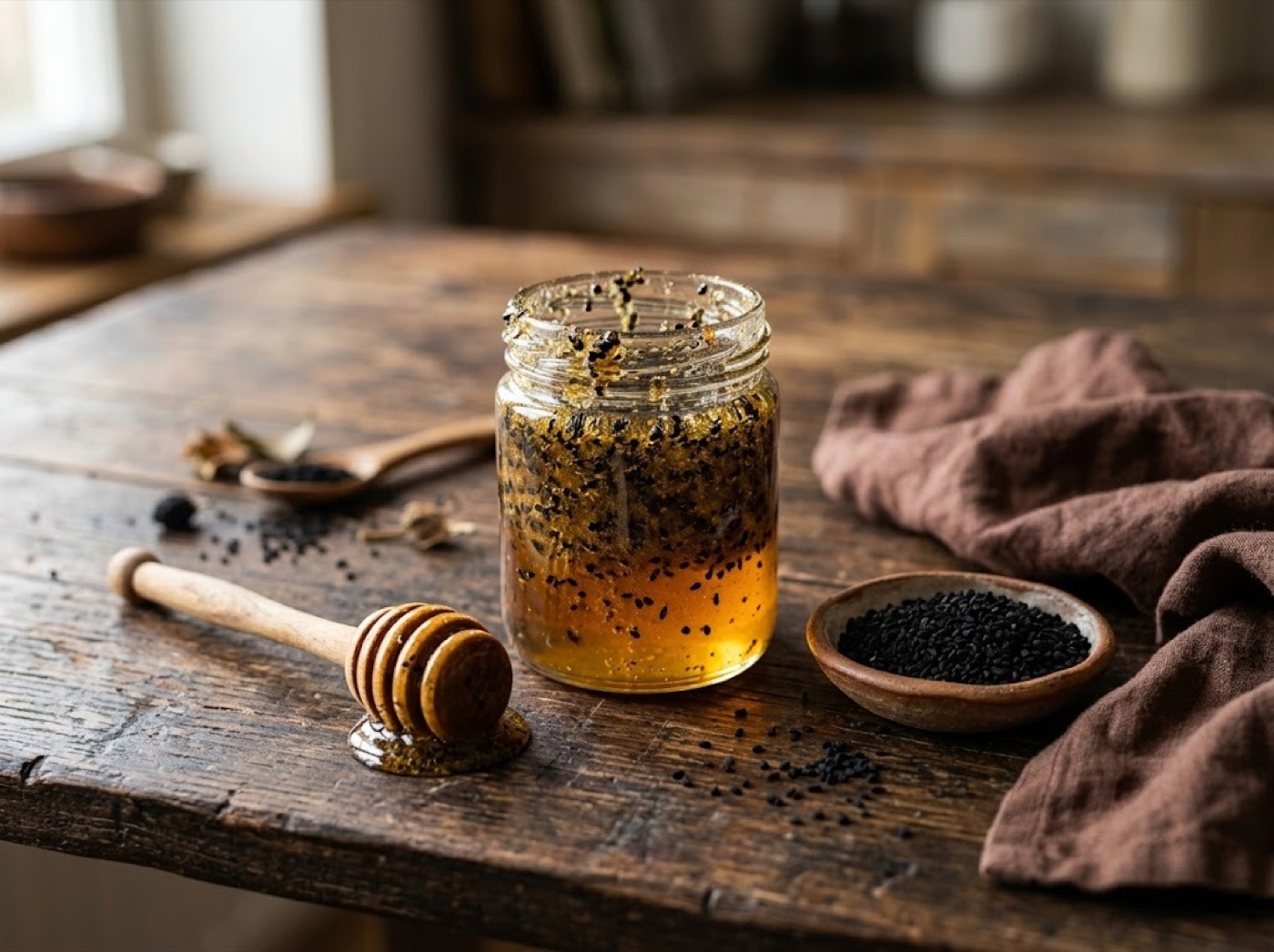
Jar of honey mixed with crushed black seeds
BlendCondiment; studies used extracts

Black Seed Honey

5 min + 24 hr rest · ½ cup

Good for: A food condiment, not a remedy. Small studies of concentrated black seed suggest possible modest effects on blood pressure, blood sugar and cholesterol, but they used concentrated doses, not a teaspoon of honey.

Ingredients

  • ½ cup raw honey
  • 1 tablespoon whole black seed (Nigella sativa, also called kalonji or black cumin), lightly toasted and crushed
  • Optional: ¼ teaspoon ground cinnamon

Steps

  1. Toast the seeds in a dry pan 1–2 minutes until fragrant.
  2. Cool, then crush in a mortar or spice grinder.
  3. Stir into the honey. Let sit 24 hours. Store sealed at room temperature; use within 6 months.
  4. To use: ½–1 teaspoon in tea, on toast or in yogurt.

Safety: Concentrated black seed (oil, capsules) may lower blood pressure and blood sugar and may slow clotting; ask first if on those medicines or blood thinners. Avoid black seed oil and supplements in pregnancy. Black seed oil on skin can cause allergic rashes. Honey is sugar: count it if you have diabetes. Never give honey to babies under 1 year.

African roots: Black seed has a long history in North and East African, Middle Eastern and South Asian kitchens. Ethiopians use it (tikur azmud) in berbere and in spiced butter.

Small jar of homemade salt-free seasoning with smoked paprika and thyme
PantryLess sodium = lower BP

All-Purpose Salt-Free Soul Seasoning

5 min · About ½ cup

Good for: The jar that replaces seasoning salt and bouillon cubes in every recipe on this page. All the flavor, none of the sodium.

Ingredients

  • 2 Tbsp smoked paprika
  • 1 Tbsp garlic powder
  • 1 Tbsp onion powder
  • 2 tsp dried thyme
  • 1 tsp black pepper
  • 1 tsp dried oregano
  • ½ tsp cayenne
  • ½ tsp ground allspice

Steps

  1. Mix and store in a jar with a tight lid.

Safety: None for most people.

African roots: Allspice is Jamaican, the backbone of jerk. Cayenne and paprika are American peppers that West African cooks took up so fully that hot pepper became central to West African food.

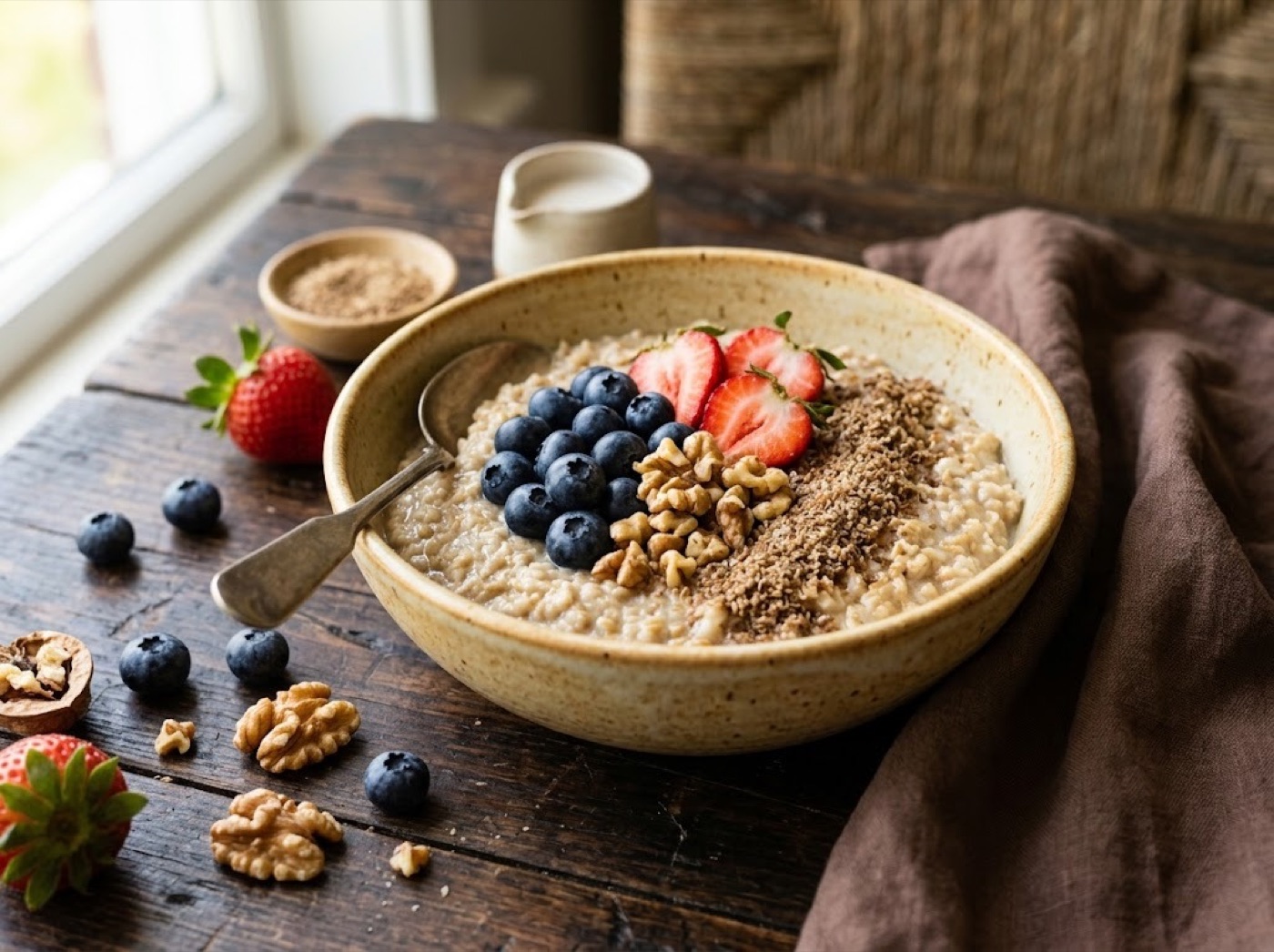
Bowl of oatmeal topped with berries, walnuts and flax
BreakfastStrong (oats & cholesterol)

Oatmeal with Flax & Berries

10 min · 1

Good for: Oats contain beta-glucan, a soluble fiber shown to help lower LDL cholesterol (an FDA-authorized health claim). Walnuts and flax add plant omega-3s.

Ingredients

  • ½ cup old-fashioned oats
  • 1 cup water or milk
  • Pinch of cinnamon
  • 1 Tbsp ground flaxseed
  • ½ cup berries
  • 1 Tbsp chopped walnuts
  • 1 tsp maple syrup (optional)

Steps

  1. Simmer the oats in the liquid 5 minutes, stirring.
  2. Off the heat, stir in the flax and cinnamon. Top with berries, walnuts and maple.

Safety: Flax: drink water and keep medicines 1–2 hours apart.

African roots: Warm grain porridge is a West African breakfast too: millet, sorghum and fonio porridges (like Ghanaian hausa koko). Try fonio in place of oats.

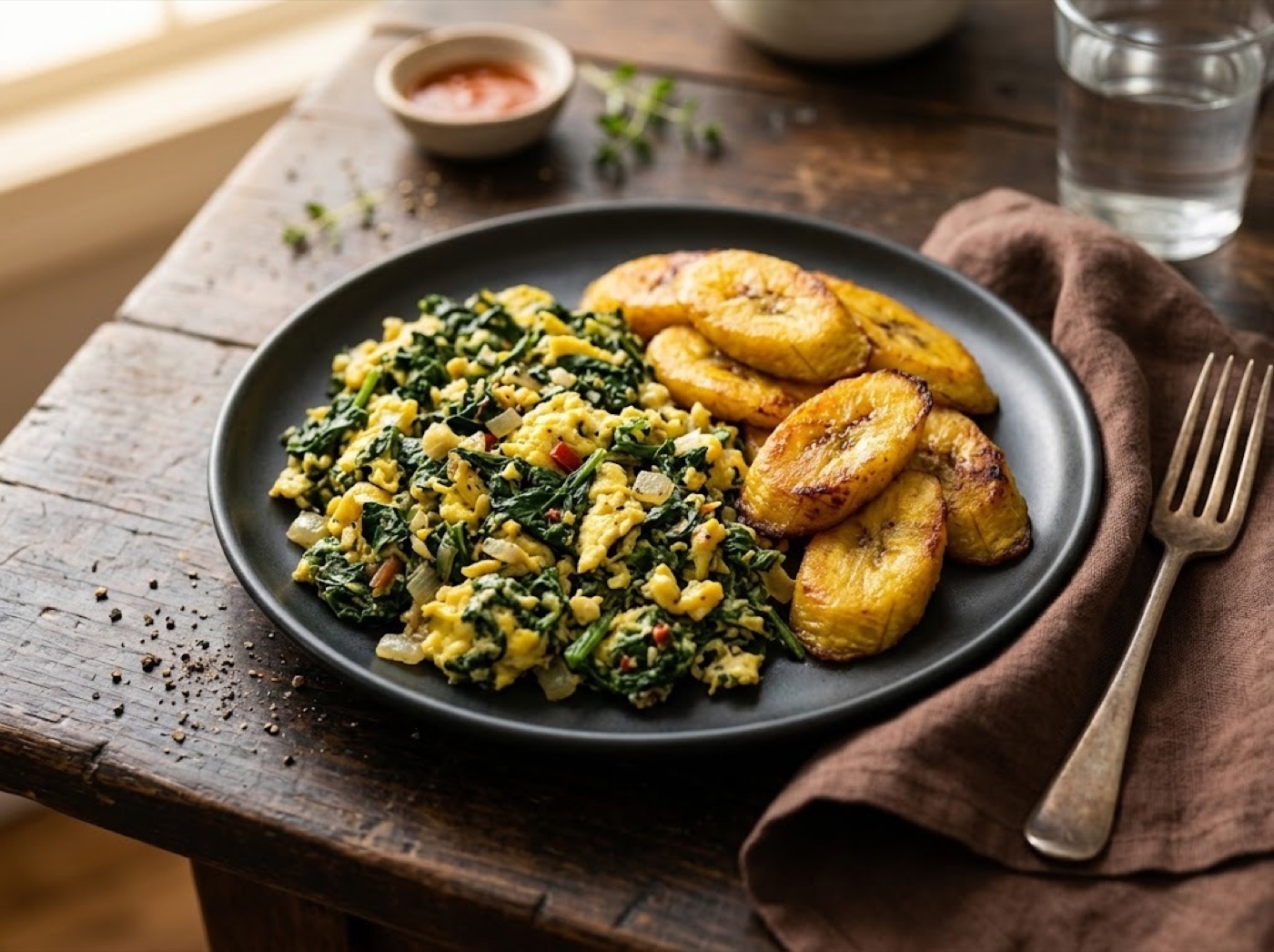
Plate of callaloo and egg scramble with baked plantain slices
BreakfastFood-level

Caribbean Callaloo & Egg Scramble with Plantain

20 min · 2

Good for: Protein and iron-rich greens; eggs supply biotin and protein for hair. The plantain is baked, not fried.

Ingredients

  • 1 tsp olive oil
  • ½ small onion, diced
  • 1 garlic clove
  • ½ scotch bonnet (seeds removed) or pinch of red pepper flakes
  • 2 cups chopped callaloo or spinach
  • 1 Roma tomato, diced
  • 4 eggs (or 2 eggs + 4 whites)
  • ½ tsp salt-free seasoning
  • 1 ripe plantain

Steps

  1. Slice the plantain on the diagonal; air fry or bake at 400 °F for 12–15 minutes, flipping once, with a light oil spray.
  2. Sauté the onion, garlic and pepper in oil 3 minutes. Add tomato and greens; cook 3 minutes until wilted.
  3. Pour in the beaten eggs with seasoning; stir gently until just set. Serve with plantain.

Safety: Wear gloves with scotch bonnet. Warfarin users: keep greens steady.

African roots: Callaloo traces back to West African leaf stews made with amaranth, taro or cocoyam leaves. Plantains came from Southeast Asia long ago and became a staple of West and Central Africa (kelewele, dodo) before reaching the Caribbean.

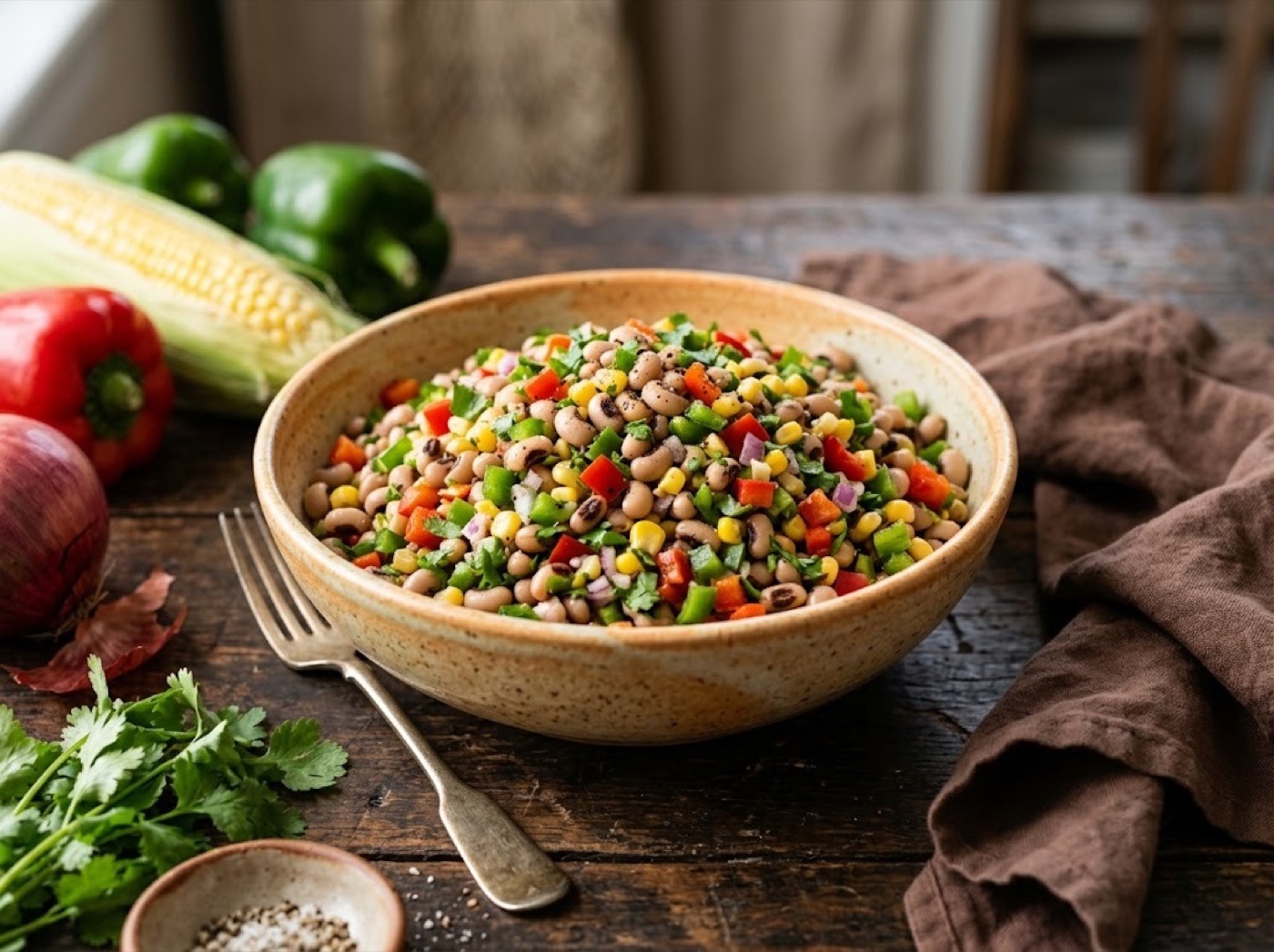
Bowl of colorful black-eyed pea salad with peppers and corn
LunchStrong (legumes, fiber)

Black-Eyed Pea "Texas Caviar" Salad

15 min + 30 min chill · 4

Good for: Beans bring fiber, plant protein, folate and potassium. High-fiber eating is linked to lower heart disease and colorectal cancer risk.

Ingredients

  • 2 cans (15 oz) no-salt-added black-eyed peas, drained and rinsed (or 3 cups cooked)
  • 1 red bell pepper, 1 green bell pepper, ½ red onion, 1 cup cherry tomatoes, all diced
  • 1 cup corn
  • ¼ cup chopped cilantro or parsley
  • 1 jalapeño, minced
  • Dressing: 3 Tbsp olive oil, 3 Tbsp red wine vinegar, juice of 1 lime, 1 tsp cumin, 1 garlic clove, black pepper

Steps

  1. Whisk the dressing.
  2. Toss with everything. Chill 30 minutes. Keeps 4 days.

Safety: None special. Choose no-salt-added cans and rinse them.

African roots: Black-eyed peas (cowpeas) were domesticated in West Africa and crossed the Atlantic with enslaved Africans. They live on in New Year's hoppin' John and in Nigerian akara and moin moin. [Documented]

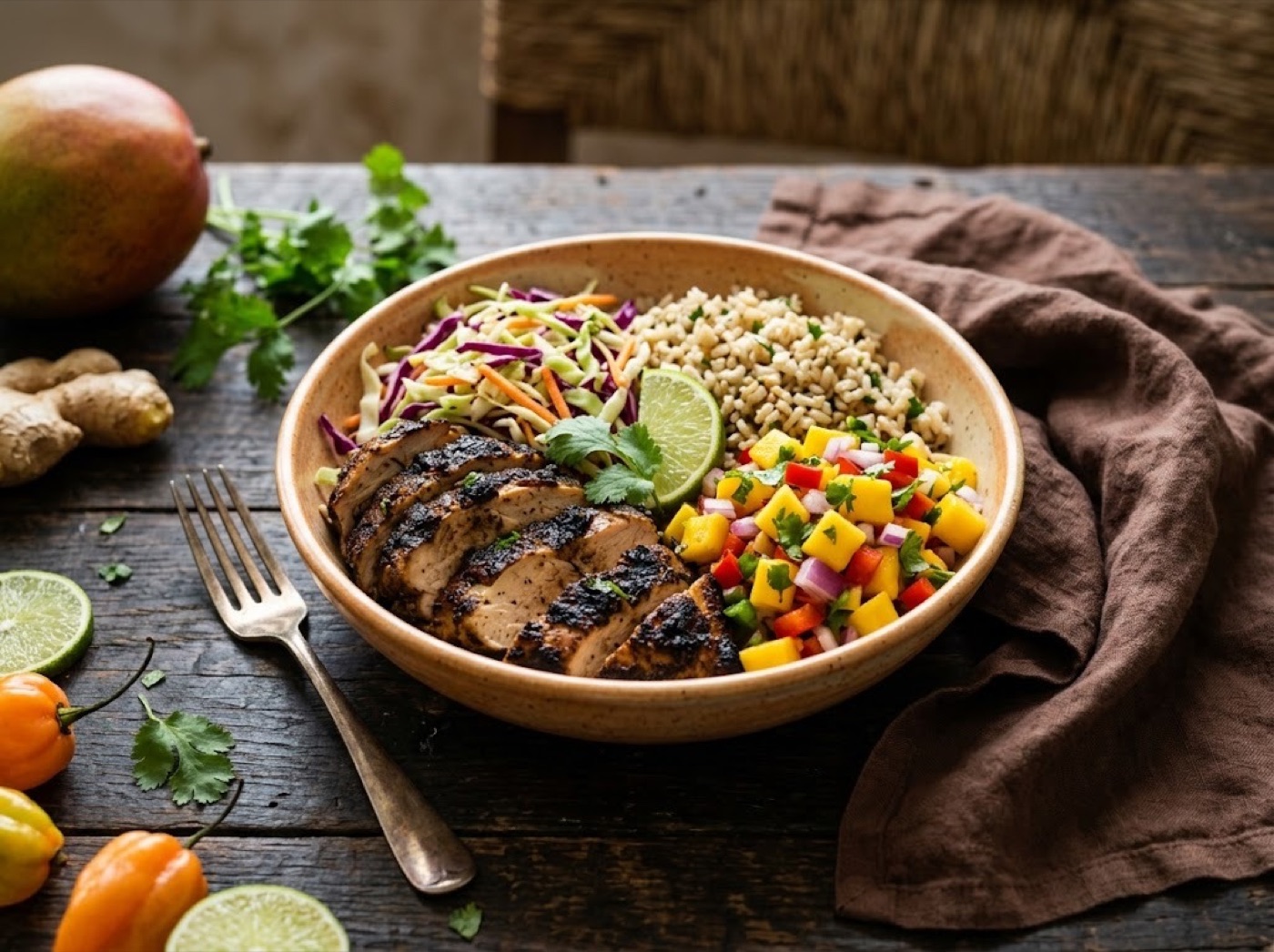
Jerk chicken bowl with brown rice, cabbage and mango salsa
LunchFood-level

Jerk Chicken Bowl with Mango Salsa

40 min + marinate · 4

Good for: Lean protein and big flavor without heavy salt; mango adds vitamin C.

Ingredients

  • Jerk marinade: 3 green onions, 1 scotch bonnet (½ for mild), 4 garlic cloves, 1-inch ginger, 1 Tbsp fresh thyme, 1 tsp allspice, ½ tsp cinnamon, ¼ tsp nutmeg, juice of 1 lime, 2 Tbsp low-sodium soy sauce, 1 Tbsp olive oil, 1 tsp brown sugar, blended smooth
  • 1½ lb boneless skinless chicken thighs or breasts
  • 3 cups cooked brown rice (or rice and peas with no-salt beans and light coconut milk)
  • Mango salsa: 1 mango, ¼ red onion, ½ red pepper, cilantro, juice of 1 lime
  • 2 cups shredded cabbage or greens

Steps

  1. Marinate the chicken 2 hours to overnight in the fridge.
  2. Grill or bake at 425 °F for 20–25 minutes, until it reads 165 °F inside. Rest 5 minutes and slice.
  3. Build bowls: rice, cabbage, chicken, salsa.

Safety: Wear gloves with scotch bonnet.

African roots: Jerk comes from Jamaica's Maroons, Africans who escaped slavery into the mountains, who blended their own cooking with the smoke-pit methods of the Indigenous Taíno. [Documented in broad strokes]

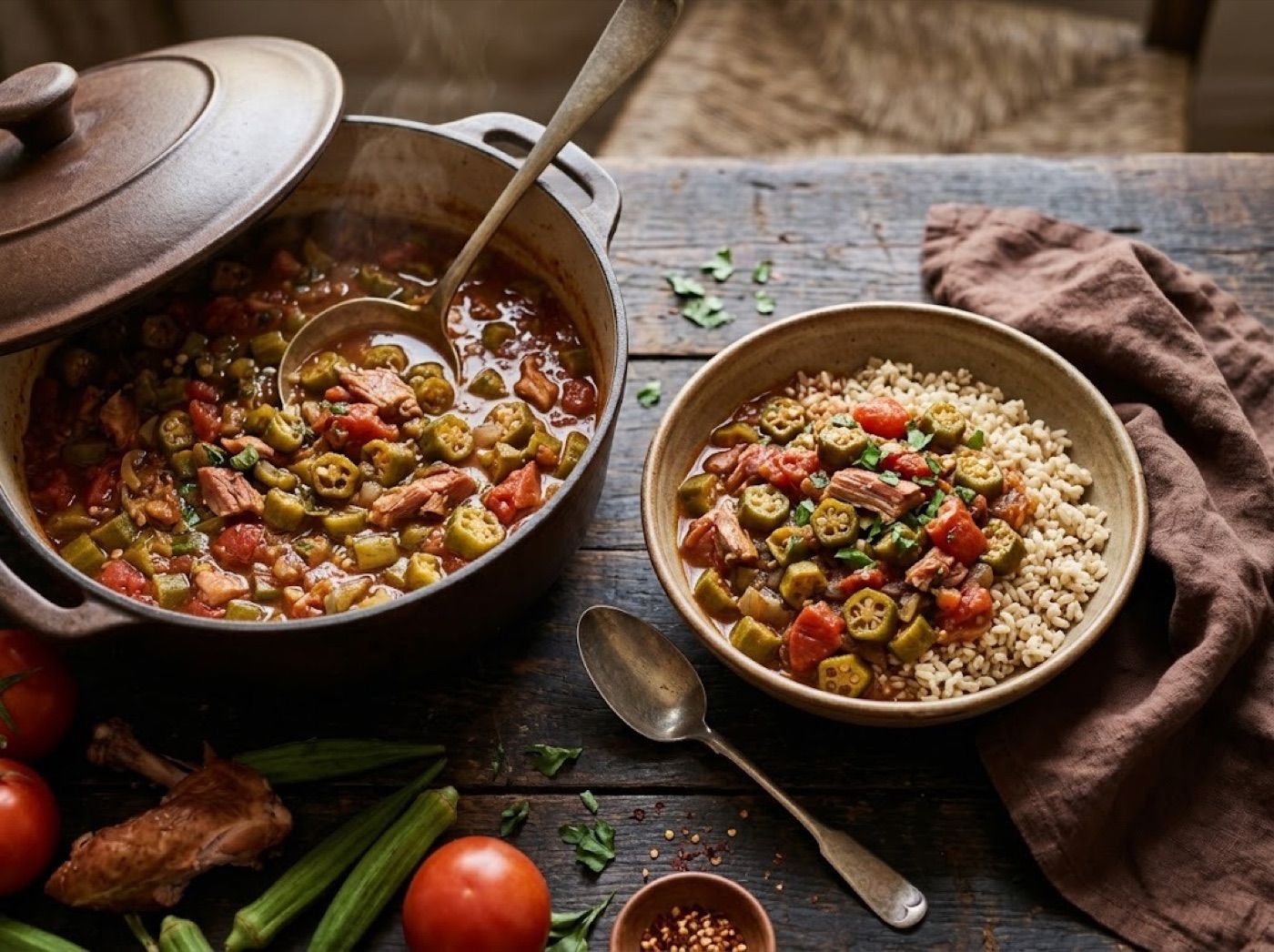
Pot of okra and tomato stew with smoked turkey over brown rice
LunchFood-level

Okra-Tomato Stew with Smoked Turkey

45 min · 4

Good for: Okra is high in fiber and vitamin C; tomatoes supply lycopene. Smoked turkey seasons without the ham hock.

Ingredients

  • 1 Tbsp olive oil
  • 1 onion, 1 green bell pepper, 2 celery stalks (the "holy trinity"), 3 garlic cloves
  • 4 oz smoked turkey (wing meat pulled, or low-sodium smoked turkey sausage), or 1 Tbsp smoked paprika for vegetarian
  • 1 lb okra, sliced (fresh or frozen)
  • 1 can (28 oz) no-salt-added diced tomatoes
  • 1 cup low-sodium broth
  • 1 tsp thyme, 1 bay leaf, ½ tsp cayenne, black pepper; 1 cup corn optional

Steps

  1. Sauté the trinity and garlic in oil 5 minutes. Add the turkey and brown 2 minutes.
  2. Add the okra; cook 5 minutes (stirring often cuts the slime). Add tomatoes, broth and spices.
  3. Simmer 25–30 minutes. Remove the bay leaf. Serve over brown rice or with a small piece of cornbread.

Safety: Smoked turkey is still salty: rinse it and use a small amount.

African roots: Okra is an African crop, and the word "gumbo" is traced to Bantu words for okra (ki-ngombo). One-pot okra stews run straight from West Africa to Gullah okra soup and Louisiana gumbo. [Documented]

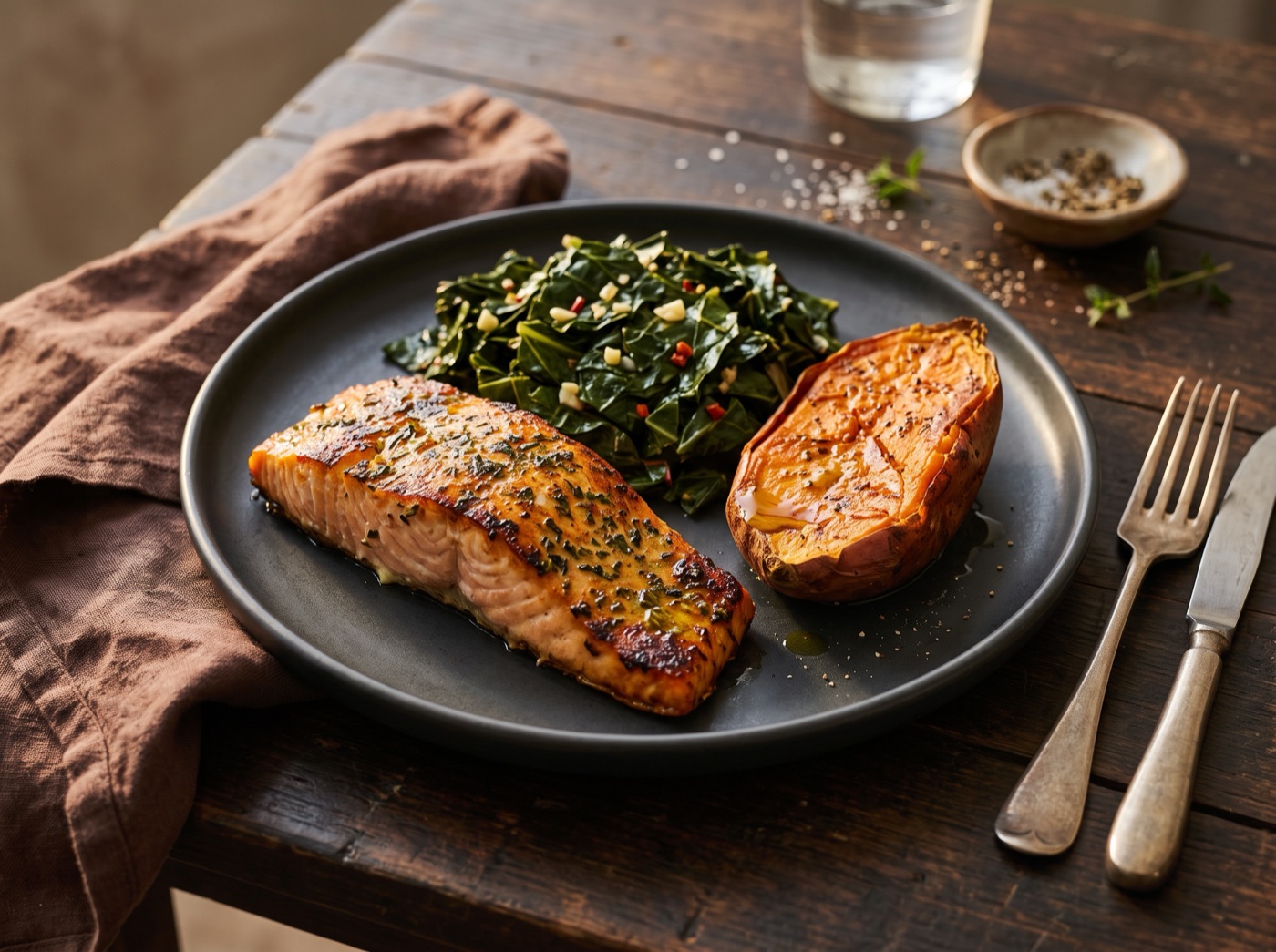
Baked salmon fillet with garlicky collard greens and sweet potato
DinnerStrong (fish 2x/week)

Baked Salmon with Garlicky Collards (no ham hock)

1 hr · 4

Good for: Salmon is a top source of omega-3 fats (EPA/DHA), linked with heart health and helpful for dry skin. Collards bring calcium, fiber and vitamins A, C and K.

Ingredients

  • Salmon: 4 fillets (5 oz each), 1 Tbsp olive oil, 1 tsp salt-free seasoning, lemon slices
  • Collards: 2 bunches (stems removed, sliced into ribbons), 1 Tbsp olive oil, 1 onion, 4 garlic cloves, 1 small smoked turkey wing (or 1½ tsp smoked paprika + ½ tsp liquid smoke), 2 cups low-sodium broth, 1 Tbsp apple cider vinegar, ½ tsp red pepper flakes

Steps

  1. Collards: sauté onion and garlic in oil 4 minutes. Add the turkey wing (or paprika), broth and greens. Cover and simmer 35–45 minutes until tender. Stir in vinegar and pepper flakes. Pull the turkey meat back into the pot; discard skin and bone.
  2. Salmon: heat oven to 400 °F. Rub fillets with oil and seasoning, top with lemon. Bake 12–15 minutes until it flakes (145 °F).
  3. Serve with half a baked sweet potato or brown rice. Spoon the pot likker over the greens; it holds the vitamins.

Safety: Warfarin users: keep collard portions steady week to week.

African roots: Collards themselves came from the Mediterranean, but the way we cook them, slow in a pot and drinking the likker, echoes West African leaf stews. [Food historians; widely cited]

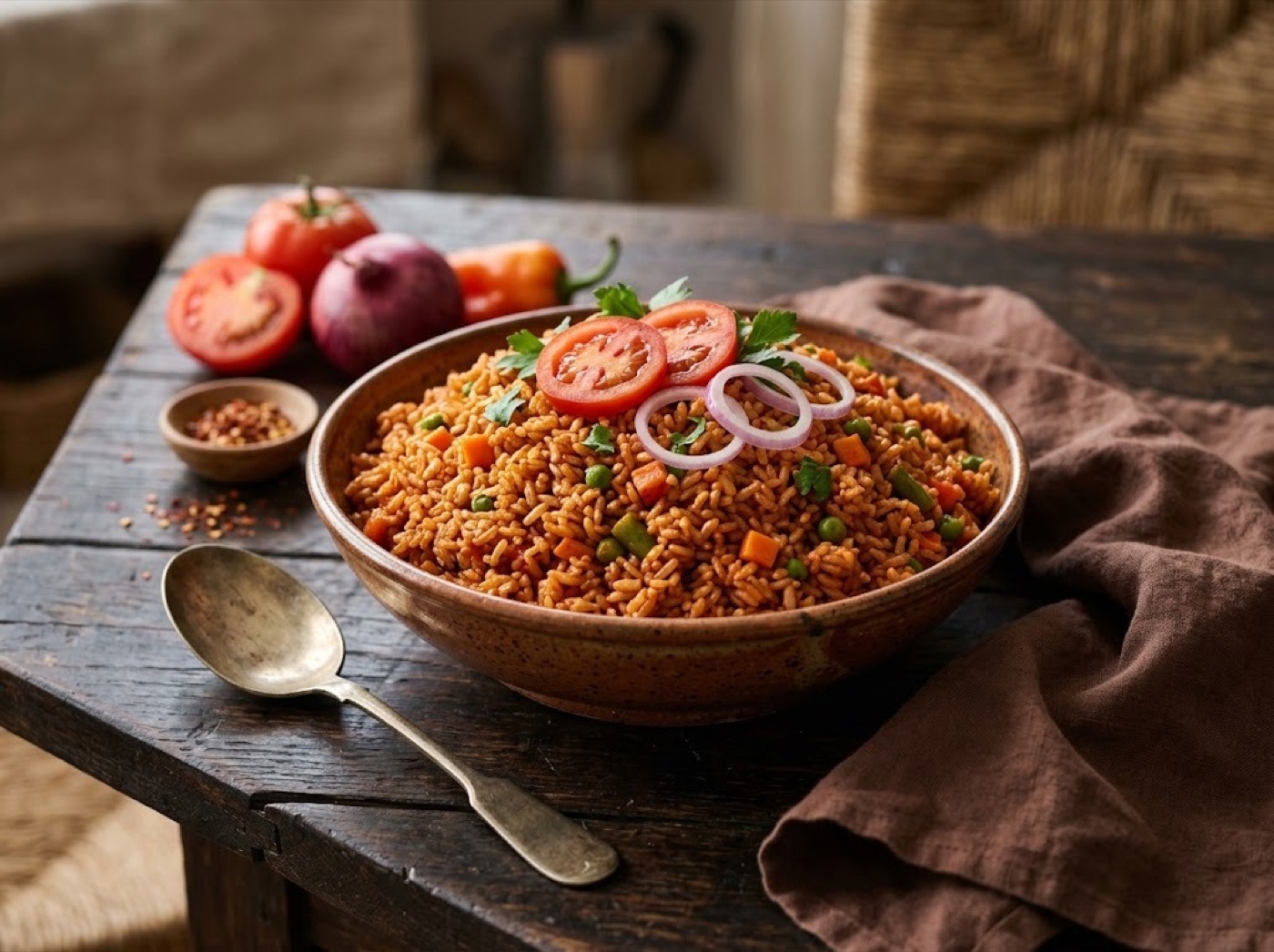
Pot of red jollof rice made with brown rice and vegetables
DinnerWhole grains: strong

Jollof Rice with Brown Rice & Chicken or Beans

1 hr 15 min · 6

Good for: Same party flavor with whole-grain fiber and much less oil and bouillon.

Ingredients

  • Pepper base: 1 can (14 oz) no-salt-added tomatoes, 2 red bell peppers, 1 onion, ½–1 scotch bonnet, 3 garlic cloves, 1-inch ginger, blended smooth
  • 2 Tbsp olive or avocado oil, 1 onion sliced, 2 Tbsp tomato paste
  • 2 cups long-grain brown rice, rinsed
  • 2½–3 cups low-sodium broth
  • 1 tsp curry powder, 1 tsp dried thyme, 2 bay leaves, ½ tsp smoked paprika, black pepper
  • 1 lb grilled chicken breast, or 2 cans no-salt-added kidney beans, rinsed
  • 1 cup frozen mixed vegetables

Steps

  1. Sauté the sliced onion in oil 4 minutes. Add tomato paste and fry 2 minutes. Add the pepper base and cook uncovered 15 minutes, stirring, until it reduces and deepens in color.
  2. Add spices, rice and broth. Stir once, bring to a boil, cover tightly (foil under the lid helps), and cook on low 40–45 minutes.
  3. Add vegetables on top for the last 10 minutes. Fluff. Serve with chicken or beans and a salad.

Safety: Bouillon cubes are very high in sodium; this recipe skips them. If you use one, choose low-sodium.

African roots: Jollof is West Africa's celebration rice, argued over with love by Ghana and Nigeria. Food historians commonly trace it to the Wolof (Jolof) Empire of Senegambia and the rice dish thieboudienne. West African women's rice-growing skill also shaped Carolina rice culture. [Documented: Carney, Black Rice]

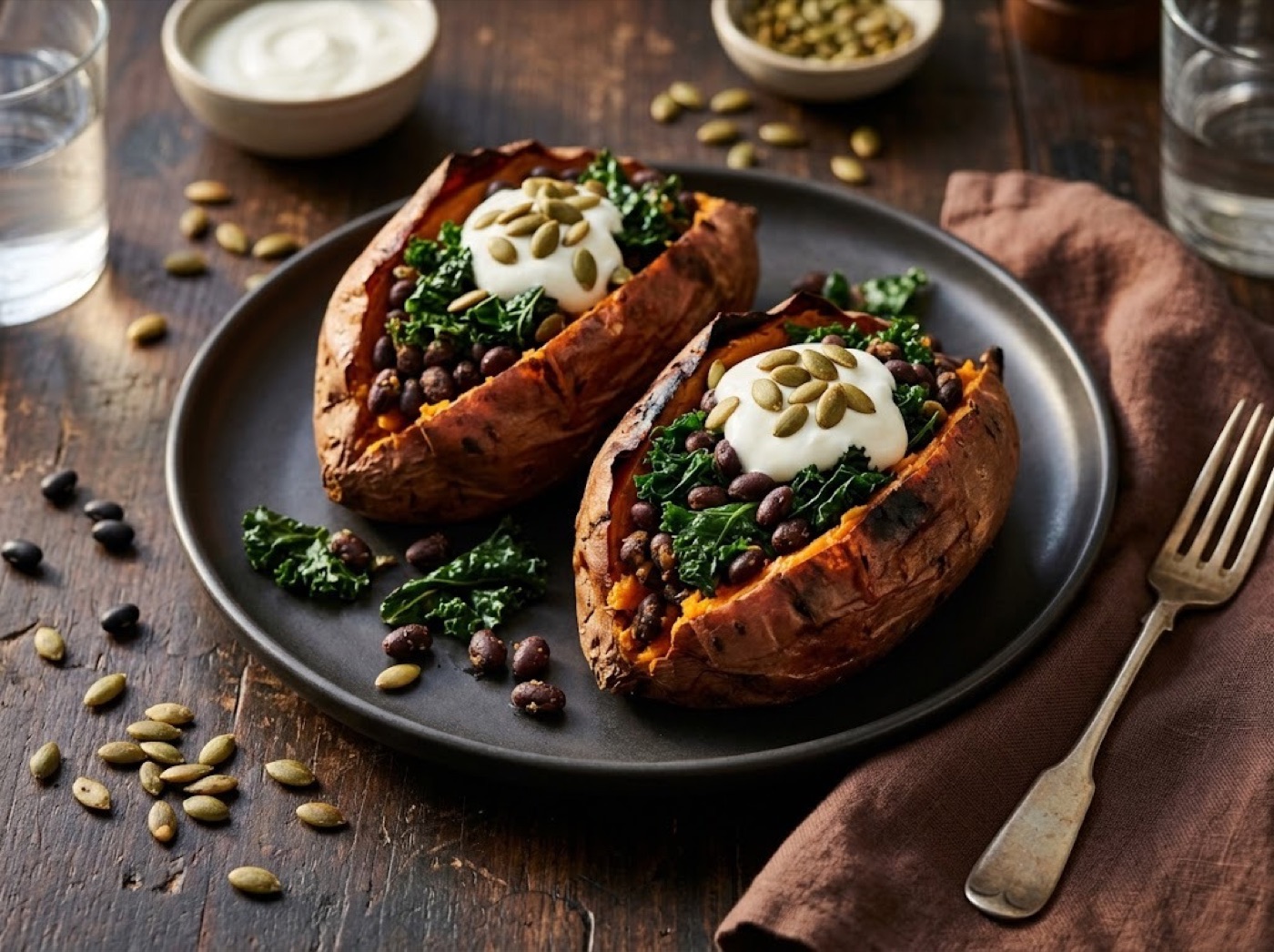
Baked sweet potatoes stuffed with black beans, kale and yogurt
DinnerFood-level

Baked Stuffed Sweet Potatoes

1 hr · 4

Good for: Beta-carotene (vitamin A) for skin, fiber and plant protein. Pumpkin seeds add zinc, which plays a role in hair and nail health.

Ingredients

  • 4 medium sweet potatoes
  • 1 can (15 oz) no-salt-added black beans, rinsed
  • 1 Tbsp olive oil, ½ onion, 1 red pepper, 2 cups chopped kale
  • 1 tsp cumin, 1 tsp smoked paprika
  • Topping: ¼ cup plain Greek yogurt with lime juice; chopped green onion; 2 Tbsp pumpkin seeds

Steps

  1. Prick the potatoes and bake at 400 °F for 45–55 minutes until soft.
  2. Sauté onion, pepper and kale with the spices 5 minutes; add beans and warm through.
  3. Split the potatoes, fluff, fill with the bean mix, and top with yogurt, onion and seeds.

Safety: High in potassium (kidney disease: ask first).

African roots: Sweet potatoes are American. Enslaved Africans used them in place of the West African yams they knew, and the name "yam" (from West African words like nyam, "to eat") stuck. [Documented]

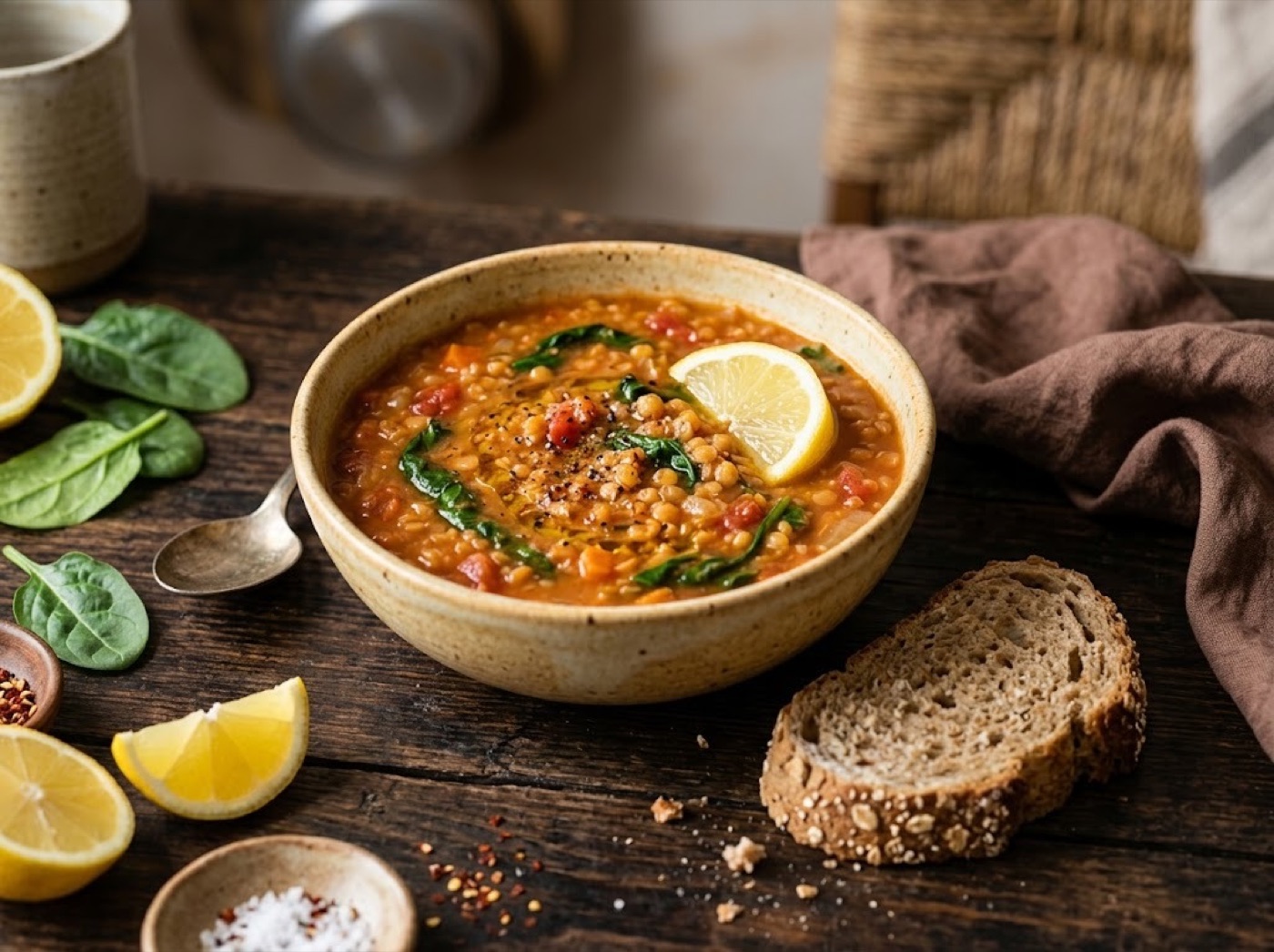
Bowl of red lentil and vegetable soup with spinach and lemon
DinnerStrong (legumes)

Red Lentil & Vegetable Soup

35 min · 6

Good for: Lentils supply iron, folate, fiber and plant protein. Iron deficiency is a common, treatable cause of hair shedding in women, and pairing iron foods with vitamin C (lemon, tomatoes) helps absorption. Ask your doctor to check your ferritin if you are shedding.

Ingredients

  • 1 Tbsp olive oil, 1 onion, 2 carrots, 2 celery stalks, 3 garlic cloves, 1 Tbsp ginger
  • 1½ cups red lentils, rinsed
  • 1 can (14 oz) no-salt-added diced tomatoes
  • 6 cups low-sodium vegetable broth
  • 1 tsp cumin, 1 tsp turmeric, ½ tsp smoked paprika, ¼ tsp cayenne
  • 2 cups spinach; juice of 1 lemon

Steps

  1. Sauté the vegetables, garlic and ginger 6 minutes. Add spices for 1 minute.
  2. Add lentils, tomatoes and broth. Simmer 20–25 minutes until the lentils are soft.
  3. Stir in spinach and lemon. Blend half for creaminess if you like. Freezes well for 3 months.

Safety: None special.

African roots: Lentil stews are everyday food in Ethiopia and Eritrea: misir wot, red lentils cooked with berbere. Add a pinch of berbere here for an East African version.

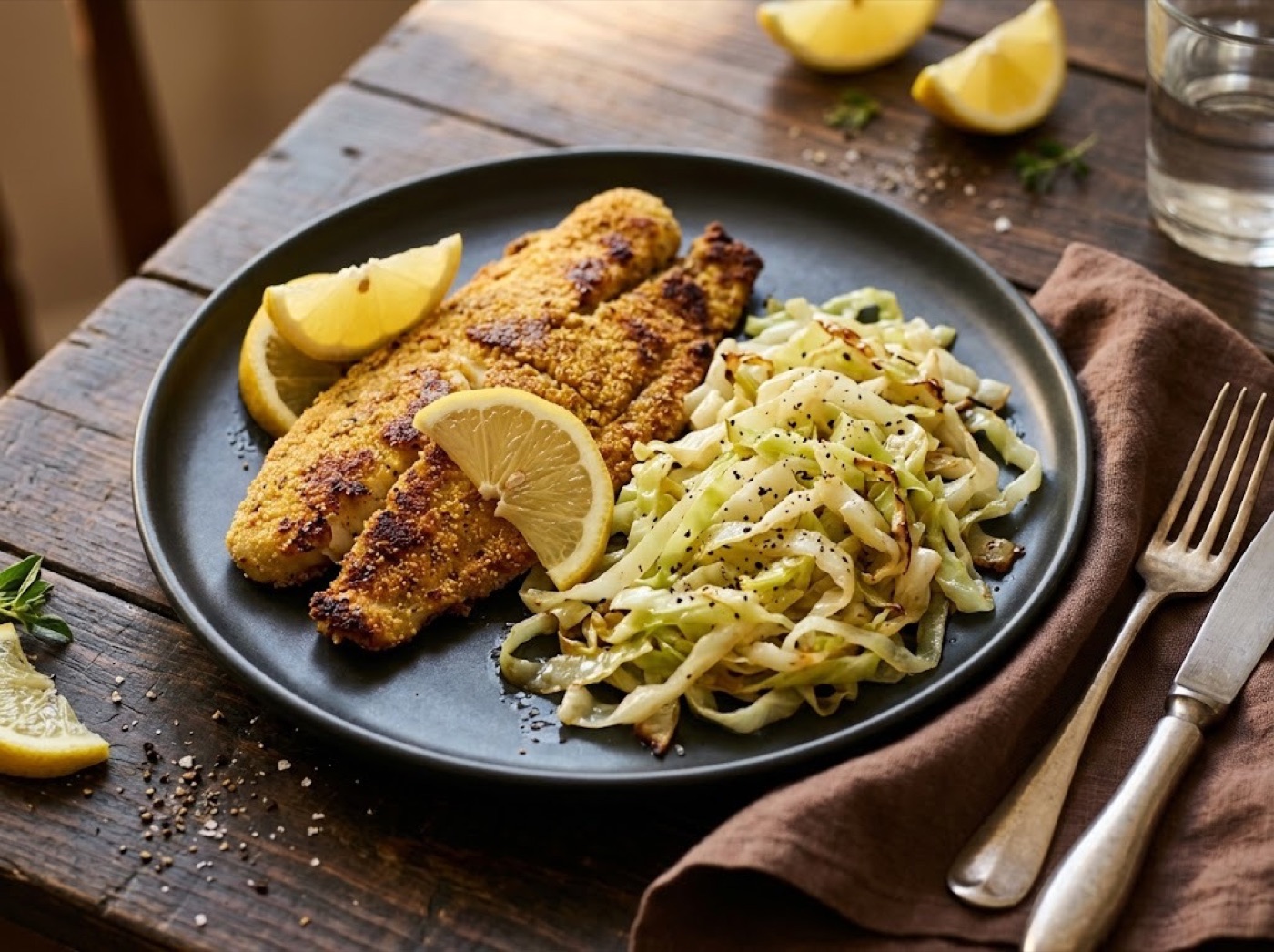
Cornmeal-crusted oven-baked catfish with sautéed cabbage
DinnerLess frying

Oven "Fried" Catfish with Cabbage

35 min · 4

Good for: All the crunch of a fish fry without the deep fryer. Catfish is a lean, low-mercury fish.

Ingredients

  • 4 catfish fillets (5 oz)
  • ½ cup buttermilk (or plain yogurt thinned with milk) + 1 tsp hot sauce
  • Crust: ½ cup yellow cornmeal, ¼ cup whole-wheat flour, 1½ tsp salt-free seasoning, ½ tsp garlic powder
  • Olive or avocado oil spray
  • Cabbage: ½ head green cabbage, 1 onion, 1 Tbsp olive oil, ½ tsp smoked paprika, 1 Tbsp apple cider vinegar

Steps

  1. Heat oven to 425 °F with a rack on a sheet pan. Dip fish in buttermilk, then crust. Place on the rack and spray the tops. Bake 15–18 minutes until golden and flaky (or air fry at 400 °F for 10–12 minutes).
  2. Sauté the cabbage and onion in oil with paprika 8–10 minutes; finish with vinegar.

Safety: None special.

African roots: Catfish was a river fish Africans knew well; it is still smoked and stewed across West Africa (as in Nigerian catfish pepper soup). Cornmeal is Indigenous American.

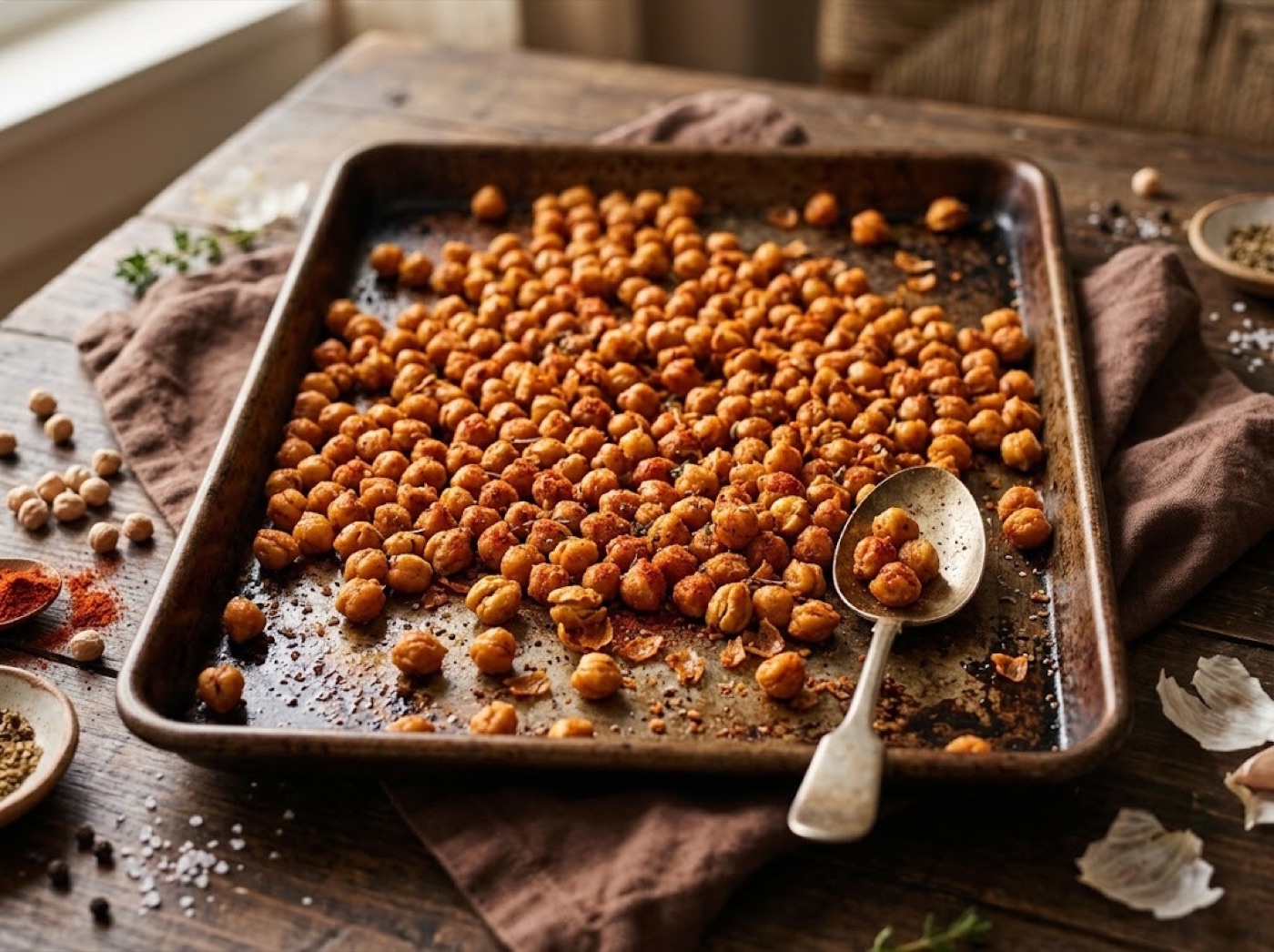
Baking sheet of crunchy spiced roasted chickpeas
SnackLegumes: strong

Spiced Roasted Chickpeas

45 min · 4

Good for: A crunchy, high-fiber, high-protein swap for chips.

Ingredients

  • 2 cans no-salt-added chickpeas, drained, rinsed and dried well
  • 1 Tbsp olive oil
  • 1 tsp salt-free seasoning or jerk spice (no salt)

Steps

  1. Roast at 400 °F for 30–40 minutes, shaking the pan every 10 minutes, until crunchy.
  2. Cool before storing (they soften in a closed jar after 2 days).

Safety: None special.

African roots: Chickpeas come from the Near East and are a staple of North and East Africa, from Egyptian and Sudanese foul-and-falafel stalls to Ethiopian shiro (ground chickpea stew).

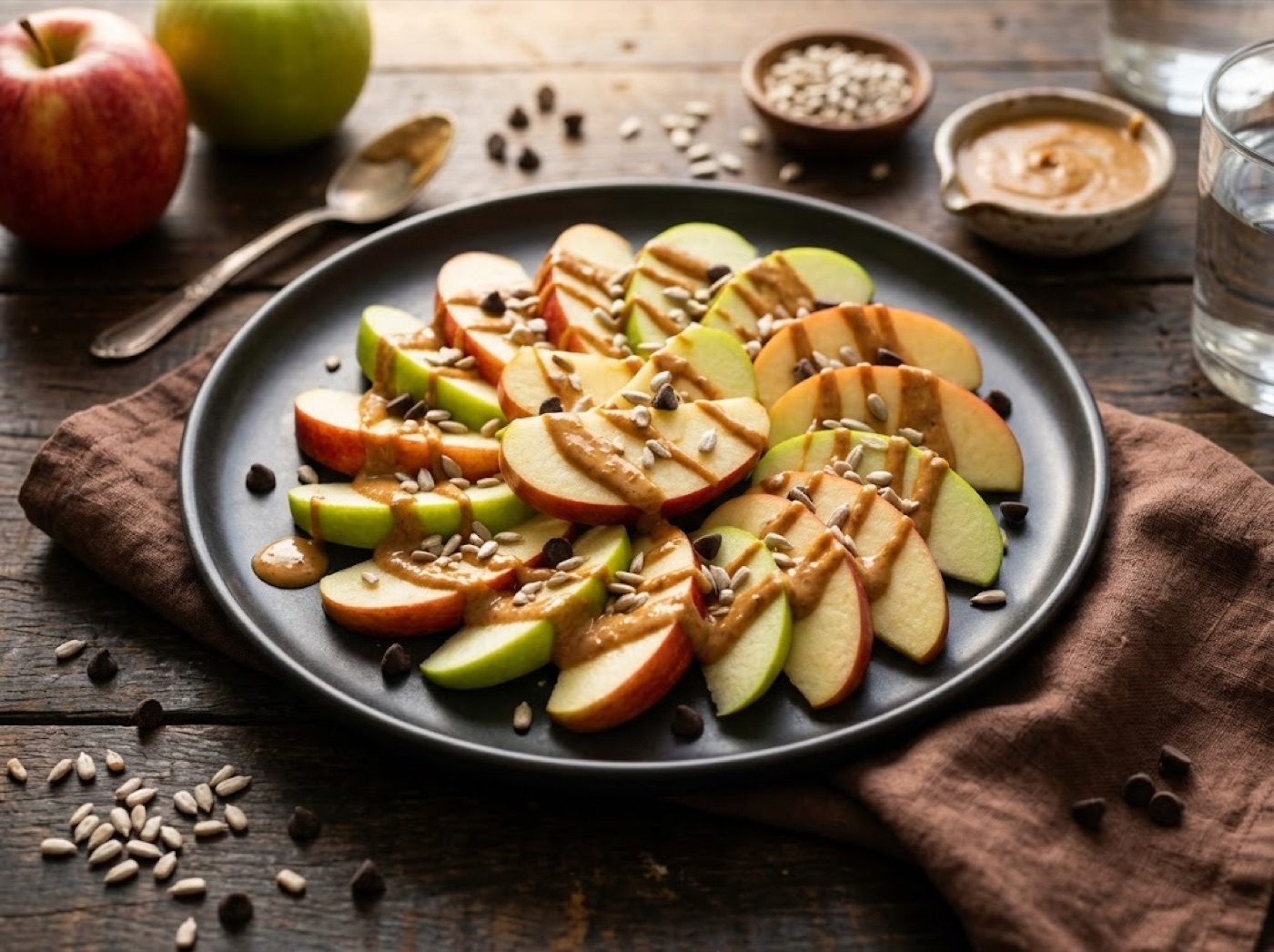
Fanned apple slices drizzled with peanut butter and seeds
SnackFood-level

Apple "Nachos" with Peanut Butter Drizzle

5 min · 2

Good for: A sweet-craving fix with fiber, healthy fat and protein.

Ingredients

  • 1 apple, thinly sliced
  • 1 Tbsp natural peanut butter, warmed to drizzle
  • 1 Tbsp sunflower seeds
  • 1 tsp dark chocolate chips
  • Pinch of cinnamon

Steps

  1. Fan the slices on a plate, drizzle and sprinkle.

Safety: Nut allergy: use sunflower seed butter.

African roots: Pennsylvania grows a lot of apples; peanuts traveled South America to Africa and back to the American South with enslaved Africans ("goober").

From Mrs. Revell's Family Kitchen

The cards off my own refrigerator

These are the 46 cards I cook from at home: the egg muffins my family grabs on the way out, Friday catfish out of the fryer, Sunday collards with no pork, the little juices measured in half-cups. Some I've made for years; some I wrote out with my care guide so every portion is measured and every vegetable is cooked. I've kept them the way I wrote them, with my make-ahead notes and swaps. Cook them, change them, make them yours.

Juices here are small on purpose: half a cup with a meal. Natural sugar still counts.

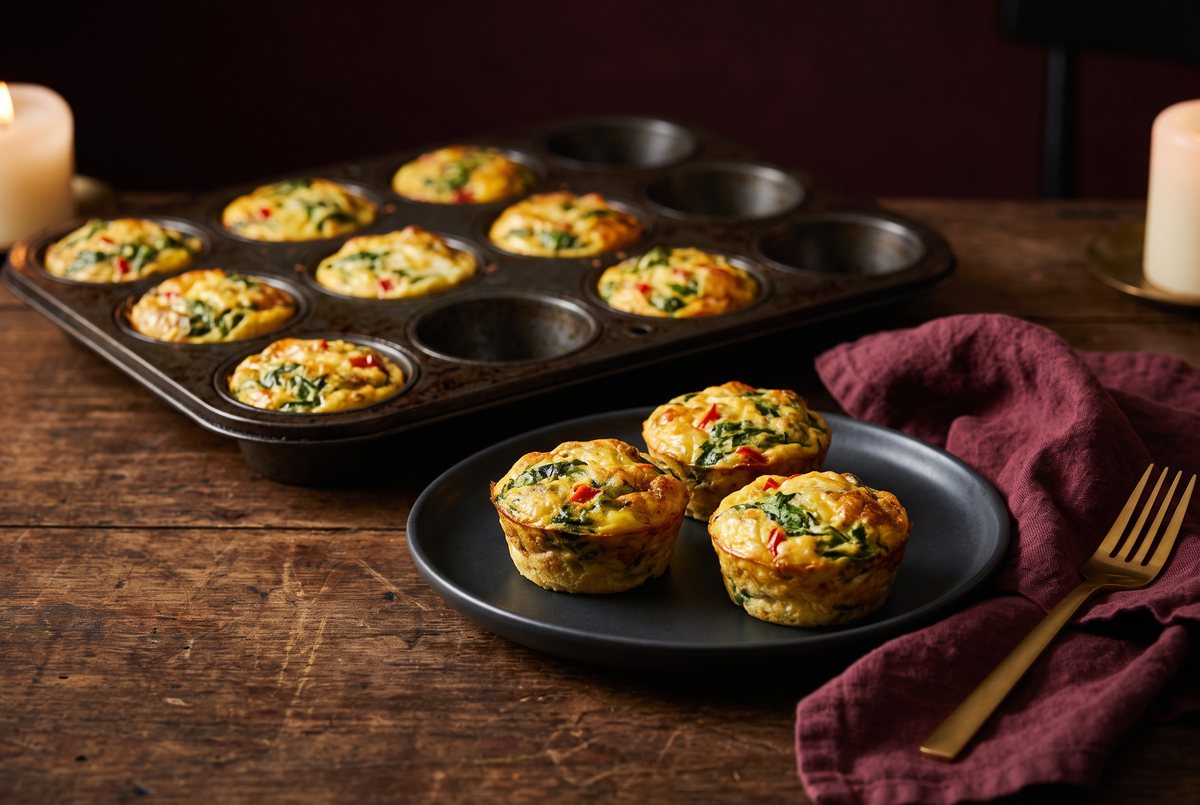
Egg and vegetable muffins from Mrs. Revell's family kitchen
BreakfastMrs. Revell's kitchen

Egg and vegetable muffins

30 min · Makes 12 / grab one on the way out

Good for: Breakfast is the meal everybody skips when the morning gets away from them. These are already made. Sharp cheddar means you need half as much for the same flavor.

Ingredients

  • 10 eggs
  • 1/2 cup milk
  • 1 cup chopped spinach
  • 1/2 red pepper, diced
  • 1/2 small onion, diced
  • 1/2 cup shredded sharp cheddar
  • 1/2 tsp garlic powder
  • black pepper
  • a little oil for the tin

Steps

  1. Heat oven to 350 °F and oil a 12-cup muffin tin well.
  2. Beat the eggs with the milk and the spices.
  3. Stir in the vegetables and cheese.
  4. Fill each cup about three-quarters.
  5. Bake 20-25 minutes until set in the middle and just pulling from the sides.

Make ahead: Sunday job. They keep 4 days in the fridge and freeze for a month. Thirty seconds in the microwave from cold, a minute from frozen.

Swap it: Anything cooked and chopped works — leftover collards, peppers, mushrooms, a little turkey.

Overnight oats, three ways from Mrs. Revell's family kitchen
BreakfastMrs. Revell's kitchen

Overnight oats, three ways

5 min, then overnight · One jar each / no cooking at all

Good for: Rolled oats soften in the milk without a stove. The chia thickens it. No added sugar anywhere — the fruit does that job, and after a week of these the sweet cereals taste like candy.

Ingredients

  • Base for one jar: 1/2 cup rolled oats
  • 1/2 cup milk or unsweetened plant milk
  • 1/4 cup plain yogurt
  • 1 tsp chia seeds
  • 1/2 tsp vanilla. Then pick one — APPLE PIE: 1/2 grated apple, 1/4 tsp cinnamon. PEANUT BUTTER BANANA: 1 tbsp peanut butter, half a sliced banana. BERRY: 1/2 cup berries, fresh or frozen, 1/4 tsp cinnamon

Steps

  1. Put the base in a jar, stir, add your pick, stir again, lid on.
  2. Refrigerate overnight, at least 6 hours.
  3. Eat it cold straight from the jar or warm it 45 seconds.

Make ahead: Build four jars Sunday night and breakfast is done until Thursday.

Swap it: Steel-cut oats will not work this way; they stay hard. Rolled or quick oats only.

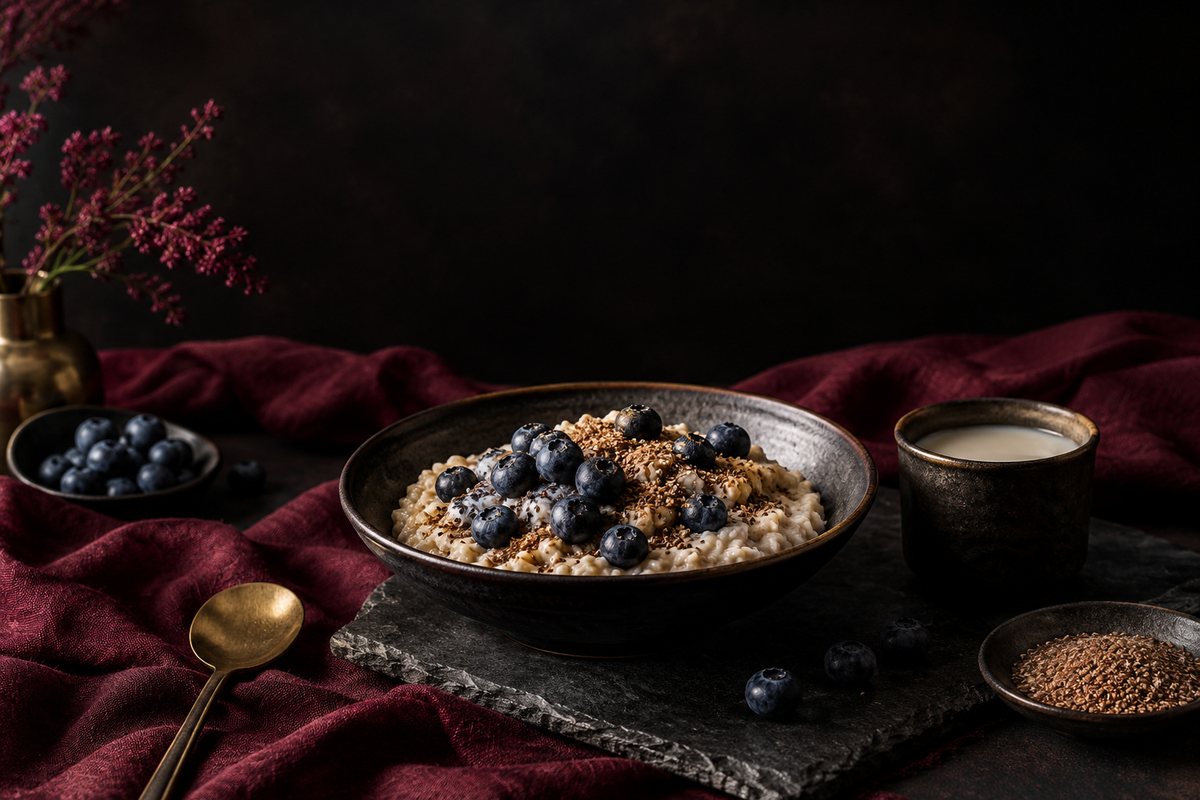
Blueberry-flax oats for the weekend from Mrs. Revell's family kitchen
BreakfastMrs. Revell's kitchen

Blueberry-flax oats for the weekend

20 min · 2 servings / warm breakfast / no raw vegetables

Good for: Cooked oats keep the grain instead of removing pulp. Whole berries retain their fiber. The meal offers a substantial carbohydrate serving, so adjust portions with appetite and clinical advice; oats are not sugar-free.

Ingredients

  • 1 cup dry rolled oats
  • 2 cups water
  • 1/2 cup unsweetened almond milk
  • 1 cup blueberries
  • 2 tsp packaged food-grade ground flaxseed, optional after medicine review
  • 1/4 tsp cinnamon

Steps

  1. Cook oats in water for their packet time.
  2. Stir in milk and cinnamon, warm through, and divide evenly into two bowls.
  3. Add 1/2 cup berries and 1 tsp optional flax to each.
  4. Yield is about two generous bowls; half the recipe is one serving.
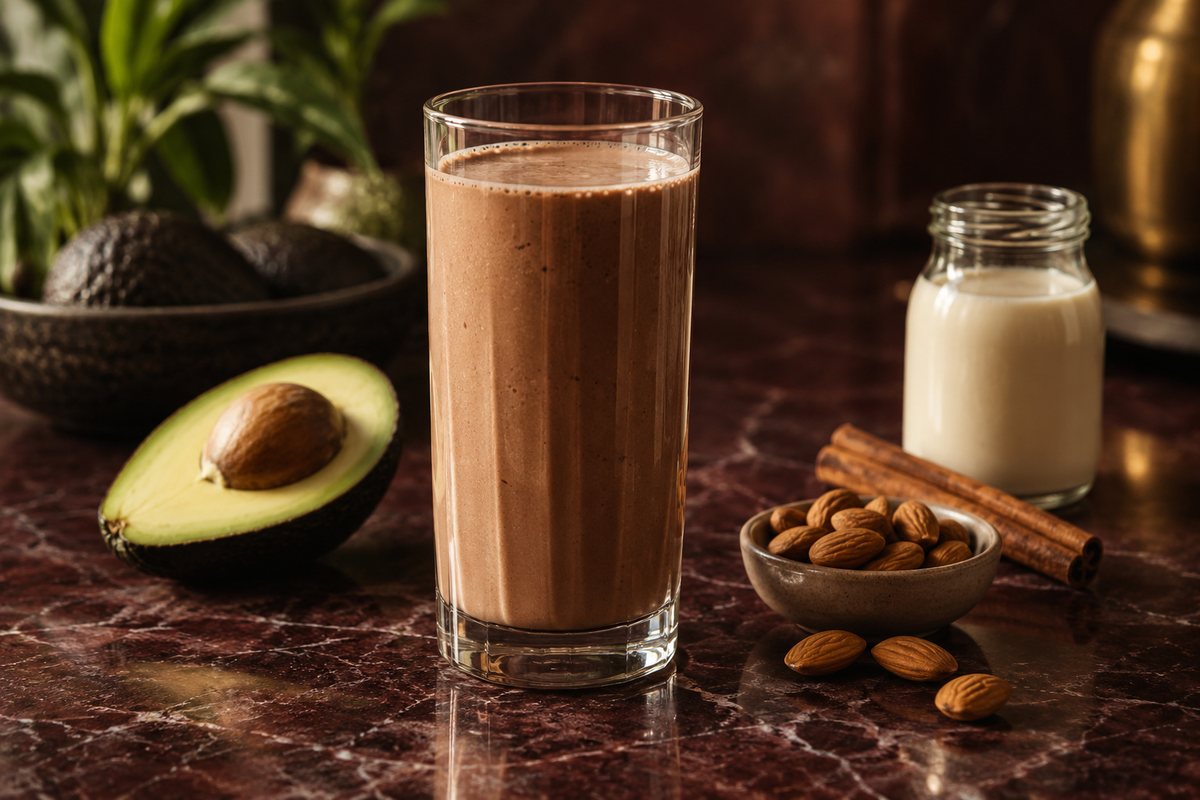
Your chocolate morning ritual from Mrs. Revell's family kitchen
BreakfastMrs. Revell's kitchen

Your chocolate morning ritual

15 min · One breakfast option / adjust ingredients and portions to your needs.

Good for: Protein makes this a more substantial breakfast; avocado adds unsaturated fat and fiber. Cinnamon gives chocolate a warmer flavor without added sugar. It is a seasoning, not proven diabetes prevention.

Ingredients

  • Use your usual label serving of Orgain chocolate protein powder, about 1 cup unsweetened homemade almond milk, half a fresh avocado, and a small pinch to 1/4 teaspoon cinnamon. Add water or ice to suit your preferred texture.

Steps

  1. Blend until smooth, adjusting liquid as needed.
  2. Keep medicine at its prescribed time and follow its food instructions.
  3. Use no honey, syrup, or sweetened almond milk.

Make ahead: Refrigerate homemade almond milk promptly in a clean covered bottle at 40 °F or below. Make small batches and use promptly; homemade shelf life varies. Keep avocado cut-side covered and chilled. Blend fresh each morning.

Chickpea and tuna lunch box from Mrs. Revell's family kitchen
LunchMrs. Revell's kitchen

Chickpea and tuna lunch box

10 min · Serves 2 / no cooking / five minutes

Good for: Beans and fish together for a couple of dollars a serving, no stove, no microwave at work. Rinsing the chickpeas takes most of the canning sodium with it.

Ingredients

  • 1 can chickpeas, 15 oz, rinsed
  • 1 can tuna in water, 5 oz, drained
  • 1/2 cucumber, diced
  • 1 cup cherry tomatoes, halved
  • 1/4 red onion, sliced thin
  • 2 tbsp olive oil
  • 2 tbsp lemon juice
  • 1 tsp dijon
  • 1 tsp dried oregano
  • black pepper
  • a handful of parsley

Steps

  1. Whisk the oil, lemon, dijon, oregano and pepper in the bottom of the container.
  2. Pile everything else on top.
  3. Toss when you are ready to eat it, not before.

Make ahead: Dressing on the bottom, greens or soft things on top, is the trick that keeps a packed lunch from going soggy. Keeps 3 days.

Swap it: Canned salmon or leftover chicken instead of tuna. White beans instead of chickpeas.

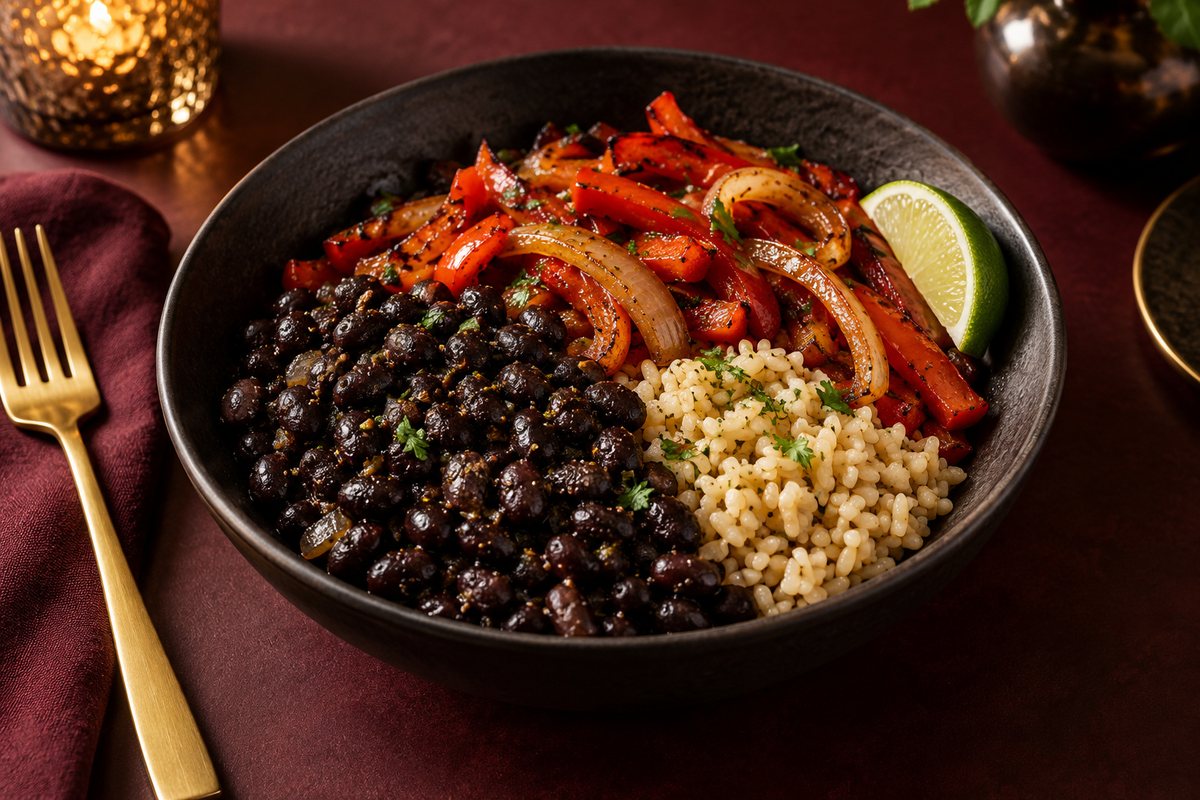
Black bean & rice bowl from Mrs. Revell's family kitchen
LunchMrs. Revell's kitchen

Black bean & rice bowl

25 min · One adult serving / mild flavor / all vegetables cooked

Good for: Beans are at home in Southern and Latin American kitchens. Their fiber and protein help make a meat-free meal satisfying. A trial in people with diabetes supported legumes within a low-glycemic diet; it does not prove this bowl prevents diabetes in you. Beans and other pulses accompany staple grains in many world diets, as FAO documents. Here the pairing adds protein and fiber while keeping the grain portion measured.

Ingredients

  • 3/4 cup cooked black beans
  • 1/3 cup cooked brown rice
  • 1 bell pepper
  • 1/2 small onion
  • 1 tsp olive oil
  • 1/4 tsp cumin
  • 1 garlic clove
  • 1 tbsp lime juice
  • 2 tbsp water

Steps

  1. Slice pepper and onion.
  2. Saute in oil 8-10 minutes until tender; add garlic and cumin for the final minute.
  3. Add cooked beans and a splash of water, simmer 3-5 minutes, then fold in rice.
  4. Finish with lime; no raw topping needed.

Make ahead: Cook beans and rice Sunday. Assemble this Wednesday portion, chill promptly, and keep cold for the drive. Smaller rice plus a larger bean portion gives the bowl its balance.

Swap it: Pinto beans or lentils work well. If still hungry, add more cooked vegetables and a modest portion of tofu; adjust starch with your dietitian if needed.

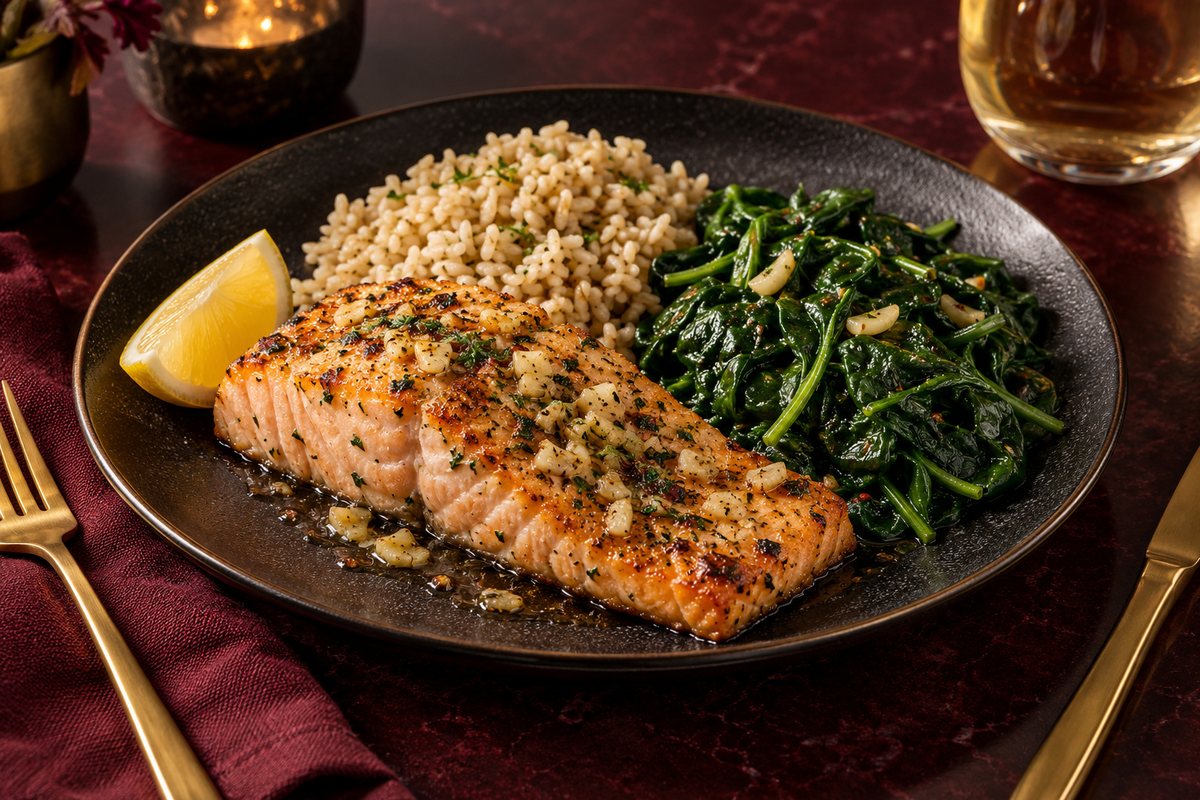
Lemon-garlic salmon bowl from Mrs. Revell's family kitchen
LunchMrs. Revell's kitchen

Lemon-garlic salmon bowl

25 min · One adult serving / mild flavor / all vegetables cooked

Good for: A familiar grilled-fish flavor meets the DASH pattern. Fish provides protein, salmon provides omega-3 fats, and brown rice adds more fiber than white rice. The rice portion still matters; it does not make carbohydrate disappear.

Ingredients

  • 5 oz raw salmon
  • 1/2 cup cooked brown rice
  • 3 cups raw spinach, cooked down
  • 1 tsp olive oil
  • 1 garlic clove
  • 1 tbsp lemon juice
  • black pepper

Steps

  1. Heat oven to 400 °F.
  2. Brush salmon with half the oil, lemon, minced garlic, and pepper.
  3. Bake roughly 12-15 minutes, checking 145 °F at the thickest part.
  4. Saute spinach in remaining oil for 2-4 minutes until wilted.
  5. Serve over cooked rice.

Make ahead: Make Sunday. Pack fish, rice, and cooked spinach together in a shallow container; cool and refrigerate promptly. Keep the lemon separate if you prefer to add it after reheating.

Swap it: Trout works with the same seasoning and 145 °F endpoint. Salmon is an option, not a daily requirement.

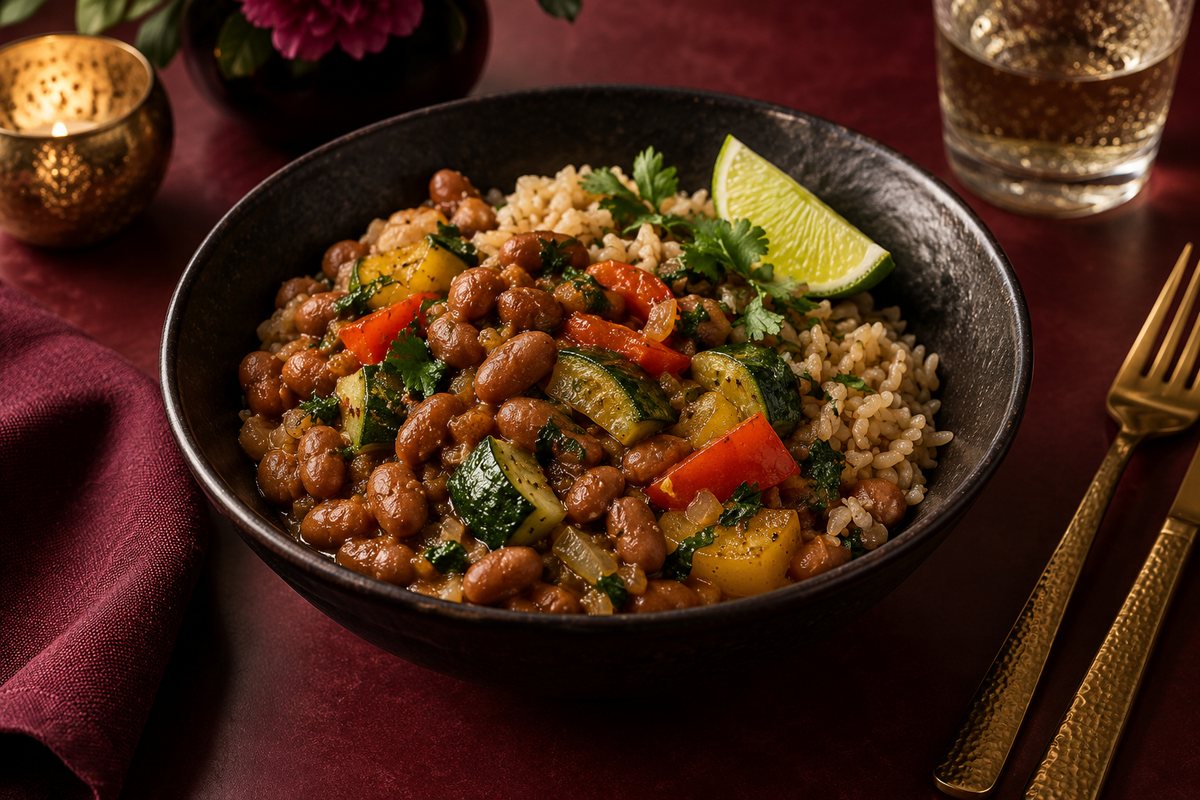
Pinto bean bowl with lime & cilantro from Mrs. Revell's family kitchen
LunchMrs. Revell's kitchen

Pinto bean bowl with lime & cilantro

25 min · One adult serving / mild flavor / all vegetables cooked

Good for: The flavors borrow from Mexican home cooking without tacos or raw salad. Lime and cooked aromatics bring brightness instead of extra salt. Beans supply both protein and carbohydrate; rice is measured rather than unlimited. Beans and other pulses accompany staple grains in many world diets, as FAO documents. Here the pairing adds protein and fiber while keeping the grain portion measured.

Ingredients

  • 3/4 cup cooked pinto beans
  • 1/3 cup cooked brown rice
  • 1 1/2 cups chopped zucchini and bell pepper
  • 1 tsp olive oil
  • 1 garlic clove
  • 1/4 tsp cumin
  • 1 tbsp lime juice
  • 1 tbsp chopped cilantro

Steps

  1. Saute zucchini and pepper in oil 8-10 minutes until fully tender.
  2. Add garlic, cumin, cooked beans, and a splash of water; simmer 5 minutes.
  3. Fold cilantro into the hot beans until wilted.
  4. Add rice and lime.
  5. No raw vegetable topping.

Make ahead: Cook Wednesday night. Pack with enough bean liquid to keep it moist. Refrigerate at 40 °F or below and carry cold on Friday; reheat only your lunch portion.

Swap it: Use black beans, lentils, or a mix. For extra protein, add a small portion of plain grilled chicken or tofu instead of cheese-heavy toppings.

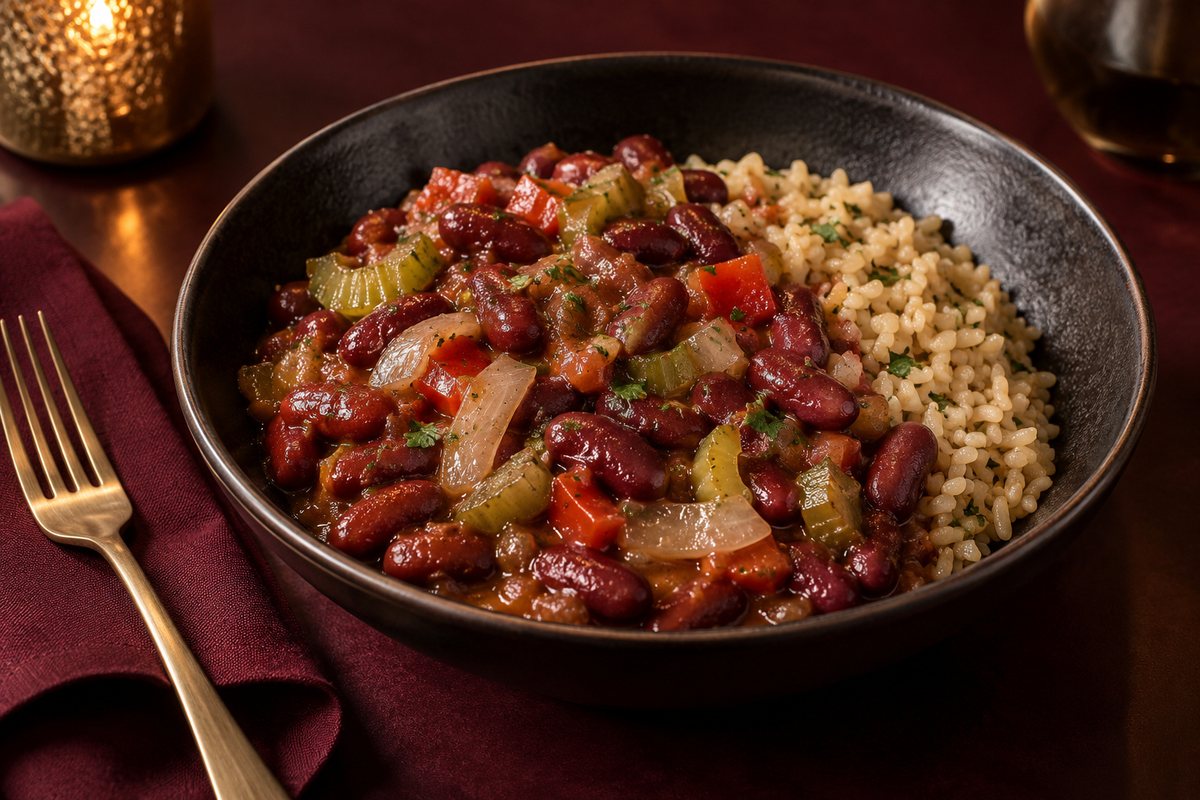
Southern red beans and rice from Mrs. Revell's family kitchen
LunchMrs. Revell's kitchen

Southern red beans and rice

35 min

Good for: The Southern celery-pepper-onion base brings big flavor without sausage or a seasoning packet. Fiber-rich beans supply protein too. A smaller rice portion keeps the two carbohydrate sources in proportion. Beans and other pulses accompany staple grains in many world diets, as FAO documents. Here the pairing adds protein and fiber while keeping the grain portion measured.

Ingredients

  • 3/4 cup fully cooked red kidney beans
  • 1/3 cup cooked brown rice
  • 1/4 cup each chopped celery, pepper, and onion
  • 1 tsp olive oil
  • 1 garlic clove
  • 1/4 tsp smoked paprika
  • 1/4 tsp dried thyme
  • 2 tbsp water

Steps

  1. Use kidney beans safely cooked, or no-salt-added canned beans.
  2. Saute celery, pepper, and onion in oil 8-10 minutes.
  3. Add garlic, paprika, thyme, beans, and a little water.
  4. Simmer 10 minutes; mash a spoonful to thicken.
  5. Serve with rice.

Make ahead: Prepare Wednesday night. Keep beans slightly saucy so they reheat well. Cool in a shallow container and refrigerate immediately rather than leaving the pot out overnight.

Swap it: Small red beans or lentils offer variation. Add skinless turkey if desired, but avoid smoked turkey or sausage as routine flavoring because sodium can climb.

African roots: Rice and beans together run from West Africa (waakye in Ghana) through the Caribbean (rice and peas) to New Orleans.

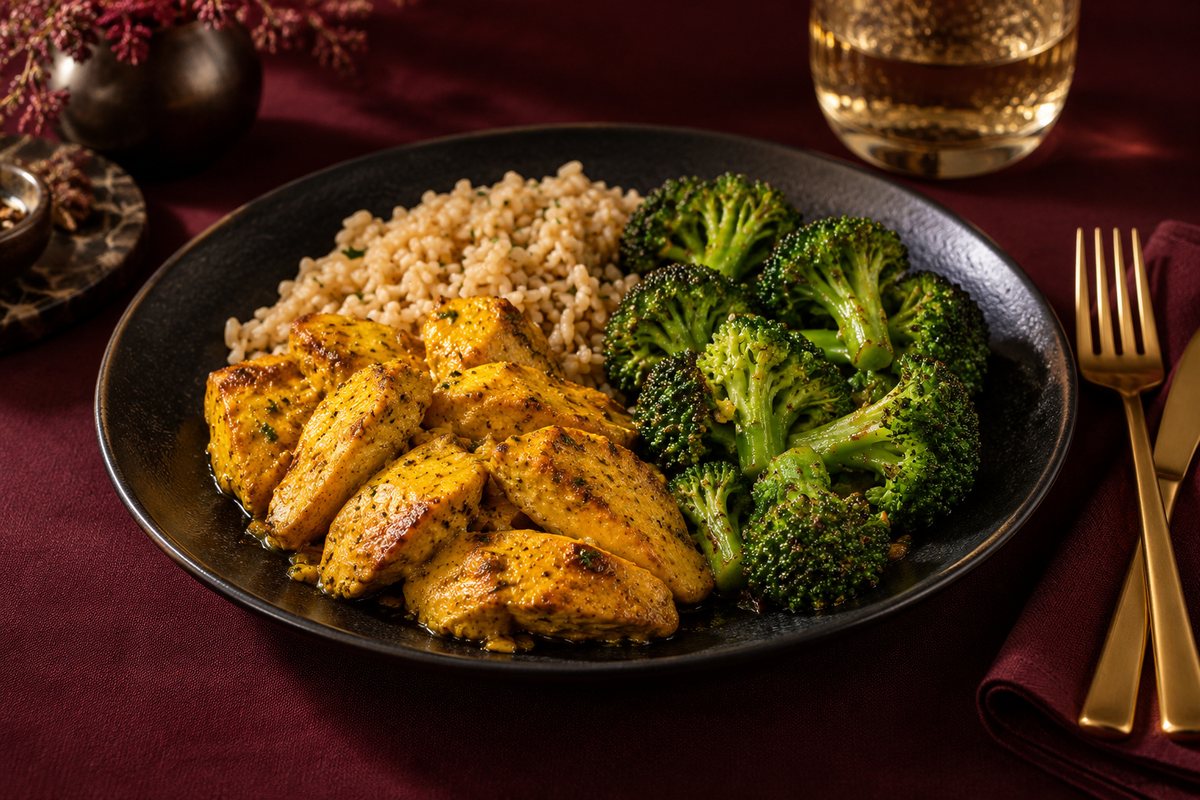
Turmeric chicken and rice from Mrs. Revell's family kitchen
LunchMrs. Revell's kitchen

Turmeric chicken and rice

30 min · One adult serving / mild flavor / all vegetables cooked

Good for: This borrows the warmth of South Asian spice cooking without chili heat. Turmeric makes low-salt food more inviting. The protein, vegetable volume, and measured whole grain carry the meal; a culinary sprinkle is not a medical turmeric treatment.

Ingredients

  • 5 oz raw chicken breast, cubed
  • 1/2 cup cooked brown rice
  • 1 1/2 cups broccoli florets
  • 1 tsp olive oil
  • 1/4 tsp turmeric
  • 1 garlic clove
  • 1 tbsp lemon juice
  • pepper

Steps

  1. Warm half the oil in a pan.
  2. Add chicken, turmeric, garlic, and pepper; cook 8-12 minutes, stirring, until chicken reaches 165 °F.
  3. Saute broccoli in remaining oil with 2 tbsp water, covered for 5-7 minutes until tender.
  4. Add lemon and cooked rice.

Make ahead: Cook Sunday. Portion rice, chicken, and broccoli in a shallow container. Keep refrigerated at 40 °F or below until Tuesday lunch; carry in your cold cooler.

Swap it: Try firm tofu with the same mild seasoning, or turkey breast cooked to 165 °F. Keep the broccoli generous.

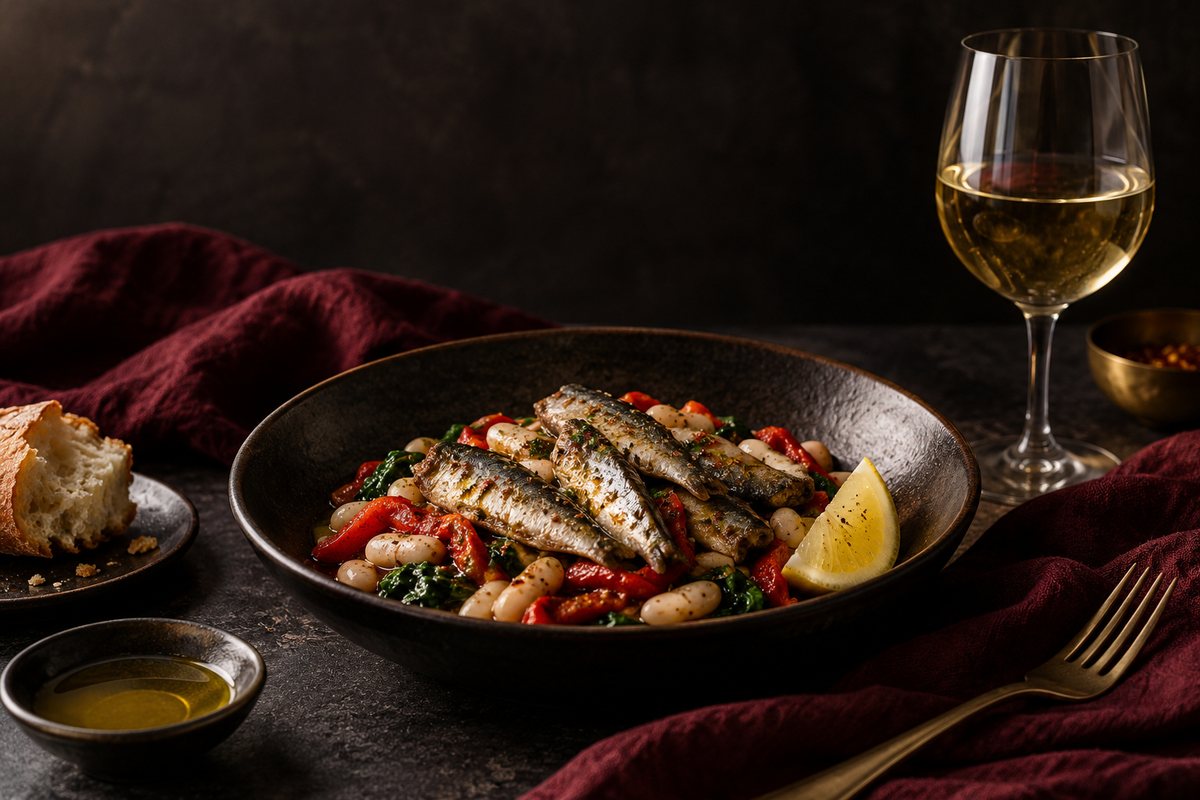
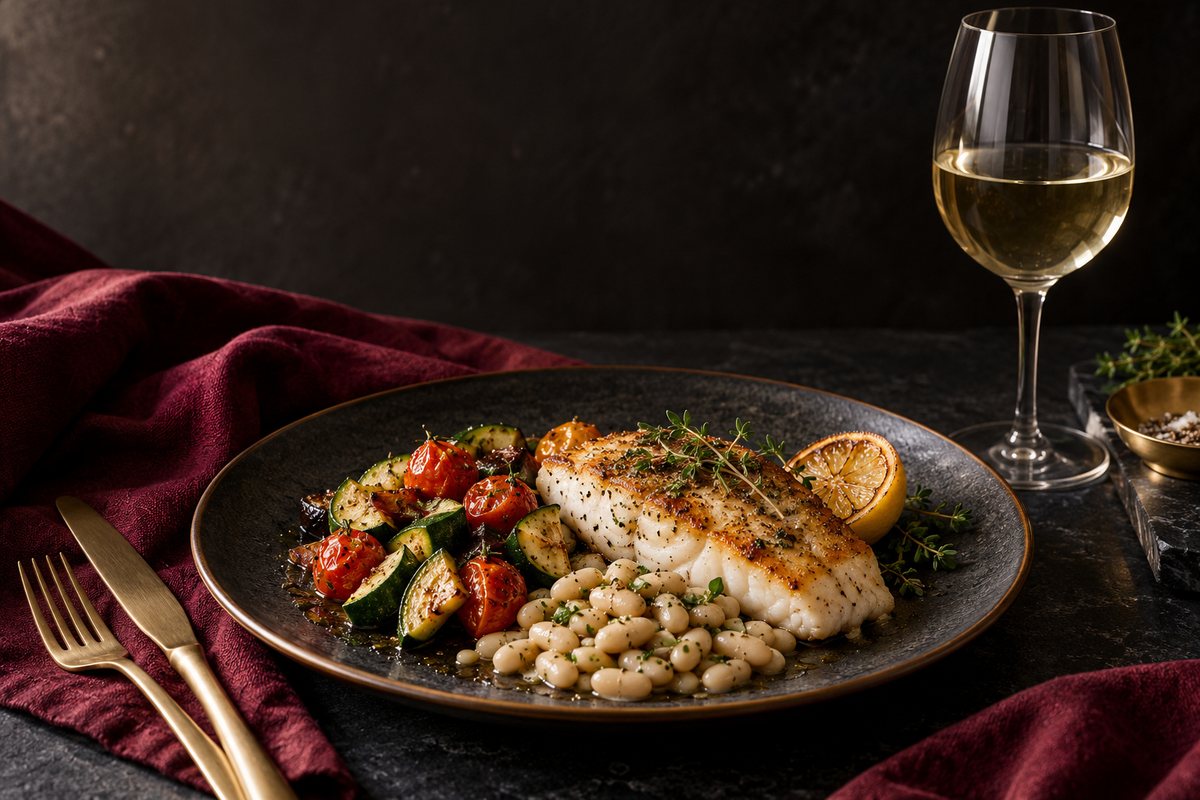
Warm sardine & white-bean bowl from Mrs. Revell's family kitchen
LunchMrs. Revell's kitchen

Warm sardine & white-bean bowl

15 min · 1 adult serving / measured ingredients / all vegetables cooked

Good for:

Ingredients

  • 3 oz drained canned sardines
  • 1/2 cup cooked no-salt-added white beans
  • 1/2 cup sliced red bell pepper
  • 2 cups raw spinach, fully wilted
  • 1 tsp olive oil
  • 1 garlic clove
  • 1 tbsp lemon juice
  • 2 tbsp water

Steps

  1. Saute pepper in oil 6-8 minutes.
  2. Add garlic and spinach; cook until spinach wilts.
  3. Stir in beans and water, then gently warm sardines 2-3 minutes, keeping pieces intact.
  4. Add lemon.
  5. Makes one bowl, one serving.

Swap it: Sardine is a market name used for several small fish species. Pacific sardine, Sardinops sagax, occurs off the North American Pacific coast; tins also come from other fisheries. Check the tin for species, country, and packing liquid.

Baked chicken tenders from Mrs. Revell's family kitchen
DinnerMrs. Revell's kitchen

Baked chicken tenders

35 min · Serves 4 / crispy without a fryer / kids ask for these

Good for: The crumb coating gets its crunch from the rack and the oven, not from oil, so these have a fraction of the fat of the drive-through version and no deep fryer in the house. Parmesan brings the salty flavor so you do not need to add salt on top of it.

Ingredients

  • 1 1/2 lb boneless skinless chicken breast, cut into strips
  • 1 cup panko breadcrumbs
  • 1/3 cup grated parmesan
  • 2 eggs
  • 1 tbsp olive oil
  • 1 tsp paprika
  • 1/2 tsp garlic powder
  • 1/2 tsp onion powder
  • 1/4 tsp black pepper. No added salt — the parmesan carries it

Steps

  1. Heat oven to 425 °F and set a wire rack on a sheet pan.
  2. Beat the eggs in one bowl.
  3. Mix panko, parmesan, oil and all the spices in another.
  4. Dip each strip in egg, press firmly into the crumbs, lay on the rack.
  5. Bake 18-22 minutes, turning once, until 165 °F in the thickest strip and the coating is golden.
  6. Rest 3 minutes.

Make ahead: Bread them the night before and keep covered in the fridge. They bake straight from cold, just add 3 minutes. Leftovers reheat crisp in the oven at 375 °F for 8 minutes — not the microwave.

Swap it: Use turkey breast the same way. For a fish night, cut cod into the same strips and drop the bake to 12-14 minutes, checking 145 °F.

Baked cornmeal catfish from Mrs. Revell's family kitchen
DinnerMrs. Revell's kitchen

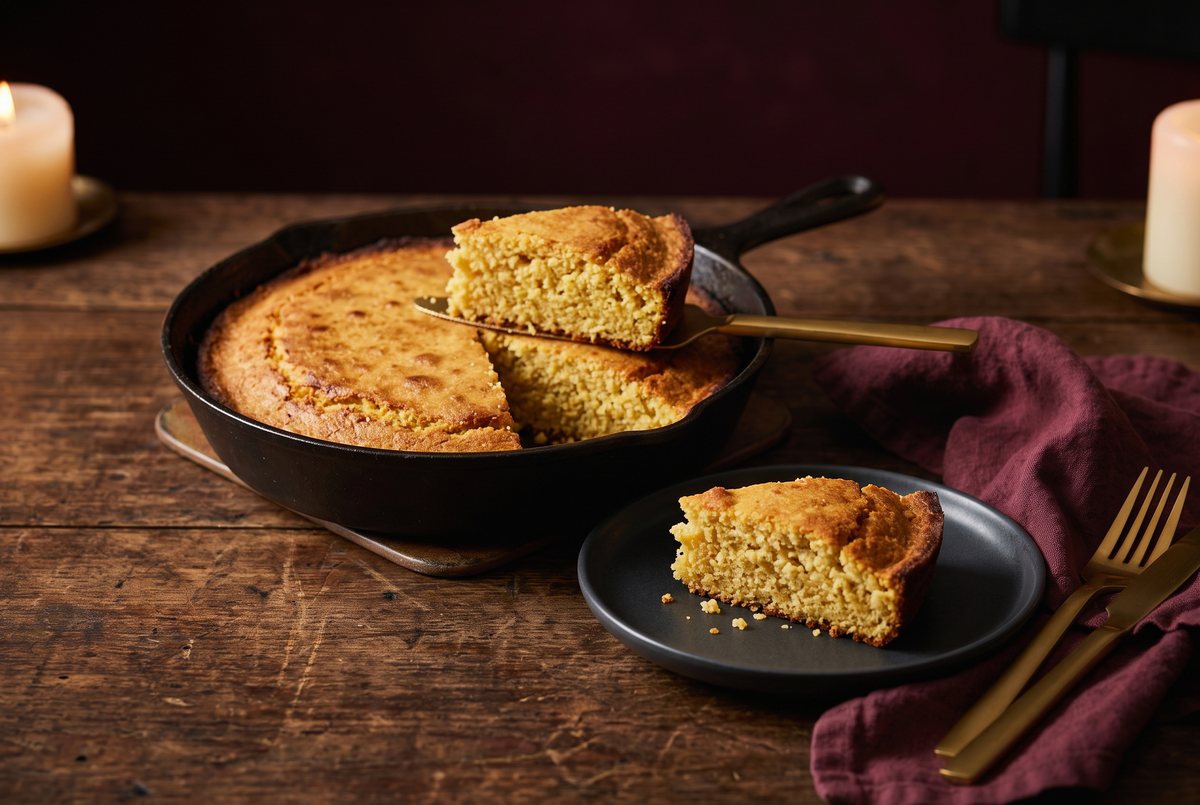
Baked cornmeal catfish

30 min · Serves 4 / Friday fish, out of the fryer

Good for: Fried catfish is a Friday tradition worth keeping. The preheated pan plus two tablespoons of oil gets you the crunch without a pot of grease, and the fish stays moist because it cooks fast and hot.

Ingredients

  • 4 catfish fillets, about 6 oz each
  • 3/4 cup cornmeal
  • 1/4 cup whole-wheat flour
  • 1 tsp paprika
  • 1 tsp garlic powder
  • 1/2 tsp onion powder
  • 1/2 tsp dried thyme
  • 1/4 tsp cayenne (leave out for little ones)
  • black pepper
  • 2 tbsp olive oil
  • lemon wedges

Steps

  1. Heat oven to 450 °F with a sheet pan inside it — a hot pan is what gives you the crust.
  2. Mix the cornmeal, flour and spices on a plate.
  3. Brush the fillets with half the oil, press both sides into the cornmeal.
  4. Pull the hot pan out, add the rest of the oil, lay the fish down, it should hiss.
  5. Bake 12-15 minutes without turning, to 145 °F.
  6. Lemon at the table.

Make ahead: Mix a big jar of the cornmeal coating and keep it in the cupboard. It works on any fish.

Swap it: Tilapia, whiting or porgy all work. Thicker cuts need 3-4 minutes more.

African roots: Catfish was a river fish Africans knew well; it is still stewed and smoked across West Africa. Cornmeal is Indigenous American.

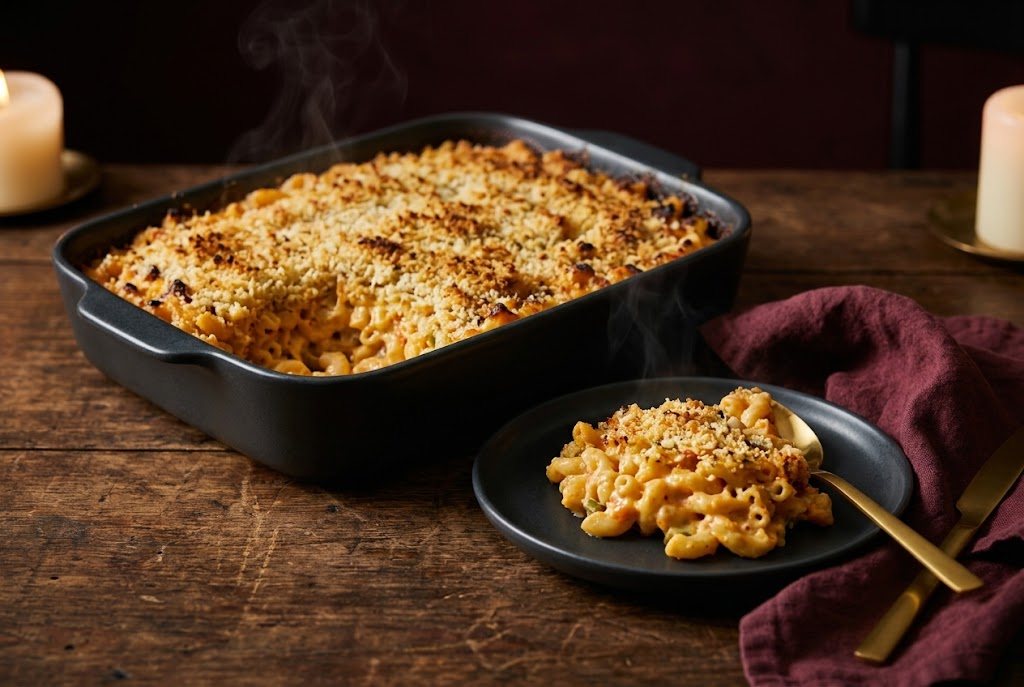
Baked mac with hidden vegetables from Mrs. Revell's family kitchen
DinnerMrs. Revell's kitchen

Baked mac with hidden vegetables

55 min · Serves 8 / the holiday dish, lightened

Good for: The squash puree does what an extra two cups of cheese used to do — it makes it orange and creamy. Nobody can taste it. You get the dish everybody wants at the table with half the cheese and a vegetable nobody argued about.

Ingredients

  • 1 lb whole-wheat elbows
  • 2 cups butternut squash or cauliflower, steamed soft
  • 2 cups milk
  • 2 cups shredded sharp cheddar
  • 1/2 cup grated parmesan
  • 2 tbsp olive oil
  • 2 tbsp flour
  • 1 tsp dijon
  • 1/2 tsp garlic powder
  • 1/4 tsp nutmeg
  • black pepper
  • 1/2 cup panko mixed with 1 tsp oil for the top

Steps

  1. Heat oven to 375 °F.
  2. Boil the pasta two minutes short.
  3. Blend the cooked squash with 1 cup of the milk until completely smooth.
  4. Make a roux with the oil and flour, 2 minutes, whisk in the rest of the milk and the squash puree, cook until it coats a spoon.
  5. Off the heat stir in the cheddar, parmesan, dijon, nutmeg and pepper.
  6. Fold in the pasta, pour into a baking dish, scatter the panko.
  7. Bake 25-30 minutes until bubbling and brown on top.

Make ahead: Assemble it the day before and bake it the day of, adding 10 minutes from cold.

Swap it: Cauliflower is more neutral if someone in the house is suspicious of squash.

Black-eyed pea soup from Mrs. Revell's family kitchen
DinnerMrs. Revell's kitchen

Black-eyed pea soup

1 hr · Serves 6 / cheap / New Year's any day

Good for: Dried beans cost a fraction of canned, have no added sodium at all, and taste better. The vinegar at the end is what makes a bean pot taste finished instead of flat.

Ingredients

  • 1 lb dried black-eyed peas, soaked overnight and drained
  • 1 smoked turkey wing, about 10 oz
  • 1 onion, diced
  • 2 carrots, diced
  • 2 celery stalks, diced
  • 4 garlic cloves
  • 1 tbsp olive oil
  • 8 cups water
  • 2 bay leaves
  • 1 tsp thyme
  • 1/2 tsp smoked paprika
  • black pepper
  • 1 tbsp apple cider vinegar at the end

Steps

  1. Soften the onion, carrot and celery in the oil for 8 minutes.
  2. Garlic 1 minute.
  3. Add the peas, turkey, water, bay and thyme.
  4. Bring up, then simmer covered 45-55 minutes until the peas are soft.
  5. Pull the turkey, shred, return the meat.
  6. Fish out the bay leaves.
  7. Stir in the vinegar and the paprika off the heat.

Make ahead: Soak the peas the night before. The soup keeps 4 days and freezes 3 months.

Swap it: No soak? Use two cans of black-eyed peas, rinsed, and cut the simmer to 20 minutes.

African roots: Black-eyed peas were domesticated in West Africa and came over with our ancestors. New Year's peas are a West African story we still tell every January 1st.

Collards with smoked turkey from Mrs. Revell's family kitchen
DinnerMrs. Revell's kitchen

Collards with smoked turkey

1 hr 15 min · Serves 6 as a side / no pork / Sunday pot

Good for: Smoked turkey gives you the same smoke and depth as a ham hock with far less saturated fat, and you control the salt instead of the cure doing it for you. Greens are a Southern table staple and there is no reason to change that — only how they are seasoned.

Ingredients

  • 2 lb collard greens, stems stripped, chopped
  • 1 smoked turkey wing or leg, about 12 oz
  • 1 onion, diced
  • 4 garlic cloves
  • 1 tbsp olive oil
  • 4 cups water
  • 2 tbsp apple cider vinegar
  • 1/2 tsp red pepper flakes
  • black pepper. Taste before you reach for any salt — the turkey brings plenty

Steps

  1. Brown the onion in the oil in a heavy pot, 6 minutes.
  2. Add garlic 1 minute.
  3. Add the turkey and water, bring to a boil, then drop to a simmer for 30 minutes to build the pot likker.
  4. Add the greens in handfuls as they wilt down.
  5. Cover and simmer 35-45 minutes until tender.
  6. Pull the turkey, shred the meat off, return it.
  7. Finish with the vinegar off the heat.

Make ahead: Greens are better reheated. Make them Sunday and they carry through Wednesday.

Swap it: Kale or mustard greens cook in half the time. Leave the meat out and use a teaspoon of smoked paprika plus a little extra vinegar.

Safety: Warfarin users: keep your greens steady week to week.

African roots: Slow-cooked greens and their pot likker echo the West African leaf stews our foremothers made. The collard is Mediterranean; the method is ours.

Roasted sweet potato wedges from Mrs. Revell's family kitchen
DinnerMrs. Revell's kitchen

Roasted sweet potato wedges

40 min · Serves 4 / the side that replaces fries

Good for: Skin on means the fiber stays. The cinnamon is not a sweetener but it reads as sweet, which is why these satisfy the same craving as fries with a tablespoon of oil for the whole pan.

Ingredients

  • 3 medium sweet potatoes, scrubbed, cut into wedges
  • 1 tbsp olive oil
  • 1 tsp paprika
  • 1/2 tsp garlic powder
  • 1/2 tsp cinnamon
  • 1/4 tsp black pepper

Steps

  1. Heat oven to 425 °F.
  2. Toss the wedges with everything until coated.
  3. Spread on a sheet pan in one layer with space between them — crowded wedges steam instead of roast.
  4. Roast 30-35 minutes, turning once at the halfway mark, until the edges are dark and crisp.

Make ahead: Cut them Sunday and keep them in water in the fridge. Drain and dry well before roasting.

Swap it: Regular potatoes, butternut squash or carrots all take the same treatment and the same time.

African roots: Sweet potatoes are American, but our ancestors cooked them the way they cooked West African yams, and the name "yam" stuck.

Salmon cakes from Mrs. Revell's family kitchen
DinnerMrs. Revell's kitchen

Salmon cakes

25 min · Makes 8 cakes / serves 4 / pantry dinner

Good for: Canned salmon costs a fraction of a fillet, keeps in the cupboard, and the soft bones in it are an actual source of calcium if you mash them in. This is the cheapest omega-3 on the shelf.

Ingredients

  • 2 cans pink salmon, 14 oz total, drained and flaked
  • 1 egg
  • 1/2 cup panko
  • 3 scallions, sliced thin
  • 1/2 red pepper, minced
  • 2 tbsp plain yogurt
  • 1 tbsp lemon juice
  • 1 tsp dijon mustard
  • 1/2 tsp paprika
  • black pepper
  • 1 tbsp olive oil for the pan

Steps

  1. Mix everything except the oil in a bowl, gently, so the fish keeps some texture.
  2. Shape 8 patties about three inches across and chill them 10 minutes — this is what keeps them from falling apart.
  3. Heat the oil over medium and cook 4 minutes a side until a crust forms.

Make ahead: Shape them Sunday, stack with parchment between, and they will cook straight from the fridge all week. They are also good cold in a sandwich the next day.

Swap it: Canned mackerel works and is cheaper still. Drained canned tuna works but is drier — add an extra tablespoon of yogurt.

Turkey chili with three beans from Mrs. Revell's family kitchen
DinnerMrs. Revell's kitchen

Turkey chili with three beans

50 min · Serves 6 / mild as written / freezes well

Good for: Rinsing canned beans washes off a good share of the sodium. Three beans instead of one gives you more fiber and a better texture. Nobody misses the salt because the toasted spices do the work.

Ingredients

  • 1 lb ground turkey (93% lean)
  • 1 can each kidney, black and pinto beans, 15 oz, rinsed
  • 1 can crushed tomatoes, 28 oz, no salt added
  • 1 onion, diced
  • 1 green pepper, diced
  • 3 garlic cloves
  • 1 tbsp olive oil
  • 2 tbsp chili powder
  • 1 tsp cumin
  • 1 tsp paprika
  • 1 tsp oregano
  • 1/4 tsp black pepper
  • 1 cup water

Steps

  1. Heat the oil in a big pot.
  2. Cook the onion and pepper 5 minutes, add garlic for 1 more.
  3. Add the turkey and break it up until no pink is left, about 6 minutes.
  4. Stir in every spice and let it toast 30 seconds — this is the step most people skip and it is where the flavor comes from.
  5. Add tomatoes, beans and water.
  6. Simmer uncovered 30 minutes, stirring now and then.

Make ahead: Better the second day. Keeps 4 days in the fridge, 3 months frozen in portions. Cool it on the counter no longer than 2 hours before it goes in.

Swap it: Leave the turkey out entirely and add a fourth can of beans plus a cup of corn — it still tastes like chili. For the little ones, pull their bowl before you add any hot pepper.

Whole-wheat pasta, turkey tomato sauce from Mrs. Revell's family kitchen
DinnerMrs. Revell's kitchen

Whole-wheat pasta, turkey tomato sauce

35 min · Serves 5 / weeknight / one pot plus the pasta

Good for: The grated carrot melts away and takes the sharp edge off the tomatoes, which means no sugar in the sauce. Whole-wheat pasta has roughly three times the fiber of white and the sauce hides it.

Ingredients

  • 12 oz whole-wheat penne or rotini
  • 1 lb ground turkey
  • 1 can crushed tomatoes, 28 oz, no salt added
  • 1 onion, diced
  • 4 garlic cloves
  • 1 carrot, grated
  • 1 tbsp olive oil
  • 1 tsp dried basil
  • 1 tsp oregano
  • 1/4 tsp red pepper flakes (leave out for little ones)
  • black pepper
  • grated parmesan to finish

Steps

  1. Boil the pasta in unsalted water to the package time, minus a minute.
  2. While it cooks, heat the oil and soften the onion and grated carrot 6 minutes.
  3. Add garlic 1 minute.
  4. Add the turkey, break up, cook until no pink.
  5. Add tomatoes and herbs, simmer 15 minutes.
  6. Drain the pasta, saving a cup of its water, and stir it into the sauce with a splash of that water.

Make ahead: Make the sauce Sunday and keep it in a jar. It is 10 minutes to dinner any night that week.

Swap it: Ground chicken works the same. For meatless, swap in a can of rinsed lentils at the tomato stage.

Atlantic mackerel with Southern greens from Mrs. Revell's family kitchen
DinnerMrs. Revell's kitchen

Atlantic mackerel with Southern greens

35 min · 1 adult serving / measured ingredients / all vegetables cooked

Good for:

Ingredients

  • 5 oz raw Atlantic mackerel fillet
  • 1 cup already cooked collards, prepared without salty pork
  • 1/2 cup cubed sweet potato
  • 1 tsp olive oil
  • 1 tbsp lemon juice
  • 1/4 tsp smoked paprika
  • pepper
  • 1 tbsp water

Steps

  1. Heat oven to 400 °F.
  2. Toss sweet potato with half the oil and roast about 20-25 minutes until tender.
  3. Brush mackerel with remaining oil, lemon, paprika, and pepper; bake about 10-15 minutes to 145 °F.
  4. Warm collards with water.
  5. One plate serves one.

Swap it: Choose Atlantic mackerel, Scomber scombrus, from the North Atlantic. It is different from king mackerel. Species matters: FDA places Atlantic mackerel among lower-mercury Best Choices; king mackerel is in its highest-mercury avoid category.

Safety: Warfarin users: keep your greens steady week to week.

African roots: Oily fish and greens is an old pairing on both sides of the Atlantic: smoked mackerel is a staple in Ghana and Nigeria.

Black sea bass with lemon & quinoa from Mrs. Revell's family kitchen
DinnerMrs. Revell's kitchen

Black sea bass with lemon & quinoa

30 min · 1 adult serving / measured ingredients / all vegetables cooked

Good for:

Ingredients

  • 5 oz raw black sea bass fillet
  • 1/2 cup cooked quinoa
  • 1 1/2 cups sliced zucchini
  • 1 tsp olive oil
  • 1 tbsp lemon juice
  • 1 garlic clove
  • 1/4 tsp thyme
  • pepper
  • 1 tbsp water

Steps

  1. Heat oven to 400 °F.
  2. Brush fish with half the oil, lemon, garlic, thyme, and pepper; bake roughly 10-15 minutes until 145 °F at the thickest point.
  3. Saute zucchini in remaining oil with water for 7-9 minutes until tender.
  4. Warm quinoa.
  5. The whole plate serves one.

Swap it: This is black sea bass, Centropristis striata, from western Atlantic waters, not toothfish sold as Chilean sea bass. Ask the fish counter to confirm the species and actual origin. The picture illustrates the dish; it is not a species-identification photograph.

Garlic-herb chicken with black rice from Mrs. Revell's family kitchen
DinnerMrs. Revell's kitchen

Garlic-herb chicken with black rice

40 min · One adult serving / mild flavor / all vegetables cooked

Good for: Black rice adds color and whole-grain variety, not a blood sugar exemption. Roasted Brussels sprouts give sweetness without glaze. Garlic makes a low-salt meal flavorful; clinical garlic studies often use supplements rather than roasted cloves.

Ingredients

  • 5 oz raw skinless chicken breast
  • 1 1/2 cups halved Brussels sprouts
  • 1/2 cup cooked whole-grain black rice
  • 1 tsp olive oil
  • 1 garlic clove
  • 1/4 tsp thyme
  • 1 tbsp lemon juice
  • pepper to taste

Steps

  1. Cook black rice by its packet, without a salty broth.
  2. Heat oven to 400 °F.
  3. Toss sprouts with half the oil and roast 20-30 minutes.
  4. Season chicken with remaining oil, garlic, and thyme; bake about 20-25 minutes to 165 °F.
  5. Finish with lemon.

Make ahead: Cook Wednesday night. Chill a dinner portion with chicken sliced for even reheating. If Friday plans change, freeze the unused portion promptly instead of leaving it for several more days.

Swap it: Use skinless turkey, lean pork tenderloin, or tofu. Whole pork cuts need 145 °F plus a three-minute rest before cooling; poultry needs 165 °F.

Grilled salmon & cinnamon sweet potato from Mrs. Revell's family kitchen
DinnerMrs. Revell's kitchen

Grilled salmon & cinnamon sweet potato

40 min · One adult serving / mild flavor / all vegetables cooked

Good for: Sweet potato supplies a satisfying starch in a modest serving. Cinnamon adds sweetness in aroma, so the mash needs no brown sugar. Asparagus adds cooked vegetable volume. This supports the overall pattern; cinnamon itself is not proven glucose control. Greens, sweet potatoes and okra have a place in African-American food heritage, documented by Smithsonian. This recipe draws on that tradition while using measured seasoning and modern food safety.

Ingredients

  • 5 oz raw salmon
  • 1 1/2 cups asparagus pieces
  • 1 small sweet potato, about 4 oz
  • 1 tsp olive oil
  • 1 tbsp lemon
  • pinch cinnamon
  • pepper
  • water for mashing

Steps

  1. Bake sweet potato at 400 °F for about 40-50 minutes until soft.
  2. Mash without sugar using cinnamon and a splash of water.
  3. Roast asparagus with half the oil 10-15 minutes.
  4. Brush salmon with remaining oil and lemon; grill until it reaches 145 °F.

Make ahead: Make Sunday and freeze the cooled meal for best fish quality. Move it to the refrigerator Monday night to thaw for Tuesday dinner. The sweet potato and asparagus can share the container.

Swap it: Cod, pollock, or trout can replace salmon. Lean white fish has less omega-3 fat than oily fish, but still provides useful protein.

Herb trout with barley & beans from Mrs. Revell's family kitchen
DinnerMrs. Revell's kitchen

Herb trout with barley & beans

35 min · 1 adult serving / measured ingredients / all vegetables cooked

Good for:

Ingredients

  • 5 oz raw rainbow trout fillet
  • 1/2 cup cooked barley
  • 1 1/2 cups green beans
  • 1 tsp olive oil
  • 1 tbsp lemon juice
  • 1/4 tsp dried dill or thyme
  • 1 tbsp water
  • pepper to taste

Steps

  1. Brush trout with half the oil, lemon, and dill.
  2. Bake at 400 °F about 10-15 minutes, checking 145 °F.
  3. Steam green beans 6-8 minutes; toss with remaining oil.
  4. Warm cooked barley with 1 tbsp water.
  5. Plate the full recipe as one serving.

Swap it: Rainbow trout is a cool-water fish, sold farmed or wild-caught; it is not always an ocean fish. Country and farm/wild origin vary by seller. Buy labeled rainbow trout; check local advisories for personally caught fish.

Herb-grilled salmon with almond green beans from Mrs. Revell's family kitchen
DinnerMrs. Revell's kitchen

Herb-grilled salmon with almond green beans

30 min · One adult serving / mild flavor / all vegetables cooked

Good for: This draws on Mediterranean-style combinations of fish, vegetables, nuts, and olive oil. Quinoa adds protein and fiber but still contains carbohydrate. Small amounts of almonds and oil provide unsaturated fats without needing a heavy sauce.

Ingredients

  • 5 oz raw salmon
  • 1 1/2 cups green beans
  • 1/2 cup cooked quinoa
  • 1 tbsp unsalted slivered almonds
  • 1 tsp olive oil
  • 1 tbsp lemon juice
  • 1 tsp chopped dill or 1/4 tsp dried thyme
  • pepper to taste

Steps

  1. Rinse quinoa and cook by packet directions.
  2. Steam green beans 6-8 minutes, or longer to your liking.
  3. Toss with half the oil and almonds.
  4. Brush salmon with remaining oil, herbs, and lemon; grill or bake to 145 °F.
  5. Plate with quinoa.

Make ahead: Prepare Wednesday night for Thursday. Cool promptly and refrigerate the whole meal. Keep almonds separately if you prefer their crunch after heating.

Swap it: Try trout or lean cod, or baked tofu. Keep oily fish in some meals across the week rather than relying only on white fish.

Lemon cod & white-bean skillet from Mrs. Revell's family kitchen
DinnerMrs. Revell's kitchen

Lemon cod & white-bean skillet

30 min · 1 adult serving / measured ingredients / all vegetables cooked

Good for:

Ingredients

  • 5 oz raw Pacific cod fillet
  • 1/2 cup cooked no-salt-added white beans
  • 1 cup sliced zucchini
  • 1/2 cup chopped tomatoes
  • 1 tsp olive oil
  • 1 garlic clove
  • 1 tbsp lemon juice
  • 1/4 tsp dried thyme
  • 2 tbsp water

Steps

  1. Saute zucchini in oil 5 minutes.
  2. Add tomato, garlic, thyme, beans, and water; simmer 5 minutes.
  3. Nestle cod into the skillet, cover, and cook about 6-10 minutes to 145 °F at the thickest part.
  4. Finish with lemon.
  5. One skillet portion serves one.

Swap it: Pacific cod is Gadus macrocephalus, a North Pacific species; U.S. catch includes Alaska. Atlantic cod is a different species. Check the label rather than assuming all cod is from the same ocean.

Shrimp & veggie stir-fry from Mrs. Revell's family kitchen
DinnerMrs. Revell's kitchen

Shrimp & veggie stir-fry

20 min · One adult serving / mild flavor / all vegetables cooked

Good for: East Asian-style stir-fry lets cooked vegetables be the main event. A measured sauce avoids the sodium load of restaurant portions. Ginger is here for flavor; studies of capsules in diabetes do not prove a spoonful treats blood sugar.

Ingredients

  • 5 oz peeled raw shrimp
  • 1/2 cup cooked brown rice
  • 1 1/2 cups broccoli, carrot, and zucchini
  • 1 tsp olive oil
  • 1 tsp grated ginger
  • 1 garlic clove
  • 1 tsp reduced-sodium soy sauce
  • 1 tbsp water

Steps

  1. Saute chopped vegetables in oil 6-8 minutes until tender.
  2. Add ginger and garlic, then shrimp; cook 3-5 minutes until pearly and opaque.
  3. Add measured soy sauce and water; toss with cooked rice.
  4. Reduced-sodium soy sauce still contains salt.

Make ahead: Cook Sunday and freeze this cooled Wednesday dinner for seafood quality. Thaw in the refrigerator Tuesday night. Reheat gently, stirring, but still verify 165 °F throughout.

Swap it: Firm tofu, cod pieces, or chicken work. Cook fish to 145 °F and chicken to 165 °F before cooling. Use no-salt seasoning plus lemon if avoiding soy sauce.

Shrimp, okra & tomato stew from Mrs. Revell's family kitchen
DinnerMrs. Revell's kitchen

Shrimp, okra & tomato stew

40 min · 1 adult serving / measured ingredients / all vegetables cooked

Good for:

Ingredients

  • 5 oz peeled raw shrimp
  • 1 cup sliced okra
  • 1/2 cup chopped no-salt-added tomatoes
  • 1/4 cup chopped onion
  • 1/4 cup chopped celery
  • 1/3 cup cooked brown rice
  • 1 tsp olive oil
  • 1 garlic clove
  • 1/4 tsp smoked paprika
  • 1/2 cup water

Steps

  1. Saute onion/celery in oil 5 minutes.
  2. Add garlic, okra, tomatoes, paprika, and water.
  3. Cover and simmer 12-15 minutes until vegetables are tender.
  4. Add shrimp and simmer 3-5 minutes until pearly and opaque.
  5. Serve over rice.
  6. Makes one generous bowl.

Swap it: Shrimp may be wild-caught or farmed, from U.S. or imported waters. The package tells you the actual origin; this recipe does not assume a particular source. Plain shrimp differs from heavily brined, breaded, or seasoned shrimp.

African roots: Okra is an African crop, and "gumbo" comes from Bantu words for okra. This pot is a cousin of West African okra soup.

Southern baked chicken plate from Mrs. Revell's family kitchen
DinnerMrs. Revell's kitchen

Southern baked chicken plate

45 min · One adult serving / mild flavor / all vegetables cooked

Good for: Southern comfort comes from slow-cooked greens and smoky paprika, without needing salty pork. Beans give fiber and protein; skinless chicken keeps saturated fat lower than many fried or processed meat choices. Greens, sweet potatoes and okra have a place in African-American food heritage, documented by Smithsonian. This recipe draws on that tradition while using measured seasoning and modern food safety.

Ingredients

  • 5 oz raw skinless chicken breast
  • 2 cups chopped raw collards
  • 1/2 cup cooked black beans
  • 1 tsp olive oil
  • 1 garlic clove
  • 1/4 tsp each paprika and thyme
  • water and splash vinegar

Steps

  1. Heat oven to 400 °F.
  2. Rub chicken with half the oil, paprika, thyme, and pepper.
  3. Bake about 20-25 minutes to 165 °F.
  4. In a covered pan, simmer collards with garlic, remaining oil, and a little water for 25-40 minutes until tender.
  5. Finish with vinegar; warm beans.

Make ahead: Bake chicken and cook collards/beans Sunday. Chill as a ready dinner portion. When you get home, reheat rather than start cooking. Thinly sliced chicken reheats more evenly.

Swap it: Use skinless turkey breast, cooked to 165 °F, or add more black beans and a little quinoa if you want a meat-free plate.

Banana peanut butter shake from Mrs. Revell's family kitchen
DrinkMrs. Revell's kitchen

Banana peanut butter shake

3 min · Makes 2 cups / 2 servings / after school

Good for: This is the one the kids will choose over a soda, and it is a banana, milk and peanuts. Freezing the banana first is what makes it thick enough to feel like a milkshake.

Ingredients

  • 1 frozen banana, sliced before freezing
  • 1 cup milk or unsweetened plant milk
  • 1 tbsp peanut butter, no sugar added
  • 1/4 tsp cinnamon
  • 1/2 tsp vanilla
  • 2 ice cubes. No honey, no syrup — the banana is the sweetener

Steps

  1. Blend 45 seconds until there are no banana flecks left.
  2. Pour into two cups.

Make ahead: Peel and freeze bananas whenever they go spotty. A bag of them in the freezer is the whole trick.

Swap it: Sunflower seed butter if there is a nut allergy in the house. Half an avocado instead of the peanut butter makes it richer with no nuts at all.

Safety: Juice still counts as sugar, so keep it to a small glass with a meal. On potassium limits, warfarin or kidney care? Ask your care team about concentrated juices.

African roots: Peanuts went from South America to Africa and back to the American South with enslaved Africans; "goober" is from the Kikongo word nguba.

Blueberry cream, with the fiber kept from Mrs. Revell's family kitchen
DrinkMrs. Revell's kitchen

Blueberry cream, with the fiber kept

5 min · 2 servings / about 1 cup each / blend, do not strain

Good for: Keeping the whole berries keeps their fiber. Yogurt supplies protein and contributes calcium. Flax stays in the glass rather than the pulp bin. The drink still contains carbohydrate, and your portion still matters.

Ingredients

  • 1 cup fresh or frozen blueberries
  • 1 cup plain low-fat Greek yogurt
  • 3/4 cup cold water
  • 1 tbsp packaged food-grade ground flaxseed, optional and cleared with your pharmacist
  • 1/4 tsp vanilla extract. No juice or sweetener

Steps

    Safety: Juice still counts as sugar, so keep it to a small glass with a meal. On potassium limits, warfarin or kidney care? Ask your care team about concentrated juices.

    Carrot, orange & a touch of ginger from Mrs. Revell's family kitchen
    DrinkMrs. Revell's kitchen

    Carrot, orange & a touch of ginger

    10 min · Final drink: 1 cup / 2 servings of 4 fl oz each

    Good for:

    Ingredients

    • 2 medium carrots, about 4 oz total
    • 1/2 small orange, peeled and seeded, about 2 oz edible flesh
    • one 1/4-inch slice fresh ginger
    • 1 tsp lime juice
    • cold drinking water as needed to make 1 cup

    Steps

    1. Rinse carrots and ginger; remove orange peel and seeds.
    2. Juice the carrots, orange flesh, and ginger if allowed by your juicer.
    3. Stir in lime, measure, and add water to 1 cup.
    4. Serve two portions of 1/2 cup each; reserve surplus separately.

    Make ahead: Pour one 1/2-cup serving into a clean small bottle. Keep at 40 °F or below in your cooler. Enjoy with your bean, fish, or chicken lunch; drink water for the rest of your thirst. Make fresh rather than keeping a week of juice.

    Swap it: This combination is not a tested BP or diabetes treatment; natural sugar still counts. Serve 1/2 cup. If needed, add 1/8 tsp granulated stevia or monk-fruit blend labeled 1:1 sugar replacement to the entire 1-cup batch. For concentrated products follow the label instead. sweetness adds no proven health benefit.

    Safety: Juice still counts as sugar, so keep it to a small glass with a meal. On potassium limits, warfarin or kidney care? Ask your care team about concentrated juices.

    Cucumber, celery & lime from Mrs. Revell's family kitchen
    DrinkMrs. Revell's kitchen

    Cucumber, celery & lime

    10 min · Final drink: 1 cup / 2 servings of 4 fl oz each

    Good for: Mostly nonstarchy produce with citrus brightness, using less fruit than an apple-heavy green juice. It can help you enjoy a drink without added sugar; it is not proven to lower BP or sugar.

    Ingredients

    • 1/2 medium cucumber, about 5 oz
    • 1 medium celery stalk, about 1 1/2 oz
    • 1 tbsp fresh lime juice
    • cold drinking water as needed to bring extracted juice to 1 cup. No salt
    • optional sweetness below

    Steps

    1. Rinse and cut cucumber/celery to the juicer manual.
    2. Juice them, then stir in lime.
    3. Measure; add cold water to reach 1 cup.
    4. If extraction exceeds 1 cup, save the surplus as a separate measured portion.
    5. Split the cup into two 1/2-cup servings.

    Make ahead: Pour one 1/2-cup serving into a clean small bottle. Keep at 40 °F or below in your cooler. Enjoy with your bean, fish, or chicken lunch; drink water for the rest of your thirst. Make fresh rather than keeping a week of juice.

    Swap it: This combination is not a tested BP or diabetes treatment; natural sugar still counts. Serve 1/2 cup. If needed, add 1/8 tsp granulated stevia or monk-fruit blend labeled 1:1 sugar replacement to the entire 1-cup batch. For concentrated products follow the label instead. sweetness adds no proven health benefit.

    Safety: Juice still counts as sugar, so keep it to a small glass with a meal. On potassium limits, warfarin or kidney care? Ask your care team about concentrated juices.

    Cucumber, pear & garden mint from Mrs. Revell's family kitchen
    DrinkMrs. Revell's kitchen

    Cucumber, pear & garden mint

    10 min · Final yield: 1 cup / 2 servings of 4 fl oz

    Good for: Pear adds gentle sweetness, cucumber freshness, mint aroma and lime brightness. Extracted juice contains less fiber than the whole produce. This combination has not been shown to lower BP or prevent diabetes.

    Ingredients

    • 150 g cucumber, about 1 cup chopped
    • 75 g pear, about 1/2 small pear, core removed
    • 1 tbsp lime juice
    • 4 washed mint leaves
    • cold water to reach 1 cup

    Steps

    1. Wash produce under running water.
    2. Remove seeds, pits and inedible peel.
    3. Juice only ingredients permitted by your juicer’s manual; stir in lime afterward.
    4. If the manual excludes soft berries or herbs, blend those with a little collected juice separately, then strain for a juice.
    5. Measure the collected drink and add cold water to exactly 1 cup.
    6. If output exceeds 1 cup, keep extra as a separately measured portion.
    7. Divide the stated cup into two 4-fl-oz servings.

    Make ahead: Make close to serving. Keep chilled at 40 °F or below and use the same day. Homemade juice is unpasteurized; some people at higher risk of foodborne illness should choose pasteurized juice instead.

    Swap it: If needed, add 1/8 tsp of a stevia or monk-fruit granulated blend labeled as a 1:1 sugar replacement to this 1-cup batch. Concentrated powders or drops are different: follow their label, not this measure. Sweetness does not add a health benefit.

    Safety: Juice still counts as sugar, so keep it to a small glass with a meal. On potassium limits, warfarin or kidney care? Ask your care team about concentrated juices.

    Pineapple, cucumber & lime from Mrs. Revell's family kitchen
    DrinkMrs. Revell's kitchen

    Pineapple, cucumber & lime

    10 min

    Good for: A small amount of pineapple provides tropical flavor while cucumber supplies most of the produce volume. Choosing modest fruit amounts is a practical recipe design, not proof that the drink cannot raise glucose.

    Ingredients

    • 1/2 medium cucumber, about 5 oz
    • 1/4 cup pineapple pieces, about 1 1/2 oz, peel removed
    • 1 tbsp lime juice
    • cold drinking water as needed to make 1 cup. No coconut water
    • sweetness optional

    Steps

    1. Rinse and cut cucumber and pineapple to your juicer manual.
    2. Juice; add lime.
    3. Measure and top up with cold water to 1 cup.
    4. Divide into two 1/2-cup servings.
    5. If you get extra juice, keep it as another measured portion, not part of one serving.

    Make ahead: Pour one 1/2-cup serving into a clean small bottle. Keep at 40 °F or below in your cooler. Enjoy with your bean, fish, or chicken lunch; drink water for the rest of your thirst. Make fresh rather than keeping a week of juice. If medicines or kidney disease affect potassium, review concentrated juices with your care team.

    Swap it: This combination is not a tested BP or diabetes treatment; natural sugar still counts. Serve 1/2 cup. If needed, add 1/8 tsp granulated stevia or monk-fruit blend labeled 1:1 sugar replacement to the entire 1-cup batch. For concentrated products follow the label instead. sweetness adds no proven health benefit.

    Safety: Juice still counts as sugar, so keep it to a small glass with a meal. On potassium limits, warfarin or kidney care? Ask your care team about concentrated juices.

    Pomegranate lemon spritzer from Mrs. Revell's family kitchen
    DrinkMrs. Revell's kitchen

    Pomegranate lemon spritzer

    10 min · Final drink: 1 cup / 2 servings of 4 fl oz each

    Good for: Pomegranate trials and pooled reviews suggest BP reductions, but studies differ and better trials are still needed. This small spritzer has much less juice than many study regimens; it is not a tested BP dose.

    Ingredients

    • 1/4 cup (2 fl oz) 100% pomegranate juice, no added sugar
    • 1 tsp lemon juice
    • about 3/4 cup cold plain or unsweetened sparkling water, added until the combined drink measures exactly 1 cup. Optional ice after measuring

    Steps

    1. Use pasteurized bottled 100% juice, or extract washed pomegranate arils only if your juicer manual permits them.
    2. Measure 1/4 cup juice, add lemon, then water to the 1-cup mark.
    3. Stir gently.
    4. Divide into two 1/2-cup servings; each contains 1 fl oz pomegranate juice.

    Make ahead: Pour one 1/2-cup serving into a clean small bottle. Keep at 40 °F or below in your cooler. Enjoy with your bean, fish, or chicken lunch; drink water for the rest of your thirst. Make fresh rather than keeping a week of juice.

    Swap it: This combination is not a tested BP or diabetes treatment; natural sugar still counts. Serve 1/2 cup. If needed, add 1/8 tsp granulated stevia or monk-fruit blend labeled 1:1 sugar replacement to the entire 1-cup batch. For concentrated products follow the label instead. sweetness adds no proven health benefit.

    Safety: Juice still counts as sugar, so keep it to a small glass with a meal. On potassium limits, warfarin or kidney care? Ask your care team about concentrated juices.

    Ruby beet, carrot & lemon from Mrs. Revell's family kitchen
    DrinkMrs. Revell's kitchen

    Ruby beet, carrot & lemon

    10 min · Final drink: 1 cup / 2 servings of 4 fl oz each

    Good for: Beet nitrate can be converted into nitric oxide, which helps blood vessels relax. A 2024 review of 11 trials found lower clinic systolic BP, with low certainty and no clear benefit for every BP measure. This diluted recipe is not the trial drink or an established treatment dose.

    Ingredients

    • 1 small beet, about 2 1/2 oz, trimmed and scrubbed
    • 1 medium carrot, about 2 oz
    • 1 tbsp lemon juice
    • cold drinking water as needed to make 1 cup. No apple, honey, or syrup

    Steps

    1. Scrub, trim, and cut roots to your juicer instructions.
    2. Juice beet and carrot; stir in lemon.
    3. Measure and add water to 1 cup, then pour two 1/2-cup servings.
    4. Keep any surplus separate.
    5. Use cooked beet/carrot in meals if you skip this juice.

    Make ahead: Pour one 1/2-cup serving into a clean small bottle. Keep at 40 °F or below in your cooler. Enjoy with your bean, fish, or chicken lunch; drink water for the rest of your thirst. Make fresh rather than keeping a week of juice.

    Swap it: This combination is not a tested BP or diabetes treatment; natural sugar still counts. Serve 1/2 cup. If needed, add 1/8 tsp granulated stevia or monk-fruit blend labeled 1:1 sugar replacement to the entire 1-cup batch. For concentrated products follow the label instead. sweetness adds no proven health benefit.

    Safety: Juice still counts as sugar, so keep it to a small glass with a meal. On potassium limits, warfarin or kidney care? Ask your care team about concentrated juices.

    Strawberry-orange with a lime finish from Mrs. Revell's family kitchen
    DrinkMrs. Revell's kitchen

    Strawberry-orange with a lime finish

    10 min · Final yield: 1 cup / 2 servings of 4 fl oz

    Good for:

    Ingredients

    • 80 g strawberries, about 1/2 cup sliced
    • 130 g peeled orange segments, about 1 small orange, seeds removed
    • 1 tsp lime juice
    • optional 1/8 tsp ground ginger
    • cold water to reach 1 cup

    Steps

    1. Wash produce under running water.
    2. Remove seeds, pits and inedible peel.
    3. Juice only ingredients permitted by your juicer’s manual; stir in lime afterward.
    4. If the manual excludes soft berries or herbs, blend those with a little collected juice separately, then strain for a juice.
    5. Measure the collected drink and add cold water to exactly 1 cup.
    6. If output exceeds 1 cup, keep extra as a separately measured portion.
    7. Divide the stated cup into two 4-fl-oz servings.
    8. Stir in ginger after collecting the juice, if using.

    Make ahead: Make close to serving; refrigerate at 40 °F or below and use the same day. Follow the guide’s unpasteurized-juice safety advice. Ripe fruit may need no sweetener.

    Swap it: For a different drink, blend the prepared whole fruit with water to reach 1 cup and do not strain. It will be thicker and retain more fiber. Keep the same two 4-ounce portions; it still contains fruit carbohydrate.

    Safety: Juice still counts as sugar, so keep it to a small glass with a meal. On potassium limits, warfarin or kidney care? Ask your care team about concentrated juices.

    Tomato, sweet pepper & lemon from Mrs. Revell's family kitchen
    DrinkMrs. Revell's kitchen

    Tomato, sweet pepper & lemon

    10 min · Final drink: 1 cup / 2 servings of 4 fl oz each

    Good for: A savory option for a day when sweet juice is not appealing. Red pepper and tomato contribute vitamin C. Homemade salt-free flavor avoids the sodium commonly found in bottled vegetable cocktails.

    Ingredients

    • 1 medium ripe tomato, about 4 oz
    • 1/2 medium red bell pepper, about 2 1/2 oz, stem and seeds removed
    • 1 tbsp lemon juice
    • cold drinking water as needed to make 1 cup. Optional: a small pinch black pepper

    Steps

    1. Rinse produce and chop to your juicer instructions.
    2. Juice tomato and pepper; stir in lemon and optional pepper.
    3. Measure and add water to 1 cup.
    4. Split into two 1/2-cup portions.
    5. Do not add seasoning salt, celery salt, or salty bottled mix.

    Make ahead: Pour one 1/2-cup serving into a clean small bottle. Keep at 40 °F or below in your cooler. Enjoy with your bean, fish, or chicken lunch; drink water for the rest of your thirst. Make fresh rather than keeping a week of juice.

    Swap it: This combination is not a tested BP or diabetes treatment; natural sugar still counts. Serve 1/2 cup. If needed, add 1/8 tsp granulated stevia or monk-fruit blend labeled 1:1 sugar replacement to the entire 1-cup batch. For concentrated products follow the label instead. sweetness adds no proven health benefit.

    Safety: Juice still counts as sugar, so keep it to a small glass with a meal. On potassium limits, warfarin or kidney care? Ask your care team about concentrated juices.

    Blueberry-walnut cream from Mrs. Revell's family kitchen
    Nut milkMrs. Revell's kitchen

    Blueberry-walnut cream

    15 min · Final yield: 2 cups / 2 servings of 1 cup each

    Good for: Blueberries and the optional ground flax remain in the glass, including their fiber. Whole walnuts supply plant omega-3 ALA, but filtering changes how much reaches milk; this is not nutritionally equivalent to eating whole walnuts or oily fish.

    Ingredients

    • 1 1/4 cups finished unsweetened walnut milk
    • 3/4 cup blueberries
    • 1/4 tsp vanilla extract
    • optional 1 tsp ground flaxseed
    • cold water to reach 2 cups

    Steps

    1. Make and filter the plain milk first using your actual Nama manual.
    2. In a separate blender, blend the measured finished milk, fruit and flavorings for 30-45 seconds until smooth.
    3. Do not strain the fruit.
    4. Let foam settle, then add cold water outside the machine to reach exactly 2 cups; stir.
    5. Divide into two 1-cup servings.

    Make ahead: Use fresh or frozen unsweetened fruit. Wash fresh produce before cutting. Refrigerate in a clean covered bottle at 40 °F or below. Best the same day; use this fruit blend within 24 hours. Never extend beyond the original milk batch’s 72-hour limit.

    Swap it: This is a flavor variation, not a standardized flax trial dose. If adding flax, use food-grade ground seed. The finished homemade milk’s protein and mineral content are not measured.

    Safety: Homemade nut milks spoil fast: keep cold (40 °F or below) and use within a few days. Tree-nut allergy: skip.

    Peach-cinnamon almond milk from Mrs. Revell's family kitchen
    Nut milkMrs. Revell's kitchen

    Peach-cinnamon almond milk

    15 min · Final yield: 2 cups / 2 servings of 1 cup each

    Good for: Ripe peach and cinnamon suggest a Southern dessert flavor without a large syrup addition. Whole blended peach retains fiber. Cinnamon here is a flavoring, not a blood sugar treatment.

    Ingredients

    • 1 1/4 cups finished unsweetened almond milk
    • 3/4 cup diced ripe peach, pit removed
    • 1/4 tsp cinnamon
    • optional 1/8 tsp ground ginger
    • cold water to reach 2 cups

    Steps

    1. Make and filter the plain milk first using your actual Nama manual.
    2. In a separate blender, blend the measured finished milk, fruit and flavorings for 30-45 seconds until smooth.
    3. Do not strain the fruit.
    4. Let foam settle, then add cold water outside the machine to reach exactly 2 cups; stir.
    5. Divide into two 1-cup servings.

    Make ahead: Use fresh or frozen unsweetened fruit. Wash fresh produce before cutting. Refrigerate in a clean covered bottle at 40 °F or below. Best the same day; use this fruit blend within 24 hours. Never extend beyond the original milk batch’s 72-hour limit.

    Swap it: Choose fresh or frozen unsweetened peaches. If using canned peaches, choose no-added-sugar fruit packed in water or its own juice, drain, and measure 3/4 cup.

    Safety: Homemade nut milks spoil fast: keep cold (40 °F or below) and use within a few days. Tree-nut allergy: skip.

    Pineapple-coconut with gentle ginger from Mrs. Revell's family kitchen
    Nut milkMrs. Revell's kitchen

    Pineapple-coconut with gentle ginger

    15 min · Final yield: 2 cups / 2 servings of 1 cup each

    Good for: Pineapple, mango and lime make a bright tropical flavor. Fruit contributes nutrients and carbohydrate, and blending retains fiber. The almond-heavy coconut base keeps coconut a smaller ingredient; coconut is not a special heart treatment.

    Ingredients

    • 1 1/4 cups finished coconut-almond milk (homemade or unsweetened store-bought)
    • 1/2 cup pineapple chunks
    • 1/4 cup diced mango
    • 1 tsp lime juice
    • 1/8 tsp ground ginger
    • cold water to reach 2 cups

    Steps

    1. Make and filter the plain milk first using your actual Nama manual.
    2. In a separate blender, blend the measured finished milk, fruit and flavorings for 30-45 seconds until smooth.
    3. Do not strain the fruit.
    4. Let foam settle, then add cold water outside the machine to reach exactly 2 cups; stir.
    5. Divide into two 1-cup servings.

    Make ahead: Use fresh or frozen unsweetened fruit. Wash fresh produce before cutting. Refrigerate in a clean covered bottle at 40 °F or below. Best the same day; use this fruit blend within 24 hours. Never extend beyond the original milk batch’s 72-hour limit.

    Swap it: Use unsweetened fruit. Ginger is mild seasoning in this recipe. Do not add coconut oil or assume a plant drink is low in saturated fat or an adequate protein replacement.

    Safety: Homemade nut milks spoil fast: keep cold (40 °F or below) and use within a few days. Tree-nut allergy: skip.

    African roots: Ginger has been grown in West Africa for centuries; Nigeria is now one of the world's biggest growers.

    Strawberry-vanilla cashew milk from Mrs. Revell's family kitchen
    Nut milkMrs. Revell's kitchen

    Strawberry-vanilla cashew milk

    15 min · Final yield: 2 cups / 2 servings of 1 cup each

    Good for: Fresh berry aroma and a creamy pink color. Strawberries supply vitamin C; blending the whole fruit keeps its fiber. Homemade cashew milk is not automatically calcium- or vitamin-D-fortified.

    Ingredients

    • 1 1/4 cups finished unsweetened cashew milk
    • 3/4 cup sliced strawberries
    • 1/4 tsp vanilla extract
    • cold water after blending to make 2 cups

    Steps

    1. Make and filter the plain milk first using your actual Nama manual.
    2. In a separate blender, blend the measured finished milk, fruit and flavorings for 30-45 seconds until smooth.
    3. Do not strain the fruit.
    4. Let foam settle, then add cold water outside the machine to reach exactly 2 cups; stir.
    5. Divide into two 1-cup servings.

    Make ahead: Use fresh or frozen unsweetened fruit. Wash fresh produce before cutting. Refrigerate in a clean covered bottle at 40 °F or below. Best the same day; use this fruit blend within 24 hours. Never extend beyond the original milk batch’s 72-hour limit.

    Swap it: Try as an occasional small breakfast accompaniment or an afternoon drink. It does not replace your protein powder or a complete meal.

    Safety: Homemade nut milks spoil fast: keep cold (40 °F or below) and use within a few days. Tree-nut allergy: skip.

    Fruit salad with lime and mint from Mrs. Revell's family kitchen
    SweetMrs. Revell's kitchen

    Fruit salad with lime and mint

    15 min · Serves 6 / no cooking / the dessert that is fruit

    Good for: This goes on a holiday table next to the pies and it empties first. Lime and a little salt-free spice do what sugar used to do. Whole fruit keeps its fiber, which is the part juice loses.

    Ingredients

    • 2 cups cubed pineapple
    • 2 cups strawberries, halved
    • 2 cups cubed mango or melon
    • 1 cup blueberries
    • juice of 1 lime
    • 8 mint leaves, torn
    • 1/4 tsp ground ginger. No sugar — the lime makes the fruit taste sweeter, not less

    Steps

    1. Put the firmest fruit in first and the softest last so nothing gets crushed.
    2. Squeeze the lime over, add the ginger, toss gently, then tear the mint over the top.
    3. Let it sit 10 minutes before serving; the juices come out and make their own syrup.

    Make ahead: Cut everything but the strawberries a day ahead. Add those and the lime within an hour of the table.

    Swap it: Whatever is in season and cheap. Frozen fruit thawed in the fridge works out of season — buy it unsweetened.

    Skillet cornbread, less salt from Mrs. Revell's family kitchen
    SweetMrs. Revell's kitchen

    Skillet cornbread, less salt

    35 min · Serves 8 / one pan / goes with the greens

    Good for: Most cornbread recipes carry a full teaspoon of salt and a half cup of sugar. This has a quarter teaspoon and a tablespoon of honey across eight servings, and the hot skillet gives you the crust that people actually come for.

    Ingredients

    • 1 1/4 cups cornmeal
    • 3/4 cup whole-wheat flour
    • 1 tbsp baking powder
    • 1 1/4 cups buttermilk
    • 2 eggs
    • 3 tbsp olive oil plus 1 tsp for the pan
    • 1 tbsp honey
    • 1/4 tsp salt. That quarter teaspoon is the whole amount for eight servings

    Steps

    1. Heat oven to 425 °F with a 10-inch cast iron skillet inside.
    2. Whisk the dry together in one bowl, the wet in another, then fold them with as few strokes as it takes — lumps are fine, overmixing makes it tough.
    3. Pull the hot skillet, add the teaspoon of oil, swirl, pour in the batter.
    4. It should sizzle at the edge.
    5. Bake 20-25 minutes until a pick comes out clean.

    Make ahead: Best the day it is made. Day two, split it and toast it in a pan with a little oil.

    Swap it: No buttermilk? Put a tablespoon of vinegar in a cup of milk and wait 5 minutes.

    African roots: Corn is Indigenous American; skillet bread is a Southern kitchen tradition built by Black cooks.

    Sources: Serban et al. 2015, hibiscus and blood pressure meta-analysis · NCCIH Fenugreek · NCCIH Turmeric · NCCIH Ginger · NCCIH Chamomile · MSK Moringa · MSK Black seed · NIH ODS Iodine (sea moss) · Panahi et al. 2015, rosemary oil vs minoxidil · FDA health claims · AHA sodium · NHLBI DASH · African roots: Carney & Rosomoff, In the Shadow of Slavery; Jessica B. Harris, High on the Hog; NPS Gullah culture; chebe in Chad.

    Cook with the seasons

    Where good recipes start

    Black women shopping at a Philadelphia farmers market

    Shop the season

    Most of these recipes get cheaper and tastier when you buy what's in season. See the produce calendar on our Wellness Calendar.

    Woman harvesting okra and herbs in a garden

    Grow a little

    Okra, collards, mint, rosemary and peppers all grow in Philly backyards and pots. Okra loves our hot Augusts.

    Woman in her 50s pouring hibiscus tea

    One cup, not a gallon

    Teas here are food-level: 1–3 cups a day. If you want to use any herb like a medicine, take it to your doctor or pharmacist first.

    Seven days, done for you

    7-day sample meal plan

    A pattern, not a prescription. Adjust portions to your hunger, your activity and your doctor's advice. Drink water all day (aim for pale yellow). Keep it to 1 juice or smoothie and 1–2 teas a day.

    DayBreakfastLunchDinnerSnackDrink of the day
    MonOatmeal with flax & berriesBlack-eyed pea salad + greensSalmon with collards + ½ sweet potatoApple nachosMorning Crown green juice; rooibos-cinnamon tea
    TueSweet potato pie smoothie + boiled eggLeftover salmon over saladRed lentil soup + whole-grain toastRoasted chickpeasGinger-lemon tea
    WedCallaloo egg scramble + plantainLeftover lentil soupJollof (brown rice) + grilled chicken + side saladEnergy bites (2)Cucumber-mint water
    ThuGreek yogurt + 2 Tbsp four-seed mix + berriesLeftover jollof bowlStuffed sweet potatoesCarrots + hummusBerry-spinach smoothie; sleep tea
    FriOatmeal (swap in banana + pecans)Jerk chicken bowlOven-fried catfish + cabbageRoasted chickpeasSorrel cooler (1 cup)
    SatAvocado-banana shake + whole-grain toastLeftover jerk bowlOkra-tomato stew over brown riceApple nachosRuby Root juice; spearmint tea
    SunCallaloo scramble + plantainLeftover okra stewSalmon (or baked chicken) + collards + black-eyed pea saladEnergy bites (2)Golden milk
    Week-at-a-glance poster of the seven-day meal plan with a photo of each dinner
    The week at a glance, for the refrigerator door.
    Prep day (Sunday afternoon, about 2 hours): cook a big pot of brown rice; make the four-seed mix and energy bites; wash and slice the collards; make the jerk marinade and the salt-free seasoning jar; make the black-eyed pea salad; brew a pitcher of sorrel or rooibos.
    Swap in a family card any night: turkey chili with three beans, salmon cakes, baked chicken tenders or black-eyed pea soup from my kitchen all fit this plan. Filter "Mrs. Revell's family kitchen" above.
    Mrs. Revell
    Mrs. Revell says

    Sunday is my secret. Two hours with the radio on, and the whole week is already cooked. When you're tired on Wednesday, you won't reach for the drive-thru, because the jollof is sitting right there waiting on you.

    Sources: NHLBI DASH eating plan · AHA diet recommendations · American Diabetes Association. Have a registered dietitian adjust this plan if you have diabetes, kidney disease or food allergies.

    Take it to the store

    Printable grocery list (7-day plan, 1–2 people)

    Check what you already have first. Choose "no salt added" on every can.

    Produce

    • Collard greens, 2 bunches
    • Kale, 1 bunch
    • Baby spinach, 2 bags (5 oz)
    • Callaloo (or extra spinach), 1 bunch
    • Green cabbage, ½ head (+ small one for bowls)
    • Cucumbers, 3
    • Celery, 1 bunch
    • Carrots, 2 lb bag
    • Beets, 2
    • Bell peppers (4 red, 2 green)
    • Onions (5 yellow, 1 red); green onions, 1 bunch
    • Garlic, 2 heads
    • Ginger root, 4-inch piece
    • Scotch bonnet, 2; jalapeño, 1
    • Okra, 1 lb (or frozen)
    • Cherry tomatoes, 1 pint; Roma tomatoes, 2
    • Sweet potatoes, 6 medium
    • Ripe plantains, 2
    • Apples, 4 (1 green)
    • Bananas, 4
    • Mangoes, 2 (or frozen)
    • Lemons 4; limes 5; oranges 2
    • Avocado, 1
    • Fresh herbs: cilantro, thyme, mint, rosemary

    Frozen

    • Mixed berries, 2 bags
    • Mango chunks, 1 bag
    • Pineapple chunks, 1 bag
    • Mixed vegetables and corn, 1 bag each

    Protein

    • Salmon fillets, 4 to 8 (5 oz each)
    • Catfish fillets, 4
    • Boneless chicken (thighs or breasts), 2½ lb
    • Smoked turkey wing, 1 small pack (or low-sodium smoked turkey sausage)
    • Eggs, 1 dozen

    Dairy & alternatives

    • Plain Greek yogurt, 32 oz
    • Unsweetened almond or oat milk, ½ gallon
    • Buttermilk, 1 small carton (optional)

    Pantry: canned & dry

    • Black-eyed peas, 2 cans
    • Chickpeas, 2 cans
    • Black beans 1 can; kidney beans 2 cans (optional)
    • Diced tomatoes, 2 cans (14 oz) + 1 can (28 oz)
    • Tomato paste, 1 small can
    • Low-sodium broth, 3 cartons (32 oz)
    • Red lentils, 1 lb
    • Long-grain brown rice, 2 lb
    • Old-fashioned oats, 42 oz canister
    • Yellow cornmeal; whole-wheat flour (small bags)
    • Whole-grain bread, 1 loaf

    Nuts, seeds & oils

    • Ground flaxseed
    • Pumpkin, sunflower and sesame seeds
    • Walnuts, pecans
    • Natural peanut or almond butter
    • Extra-virgin olive oil; avocado oil spray
    • Unsweetened shredded coconut
    • Dark chocolate chips (70%+)
    • Hemp hearts (optional)

    Spices & flavor (salt-free)

    • Smoked paprika, garlic powder, onion powder
    • Cumin, turmeric, curry powder
    • Dried thyme, oregano, bay leaves
    • Allspice, cinnamon, nutmeg
    • Cayenne, red pepper flakes, black pepper
    • Apple cider vinegar, red wine vinegar
    • Low-sodium soy sauce; hot sauce
    • Raw honey; pure maple syrup; vanilla

    Teas & herbs

    • Rooibos
    • Chamomile
    • Spearmint
    • Dried hibiscus / sorrel
    • Nettle leaf
    • Unsweetened coconut water, 1 small carton
    Stretch the money: buy beans dry, greens in season, fish frozen, and rice and oats in big bags. SNAP works at many Philly farmers markets, and Philly Food Bucks add extra produce money. See the budget shopping guide.

    Source: Crowned & Rooted recipe research brief (04), cross-checked with NHLBI DASH and The Food Trust.