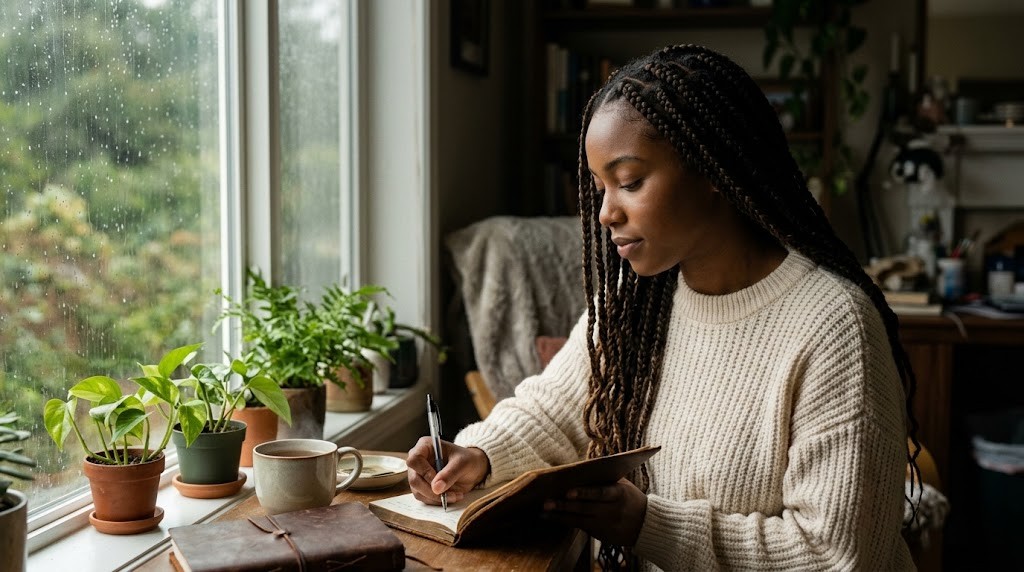
Mind, Spirit & Sleep
Rest is not a reward
For the woman who holds everybody up: how to notice when you're running on empty, where to find a therapist who gets it, simple daily care for your spirit, and how to finally get some real sleep.
Get help nowBetter sleepIf you are in crisis right now
You are not a burden. Someone will pick up.
Sources: 988 Lifeline · Philadelphia DBHIDS · DBHIDS 988
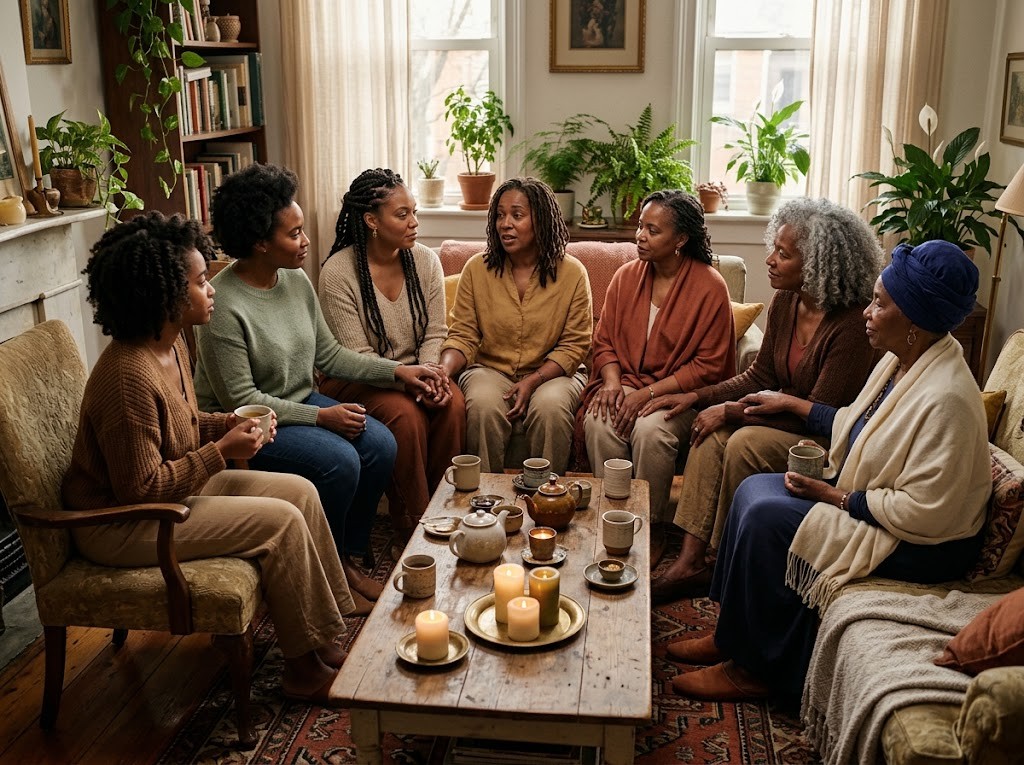
The load we carry
The "Strong Black Woman" and what it costs
Researchers have a name for it. Psychologist Cheryl Woods-Giscombé called it the Superwoman Schema: the feeling that you must always show strength, hold your feelings in, never look vulnerable, succeed with too little, and help everyone else first.
That strength is real. It got our grandmothers through. But studies are finding a cost when we never get to put it down:
- In a 2018 study of 194 Black women, feeling obligated to be strong was tied to self-silencing, which was linked to more symptoms of depression.
- A 2021 study of 240 Black women found that pulling away from problems ("disengagement coping") helped explain the link to depression.
- A 2024 study tied stronger Strong Black Woman beliefs to a lower sense of control and more anxiety and depression.
- Women who strongly held the ideal and had never used services were less likely to seek therapy.

Your strength is real, sugar. And you are allowed to set it down sometimes. Even the strongest arms have to rest, or they drop what they're carrying.
Sources: Superwoman Schema framework (PMC) · Abrams, Hill & Maxwell, Sex Roles 2018 · Journal of Black Psychology 2021 · Journal of Black Psychology 2024 · Woods, MSU 2013
Notice the signs
Depression, anxiety or burnout?
They can overlap, and many of us call all of it "just tired." If these signs last most days for two weeks or more, it's time to talk to someone.
Heavy and empty
- Sad, empty or hopeless most of the day
- Lost interest in things you used to love
- Sleeping too much or too little
- Eating changes, weight changes
- Tired, slowed down, can't focus
- Feeling worthless or guilty
- Aches, headaches or stomach trouble with no clear cause
- Thoughts of death or suicide: call or text 988
Wound up
- Worry that's hard to control
- Restless, on edge, jumpy
- Tight muscles, clenched jaw
- Racing heart, short breath
- Trouble falling or staying asleep
- Irritable; mind goes blank
- Avoiding places or people because of fear
Running on fumes
The World Health Organization describes burnout as coming from long-term work stress that hasn't been managed. Caregiving can feel the same.
- Exhausted, even after rest
- Cynical, numb, "I don't care anymore"
- Feeling like nothing you do is enough
- Snapping at the people you love
Sources: NIMH depression · NIMH anxiety · WHO burnout · USPSTF depression screening
Therapy
Therapy for Black women: what gets in the way, and how to start
Black adults with a mental illness are less likely than other adults to get treatment. Here are the walls, and the doors through them.
The barriers are real
- Cost and insurance. Sessions add up.
- Few Black therapists. It's hard to find someone who looks like you.
- Stigma. "Just pray about it." "Don't put our business in the street."
- Mistrust, earned from a long history of medical racism.
- Time. Caregiving, work, kids, church.
- The Strong Black Woman load itself. Asking for help can feel like failing.
How to start, step by step
- Check your coverage. Call the number on your insurance card and ask for in-network therapists. On Medicaid in Philly? Call CBH at 888-545-2600.
- Use a directory that lets you filter for Black women therapists (below).
- Ask about cost. Many offer a sliding scale. The Loveland Foundation helps pay.
- Book a free 15-minute consult with two or three therapists. Ask: "Have you worked with Black women? How do you handle faith in sessions?"
- Give it 3–4 sessions. If it doesn't fit, it's fine to switch. That's not failing.
- Prayer and therapy go together. Many therapists welcome your faith.
Sources: Black Health (SAMHSA NSDUH summary) · HHS Office of Minority Health · NAMI · APA workforce data · CBH
Resources
Where to find help
National help first, then Philadelphia. Check hours and sign-up dates on each site.
988 Suicide & Crisis Lifeline
Call or text 988Talk, text or chat online any time. You don't have to be suicidal to call. Overwhelmed counts.
988lifeline.orgTherapy for Black Girls
A directory of therapists who work with Black women and girls, plus Dr. Joy Harden Bradford's weekly podcast.
Find a therapist · PodcastBEAM
The Black Emotional and Mental Health Collective: a virtual directory of Black therapists, healing circles and training.
beam.communityLoveland Foundation Therapy Fund
Financial help for therapy for Black women and nonbinary people 18+ in the U.S.: up to 12 sessions, up to one hundred twenty dollars each. Sign-ups open quarterly.
Therapy Fund · FAQSista Afya Community Care
Nonprofit offering free and sliding-scale therapy, support groups and a teen-girl program. Some offerings are virtual.
sistaafya.comDBHIDS Crisis Line
215-685-6440Philadelphia's crisis line. Can send a Mobile Crisis team and help you find a Crisis Response Center.
dbhids.orgHealthy Minds Philly
Free city site: 24/7 online mental-health screenings, resources and Mental Health First Aid trainings.
healthymindsphilly.orgCommunity Behavioral Health (CBH)
888-545-2600Member Services for Philadelphia Medicaid: mental health and addiction services. Uninsured or underinsured? Call 215-685-5400.
cbhphilly.orgLocal Black therapists
Melanated Women's Health, Melanated Healing, Sankofa Healing Studio and the Philadelphia Black Women's Health Alliance sister circles are in our Philly Guide.
See the Philly GuideSources: 988 · Therapy for Black Girls · BEAM · Loveland Foundation · Sista Afya · DBHIDS · Healthy Minds Philly · CBH
Daily self-care menu
Pick one from each column today
Self-care isn't bubble baths you can't afford. It's small, free, daily things that refill the cup. Choose what you have time for.
Journaling
Research going back to psychologist James Pennebaker shows that writing about your feelings can improve mood and well-being for many people.
Meditation and mindfulness
NIH's NCCIH says meditation may help with anxiety, depression and sleep.
Movement and sleep
Exercise and enough sleep are mental-health tools, too. See the walking plan and the sleep section below.
Sources: APA Monitor on expressive writing · NCCIH meditation · CDC social connectedness
Journaling
20 prompts for your notebook
No rules. Write for five minutes. Spelling doesn't count. Nobody has to read it.
- What am I carrying today that isn't mine to carry?
- Three things that went right today, even small ones.
- When did I last feel truly rested? What was different?
- What would I tell my daughter, niece or little sister if she felt how I feel?
- Who refills my cup? When did I last see them?
- What am I pretending is fine?
- One thing my body did for me today.
- What does "strong" mean to me, and what would "soft" look like?
- A woman in my family I come from. What did she survive? What did she teach me?
- What do I need to say no to this week?
- Where in my body do I feel stress? What is it telling me?
- My favorite memory of being a girl.
- What would I do with one free Saturday, just for me?
- Something I'm proud of that nobody clapped for.
- A prayer, a hope or a wish, in my own words.
- What am I afraid to ask for help with? Who could I ask?
- How did I speak to myself today? Would I speak to a friend that way?
- Five things I love about my hair, skin or face.
- What season of life am I in? What does this season need?
- Write a thank-you letter to your future self, ten years from now.
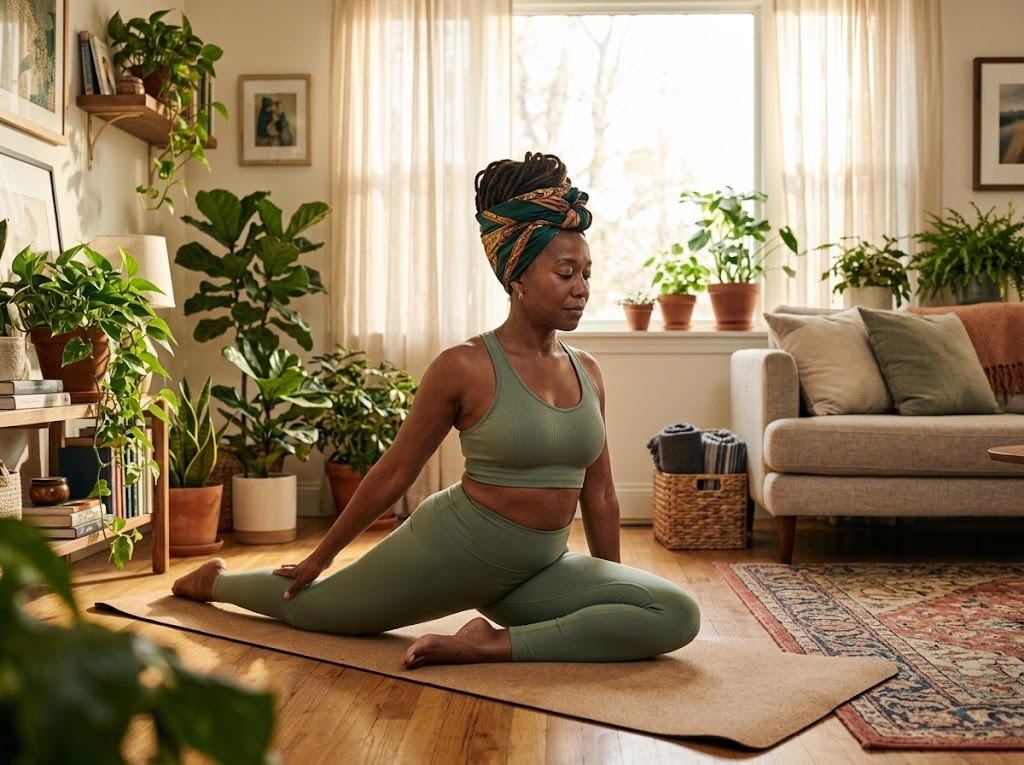
Breath, prayer & stillness
Gentle ways to calm the body
The long exhale (2 minutes)
Sit with your feet flat. Breathe in through your nose for a count of 4. Breathe out slowly through soft lips for a count of 6. No holding. Repeat 8–10 times. A longer breath out helps your body shift toward rest.
Hand on heart
Place one hand on your chest and one on your belly. Breathe normally and just feel your hands rise and fall. Say, silently, "I am here. I am safe right now."
Breath prayer
Pair a short phrase with your breath. In: "Lord, I'm listening." Out: "I give you this weight." Or any words from your own faith. Repeat for a few minutes.
Body scan for bedtime
Lying down, notice your feet, then calves, knees, hips, belly, hands, shoulders, jaw, forehead. Let each one get heavy. If your mind wanders, just come back to where you were.
For many Black women, prayer and a faith community are a deep source of strength. Let them stand alongside care, not instead of it.
Community & roots
Sister circles: we have always held each other up
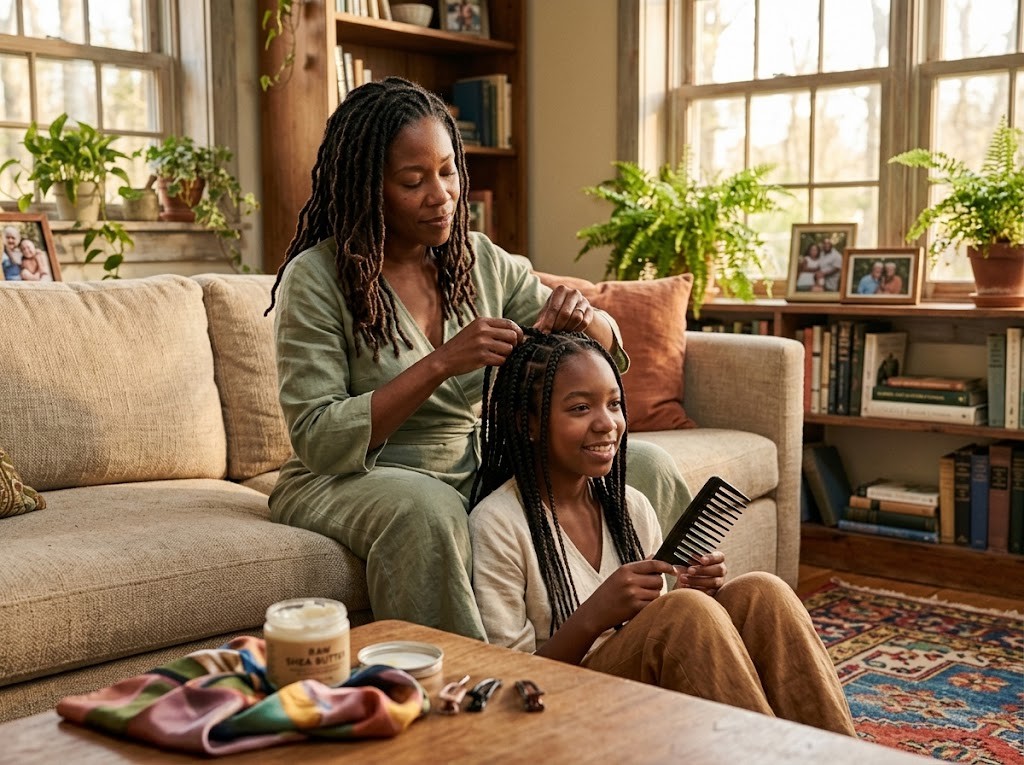
It starts in Africa. Across West and Central Africa, braiding was a social ritual: women doing each other's hair over hours of talk. That circle of hands and stories is one of the oldest support groups we have. Documented
It carried through slavery. Historian Sharla Fett shows that enslaved communities saw health as relational, bound up with family, faith and community, not just a body fit to work. Women healers held real authority among their own people. Documented
It took root in Philadelphia. In 1821, Black washerwomen and domestic workers here founded the Daughters of Africa, pooling small dues to pay sick and burial benefits for each other. Their minutes still survive at the Library Company of Philadelphia. By 1838 the city counted about 80 Black benevolent societies. Documented
It continues today. The Philadelphia Black Women's Health Alliance (since 1983) runs Sister Circle groups for women 20–39 and 40–75. BEAM hosts healing circles. GirlTrek walking teams, Black Girls RUN! and Black Girl Joy Bike Ride all gather us in the open air.
Start your own circle
- 3 to 8 women, same time each month
- Rotate homes, or meet in a park
- One question each time, from the prompts above
- What's said in the circle stays there
Circle ground rules
- Listen to understand, not to fix
- No advice unless she asks
- Phones down
- Bring a dish, or bring nothing; both are fine
When a sister is not okay
- Ask straight: "Are you thinking about hurting yourself?" Asking does not plant the idea.
- Stay with her. Call or text 988 together.
- In Philly: 215-685-6440.
My mother's friends met every first Sunday after service. They called it "the kitchen." Didn't look like therapy to anybody, but those women kept each other alive. Find your kitchen.
Sources: Crowned & Rooted history brief: African hair traditions · Sharla Fett, Working Cures (UNC Press) · Daughters of Africa minutes, Library Company of Philadelphia · Philadelphia Black Women's Health Alliance · BEAM · GirlTrek · CDC social connectedness · 988
Sleep
How much sleep do you really need?
Sleep is when skin repairs, blood pressure dips and the mind sorts the day. These are the CDC and sleep-medicine guidelines.
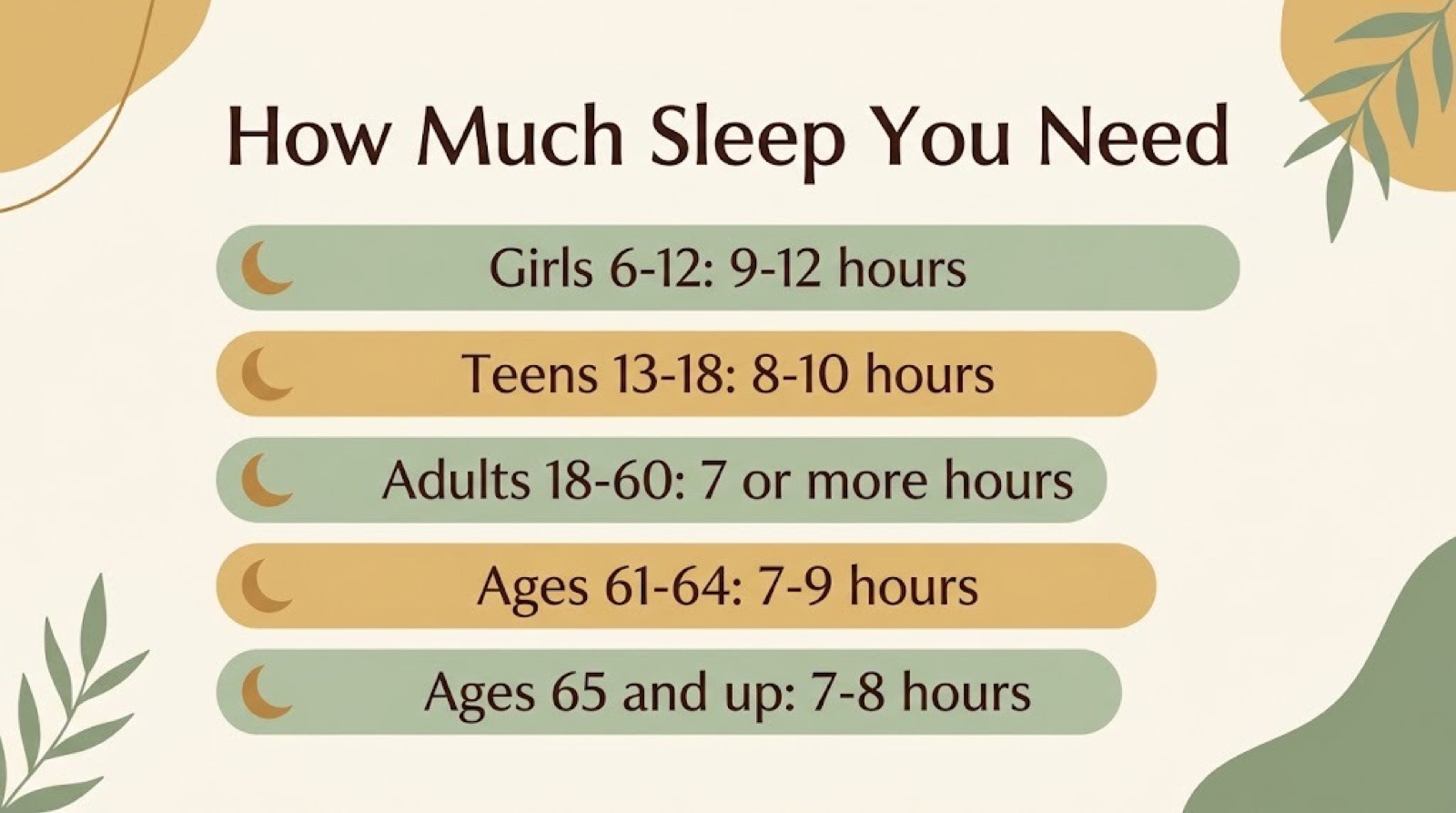
| Age | Hours per night |
|---|---|
| Girls 6–12 | 9–12 hours |
| Teens 13–18 | 8–10 hours |
| Adults 18–60 | 7 or more |
| Adults 61–64 | 7–9 hours |
| Adults 65+ | 7–8 hours |
Sources: CDC sleep · AASM pediatric consensus · AASM/SRS adult consensus
The sleep gap
Why Black women sleep less
A national study of health survey data from 2004 to 2018 found the Black–white gap in short sleep (under 7 hours) was largest for Black women, averaging about 12 percentage points.
And here is the part that surprised researchers: the gap was also large for Black adults with middle and high incomes. It doesn't close just because the paycheck goes up. Stress, shift work, neighborhood noise and discrimination are all discussed as reasons.
So if you lie awake, it is not a personal failing. It's a load. And there are things that help.
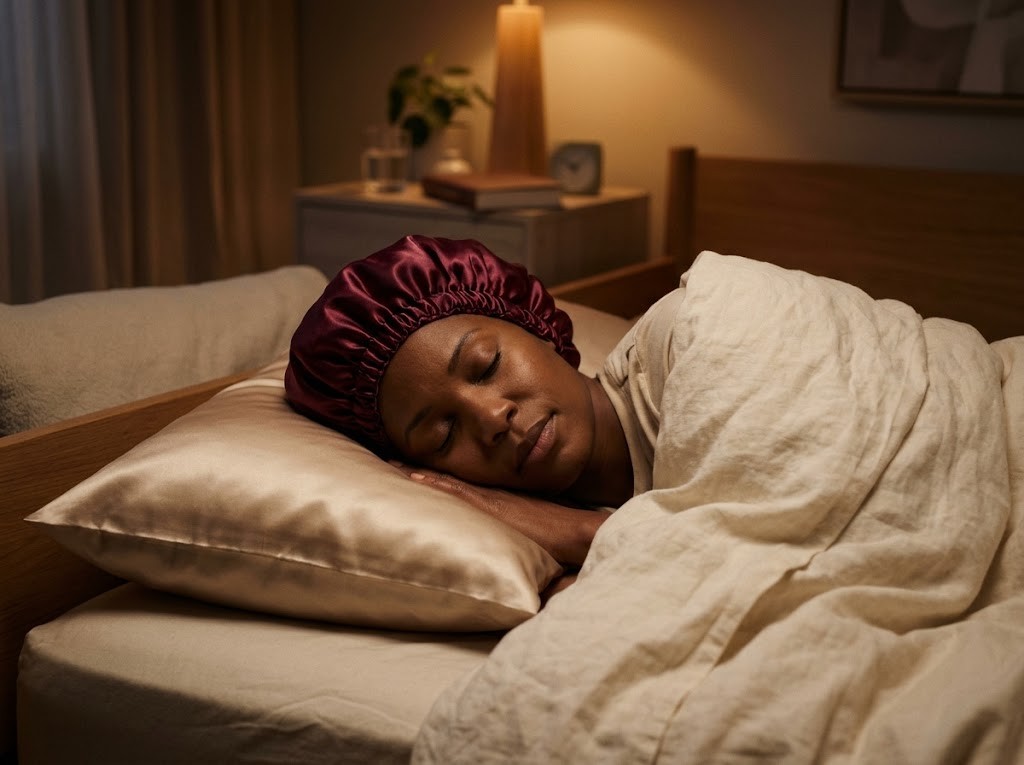
When I tie on my bonnet at night, that's my signal: the day is done, the kitchen is closed, and whatever didn't get finished can wait for the morning.
Bedtime routine
An hour that protects your hair, skin and sleep
| When | What to do | Why |
|---|---|---|
| 60 minutes before bed | Dim the lights. Last screen check. Phone on Do Not Disturb, charging across the room. | Screens and bright light keep your brain awake. |
| 45 minutes | Wash your face and moisturize. Do your hair for the night: twist or pineapple it, seal the ends, then a satin or silk bonnet or scarf, or a satin pillowcase. | Dermatologists commonly recommend satin or silk to cut friction and moisture loss while you sleep. |
| 30 minutes | Something slow: prayer, reading, three lines in your journal, light stretching, a cup of caffeine-free tea. | Tells your body the day is done. |
| Lights out | Same time every night. Can't sleep after about 20 minutes? Get up, do something quiet in low light, and come back when sleepy. | AASM guidance: don't train your bed to be a worry spot. |
Sleep hygiene checklist
- Same bedtime and wake time, weekends too
- Bedroom dark, quiet, cool and comfortable
- Phone, TV and laptop out of the bedroom, or put away
- No big meals, caffeine or alcohol close to bed
- Moved my body today (not right before bed)
- Nap only 20–30 minutes, and earlier in the day
- Bonnet, scarf or satin pillowcase on
- Loud snoring or gasping? Ask about sleep apnea
Menopause night sweats
The SWAN study found hot flashes and night sweats lasted a median of about 10 years for Black women, the longest of any group, and started earlier in the change. That's a lot of broken sleep.
- Keep the bedroom cool; run a fan
- Layer light, breathable bedding you can kick off
- Moisture-wicking sleepwear
- Skip alcohol and spicy food at night
- Keep a cool glass of water by the bed
- Tell your doctor. There are hormonal and non-hormonal treatments.
Sources: CDC sleep · AASM Sleep Education · Sleep Foundation · AAD hair tips · Avis et al. 2015 (SWAN) · Sleep Foundation menopause · The Menopause Society · NCCIH chamomile
Talk with your own doctor or nurse about what's right for you.