Womanhood
Every season of you
From a girl's first period to a grandmother's silver crown: what changes in each season of a woman's life, what to check, what to eat, and where to find the full story on this site.
Walk the timelineYour care, your voice
A welcome from Mrs. Revell
Come sit with me a minute
I've taught school, raised children and buried elders. I've learned that a woman's body keeps changing her whole life. Nobody hands us the map. We pick it up in pieces from our mothers, aunties, church mothers and girlfriends. Some pieces are gold. Some, bless them, are just old wives' tales.
This part of Crowned & Rooted puts the map in one place. Each season gets its own page, written plainly and checked against the best health sources we have. And because the numbers on Black women's care are not where they should be, there's a page on speaking up for yourself, too.
Find the season you're in. Then read the one before it, so you can be gentle with the girl you were. Read the one after it, so you're ready for the woman you're becoming.
Start anywhere
The Womanhood pages
Eleven guides, one body, every age.

Puberty
Body changes, first bra, first talk. Help for girls and the grown-ups who love them.

Periods
What's normal and what's not. Heavy bleeding, cramps, iron, fibroids and endometriosis.

The Talk
Talking with children about bodies, boundaries and sex, from toddler to 19, with word-for-word scripts.

Birth Control
Every method compared with CDC numbers, emergency contraception, STI protection and teen rights in PA.
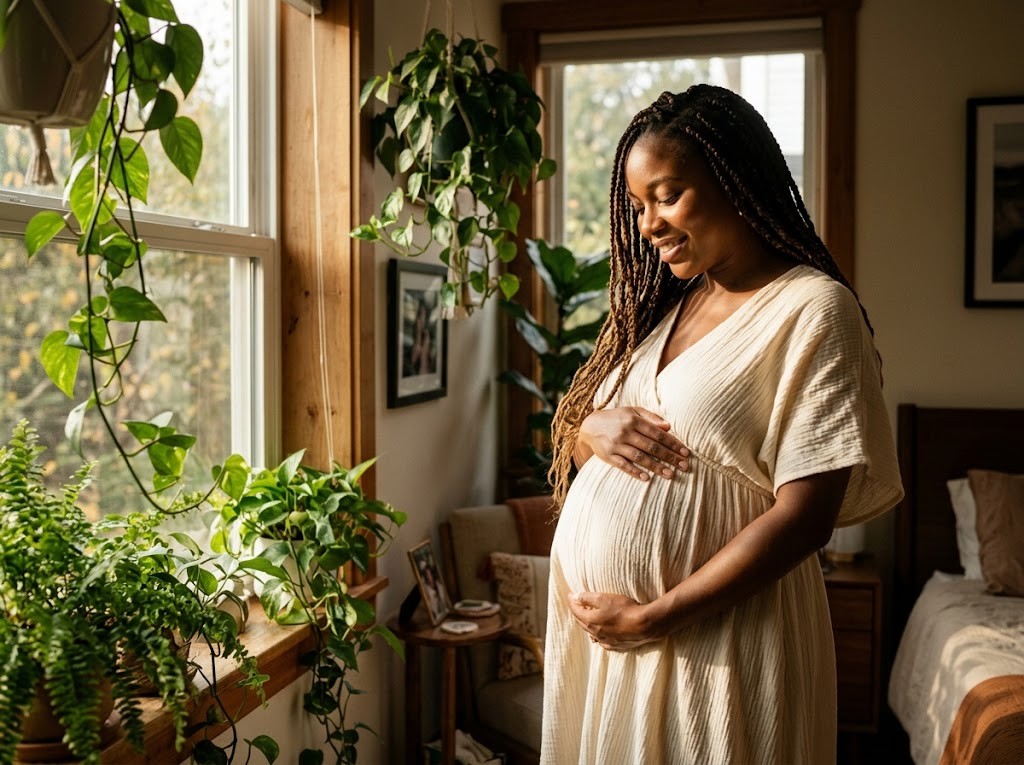
Pregnancy
Before, during and the year after: vitamins, warning signs, doulas and your rights.
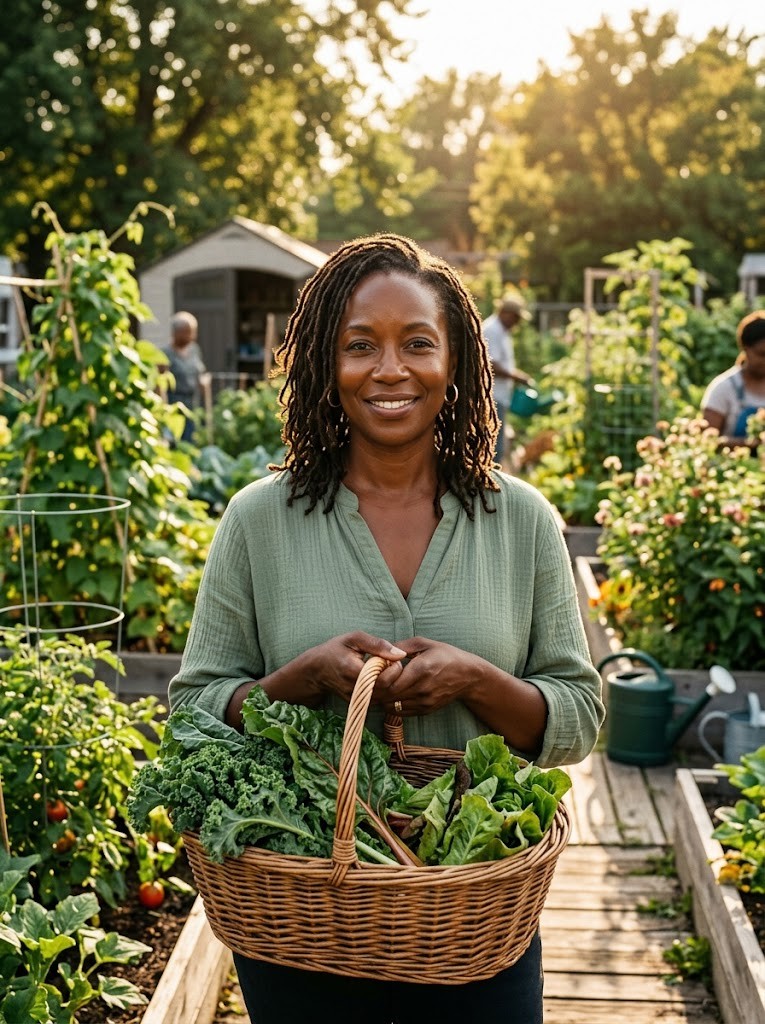
Perimenopause & Menopause
Hot flashes, sleep, mood, bones and heart, and the treatments worth asking about.
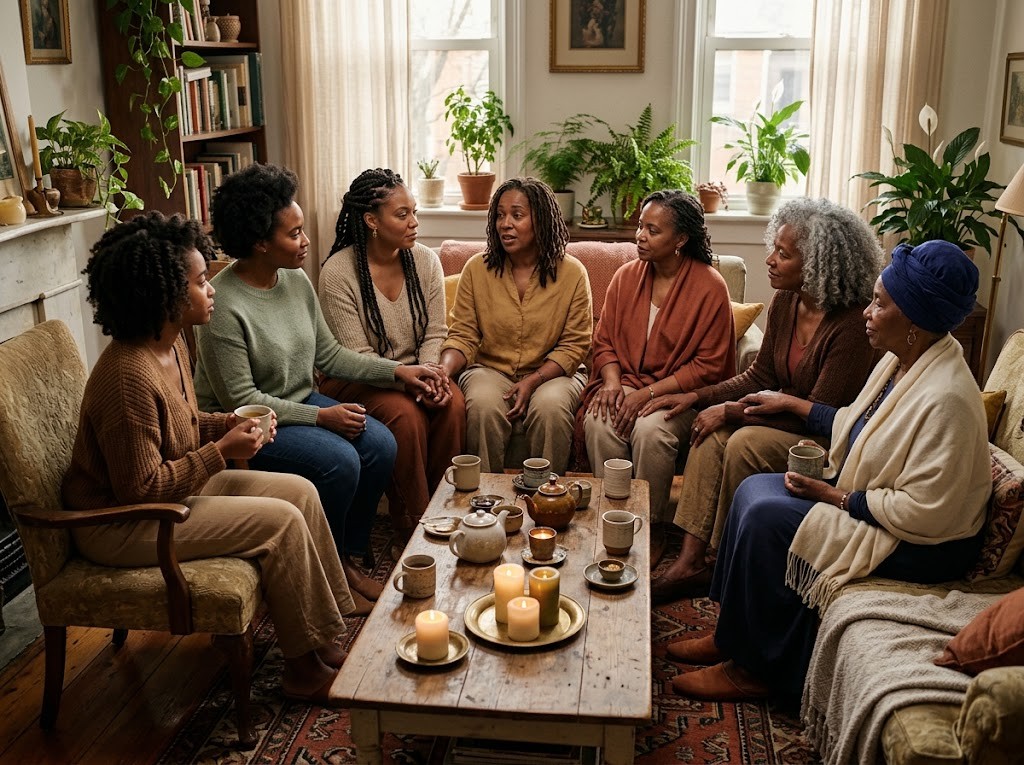
Your Care, Your Voice
The facts on unequal care, your screening checklist, and the words that get you heard.
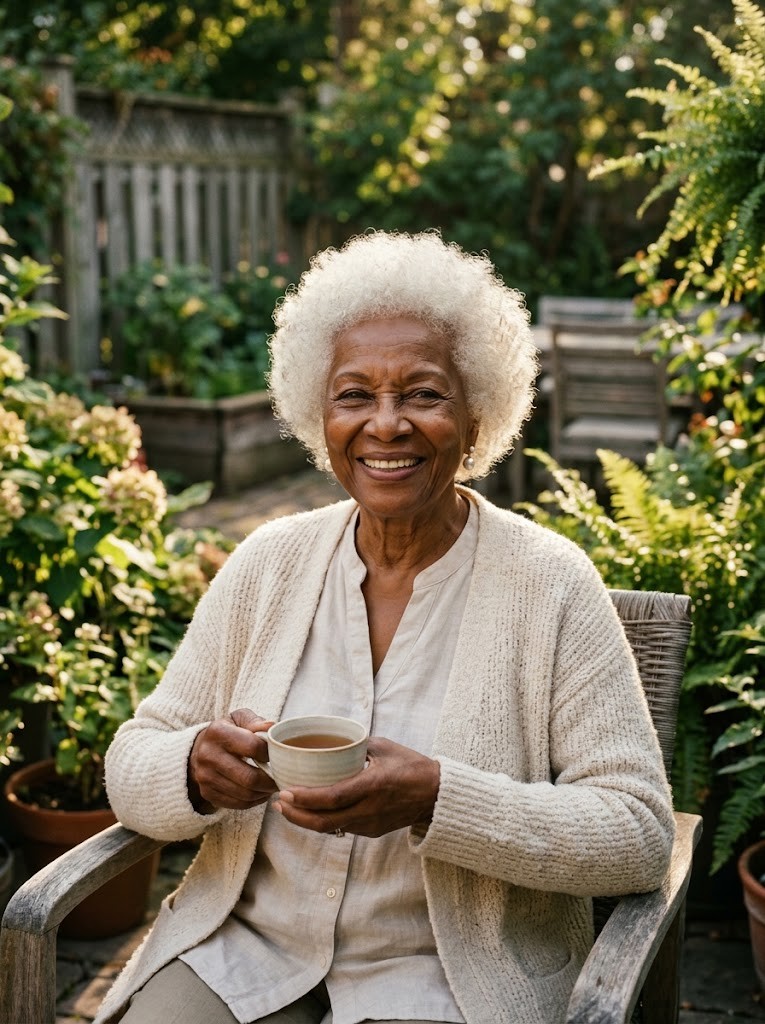
Every Age
Nutrients, hair, skin, movement and a simple daily routine for each decade.
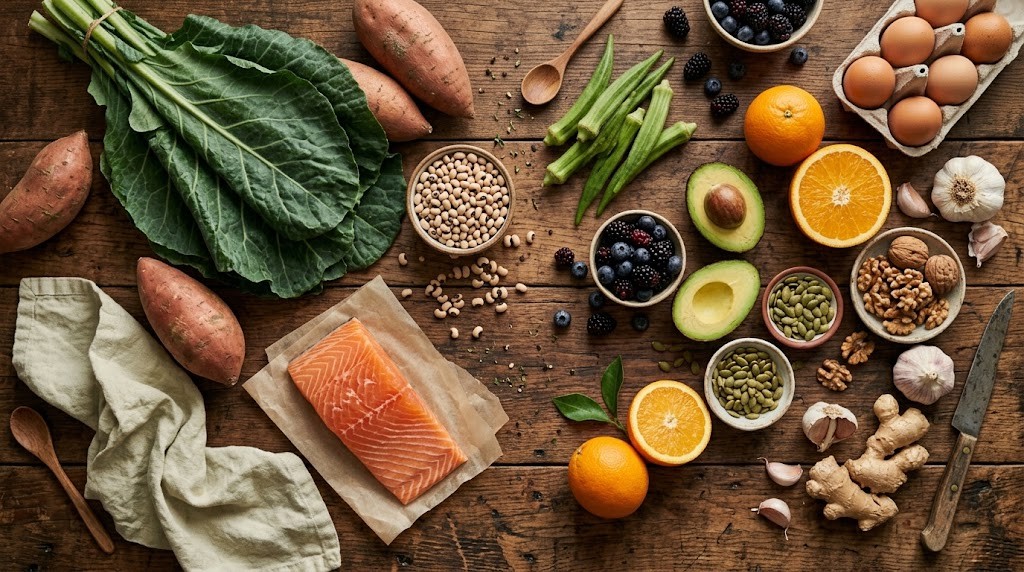
Foods That Protect
What to eat more of and less of for your heart, blood pressure, bones and cancer risk.
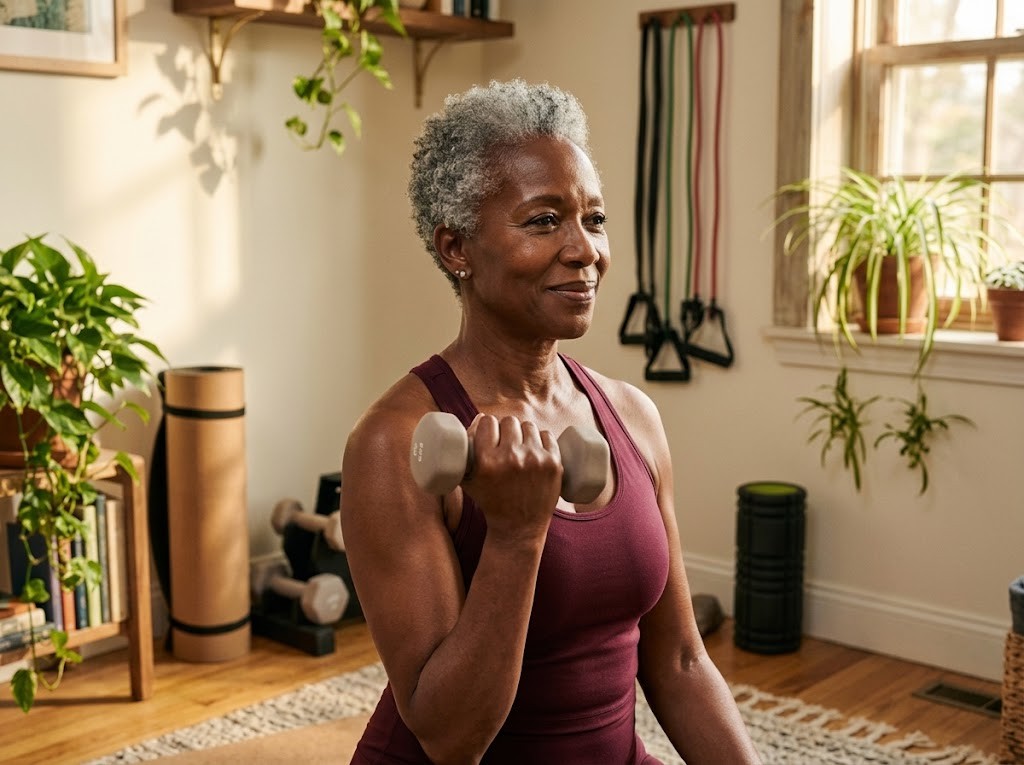
Body
Blood pressure, diabetes, stroke, lupus, sickle cell and movement that builds strength.

Mind & Sleep
Putting down the "strong Black woman" load, finding a therapist, and getting real rest.
A lifetime timeline
What to do in each season
This is the big picture. Each step links to the page with the details. These are guidelines for women at average risk. Your own doctor may set a different schedule for you.
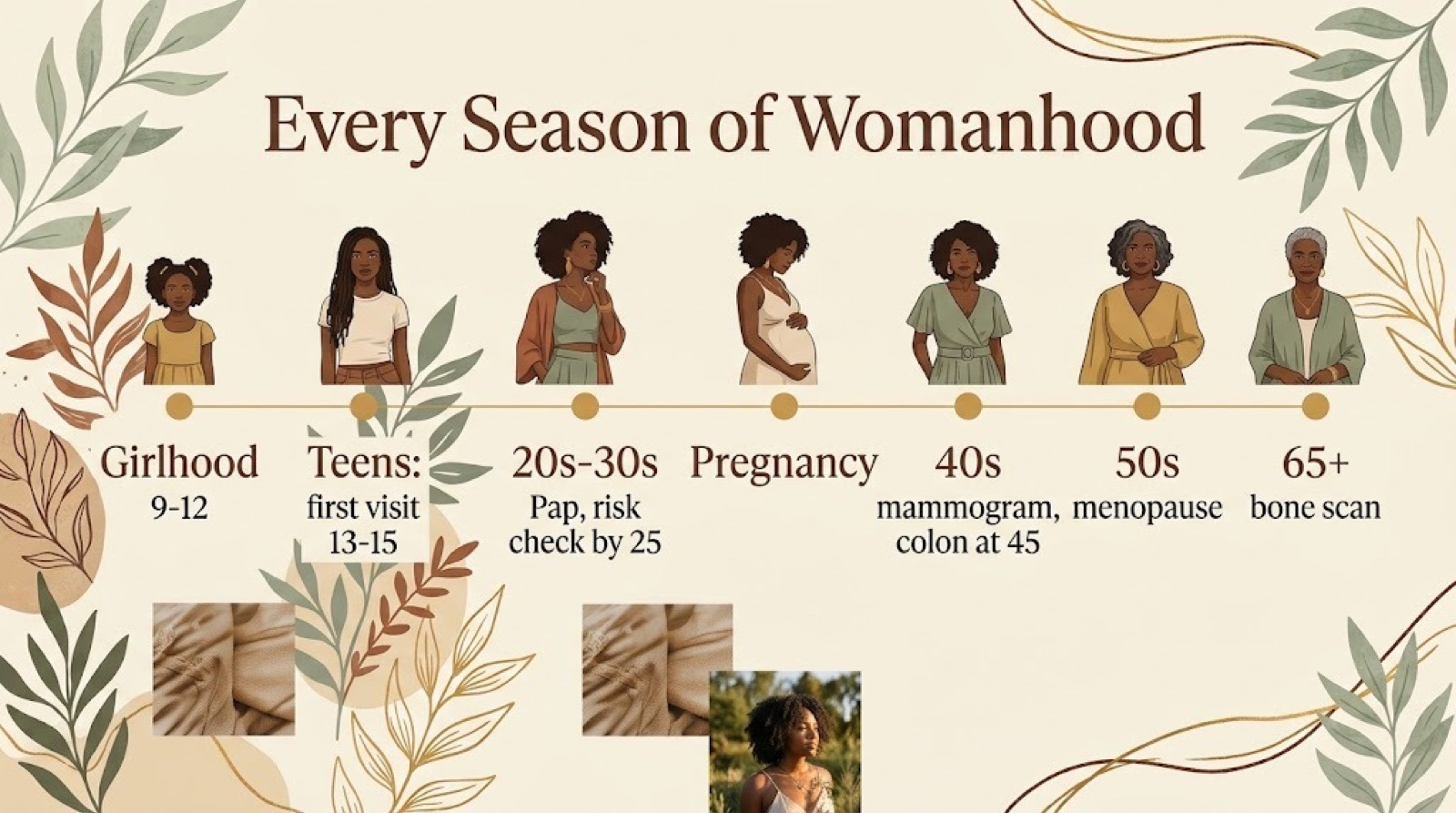
- 9–12
Girlhood
Before the first period
- Talk early about body changes, so her first period isn't a scare.
- Pack a "just in case" pouch for her school bag.
- HPV vaccine is best at 11–12, and can start at 9 (CDC).
- Calcium matters now: girls 9–18 need 1,300 mg a day, because these are the bone-building years (NIH).
- Teens
First period & first visit
Learning her cycle
- Track periods in an app or notebook. In teens, a normal cycle runs 21 to 45 days (ACOG).
- See someone if a period lasts more than 7 days, soaks a pad or tampon every hour for several hours, or keeps her home from school.
- First gynecologist visit at 13–15. It's mostly a talk. An inside exam usually isn't needed (ACOG).
- Iron need jumps to 15 mg a day at 14–18 (NIH). Eat beans, greens and lean meat with vitamin C foods.
- Sleep 8–10 hours. Know 988.
- Keep talking about relationships, consent and online safety. Teens in PA can get birth control and STI care confidentially.
- 20s
30sBuilding years
Yearly visits become a habit
- Well-woman visit every year (ACOG).
- Pap test every 3 years from 21. From 30, you can choose an HPV test every 5 years (USPSTF).
- Breast cancer risk assessment by 25, especially for Black women (American College of Radiology).
- Know your blood pressure numbers. Know your sickle cell trait status before pregnancy.
- Heavy, painful periods are not "just how it is." Ask about fibroids and endometriosis by name.
- Baby
If and when you choose
Pregnancy and the year after
- Take 400 mcg of folic acid daily, starting at least a month before you try (CDC).
- Check that your prenatal vitamin lists iodine and choline. Some don't (NIH).
- Learn the CDC Hear Her warning signs. They count for a full year after birth.
- Bring a support person or doula. Pennsylvania Medicaid covers moms for 12 months after birth.
- Depression screening during and after pregnancy is recommended (USPSTF).
- 40s
Perimenopause begins
The change starts quietly
- Mammogram from 40: every 2 years per USPSTF, or every year per the ACR. Read your letter for the words "dense breasts."
- Baseline eye exam at 40 (American Academy of Ophthalmology).
- Colon cancer screening starts at 45 (USPSTF).
- Periods may get irregular, heavier or lighter. Sleep and mood can shift. Tell your doctor. There is help.
- Lift weights 2 days a week to protect muscle and bone (CDC).
- 50s
Menopause
Twelve months with no period
- The average age of menopause in the U.S. is about 52 (National Institute on Aging).
- In the SWAN study, hot flashes and night sweats lasted a median of 10.1 years for Black women, the longest of any group. Ask about treatment. You don't have to tough it out.
- Calcium need rises to 1,200 mg a day at 51 (NIH). Bone loss speeds up after menopause.
- Keep up blood pressure, blood sugar and cholesterol checks. Heart risk rises now.
- Any bleeding after menopause needs a visit.
- 65+
Elder years
The silver crown
- Bone density scan (DXA) at 65 (USPSTF).
- Mammograms through 74, then decide with your doctor. Eye exams every 1–2 years.
- Strength and balance training to prevent falls. Walk most days (CDC).
- Sleep 7–8 hours. Ask about B12 if you take metformin or acid reducers (NIH).
- Mention memory changes early. Taking care of your heart takes care of your brain (NIA).
- Keep your well-woman visit. Elders still need one.
Nobody warned me that perimenopause can start in your forties and feel like the whole house got rearranged. If I'd known, I would have saved myself a lot of worry. Now you know. Write your next screening date on the calendar before you close this page.
Sources: CDC HPV vaccine · NIH ODS calcium · NIH ODS iron · ACOG heavy bleeding · ACOG your first period · ACOG first gynecologic visit · ACOG well-woman visit · USPSTF cervical · ACR 2023 · CDC folic acid · NIH ODS pregnancy · CDC Hear Her · PHLP postpartum Medicaid · USPSTF depression · USPSTF breast · AAO · USPSTF colorectal · CDC activity guidelines · NIA menopause · Avis et al., JAMA Intern Med 2015 (SWAN) · USPSTF osteoporosis · CDC older adults · NIH ODS B12 · NIA brain health
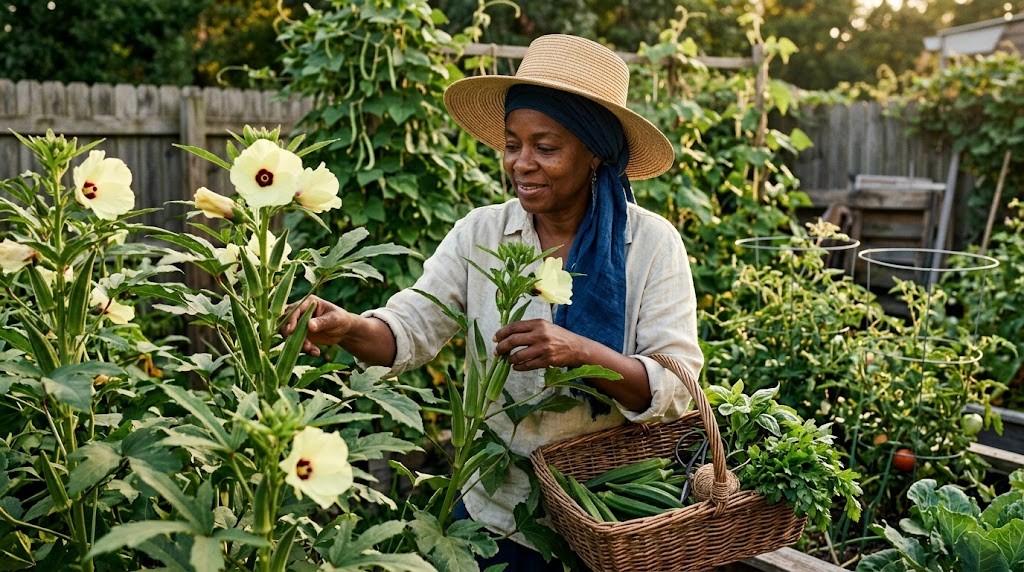
Food at every stage
Foods that help protect you
No single food prevents disease. But everyday eating patterns really do move the needle on blood pressure, blood sugar, bones and some cancers. Many of the best foods are already on our grandmothers' tables, and some came across the ocean with our ancestors.
- Black-eyed peas (cowpeas) were first grown in West Africa. Archaeologists found charred cowpeas in central Ghana dated to before 1500 BCE. They're full of fiber, folate and plant protein. Documented roots
- Okra is an African crop. The English word comes from the Igbo word ọ́kụ̀rụ̀, and "gumbo" traces to Central African Bantu languages. Its exact origin point is still debated. Documented roots
- Sweet potatoes are not African. They are native to Central and South America. True yams are the African crop. Enslaved Africans called the American sweet potato by the name of the food they knew, which is why candied "yams" are really sweet potatoes. Both are good food. Documented
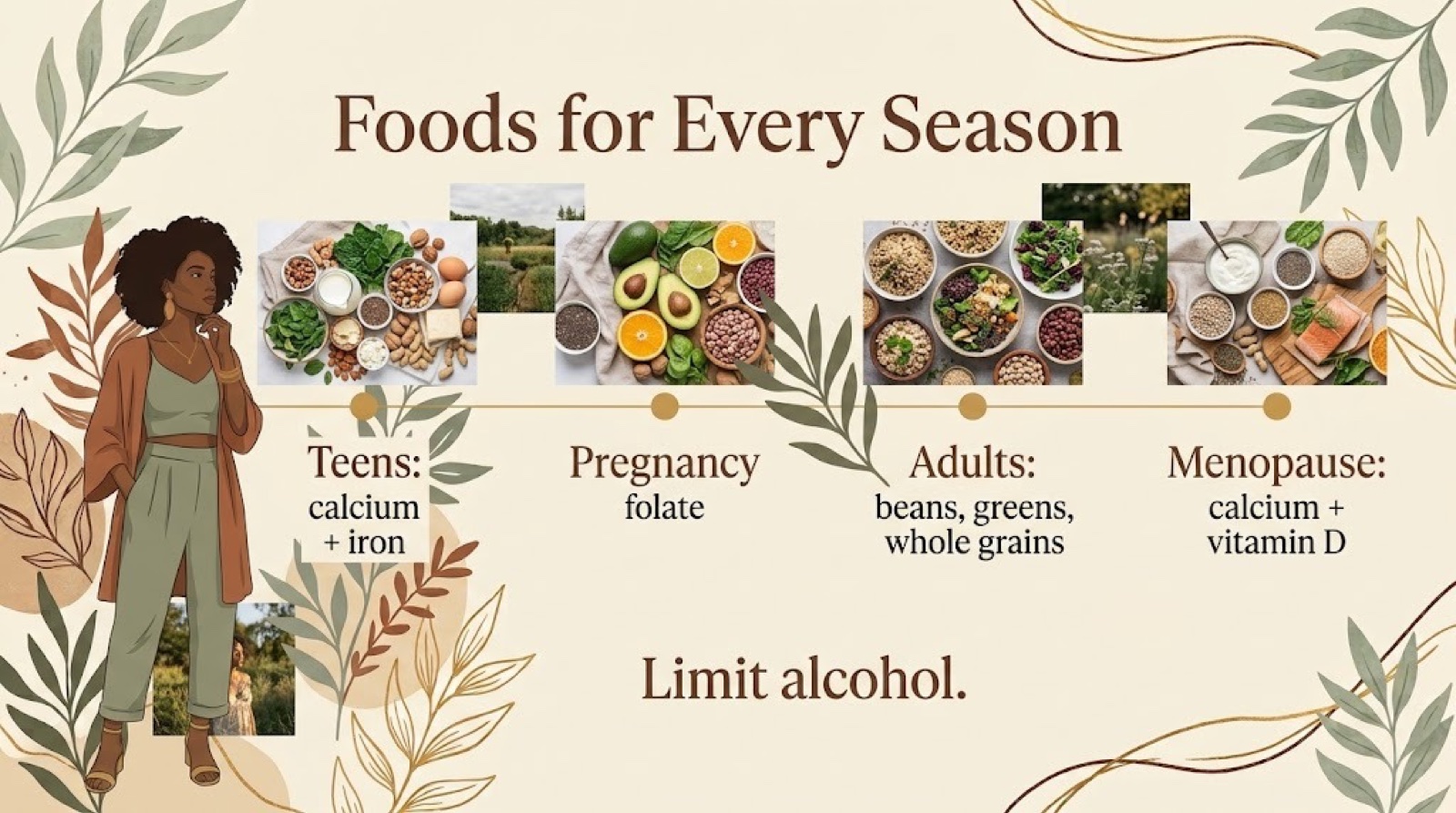
| Season | Lean on these foods | Why | Evidence |
|---|---|---|---|
| Girls & teens | Milk or fortified soy milk, yogurt, collards, sardines with bones; beans and greens with oranges or peppers | Calcium builds bone in the peak bone-building years. Iron with vitamin C replaces what periods take. | Strong |
| Heavy periods & fibroids | Iron foods (black-eyed peas, lentils, greens, fish) with vitamin C; fruit, green vegetables, dairy or fortified alternatives, fatty fish for vitamin D | Heavy bleeding drains iron. In studies, higher vitamin D and dairy were linked to fewer fibroids. That's a link, not proof. | Strong (iron) Some (fibroids) |
| Before & during pregnancy | Leafy greens, beans, fortified grains (folate); eggs (choline); 2–3 servings a week of low-mercury fish | Folate helps prevent neural tube defects. ACOG recommends low-mercury fish in pregnancy. | Strong |
| Every adult season | Beans, whole grains, oats, leafy greens, berries, tomatoes; less processed meat, salt, sugary drinks and alcohol | Fiber and whole grains lower colorectal cancer risk. DASH-style eating lowers blood pressure. Alcohol raises breast cancer risk, and there's no safe amount for cancer. | Strong |
| Breast health | Non-starchy vegetables, carrots, sweet potatoes, greens, soy foods; limit alcohol most of all | Vegetables are linked to lower risk of ER-negative breast cancer (the group that includes triple-negative). Soy foods are safe, even for survivors. Supplements are different. | Some (vegetables) Strong (alcohol) |
| Menopause & elder years | Calcium and vitamin D foods, protein at every meal, B12-fortified foods; fewer salty foods and less soda | Protects bone and muscle as estrogen falls. B12 from food gets harder to absorb with age. | Strong |
Safety: if you take warfarin (a blood thinner), keep the amount of leafy greens you eat steady. Don't suddenly add or drop them. If you're on blood pressure, thyroid or diabetes medicine, ask your pharmacist before adding herbs or supplements. In pregnancy, keep caffeine under 200 mg a day (ACOG).
Sources: research brief 05 (foods that protect) · WCRF/AICR Cancer Prevention Recommendations · WCRF breast cancer · U.S. Surgeon General, Alcohol and Cancer (2025) · NIH ODS calcium · NIH ODS iron · Baird et al. 2013 (vitamin D and fibroids) · Wise et al. 2011 (fruit and fibroids) · ACOG nutrition in pregnancy · CDC folic acid · AICR Foods That Fight Cancer · African roots: D'Andrea et al. 2007 (cowpeas, Ghana) · 64 Parishes (gumbo) · Carney & Rosomoff, In the Shadow of Slavery (UC Press, 2009) · more on our African Roots page
Start today
Three small things, this week
Book it
Find your age on the yearly checklist and book the one check you're behind on.
Ask the family
At the next cookout, ask who had breast, colon or uterine cancer, fibroids, diabetes or high blood pressure, and at what age. Write it down.
Pass it on
Send this page to a daughter, niece, sister or friend. We take care of each other.
Every season has its own beauty, even the sweaty ones. Take care of the woman you are today, and the woman you'll be at eighty will thank you.
Talk with your own doctor, nurse or midwife about what's right for you. In an emergency call 911. In a mental-health crisis call or text 988.