Womanhood · Teens to menopause
Period Care: Cramps, Bloating & Your Cycle
Your cycle is a monthly report card on your health. Learn what is normal, what eases cramps and bloat, how to use over-the-counter medicine safely, and when "that's just how periods are" is not good enough.
The basics, simply
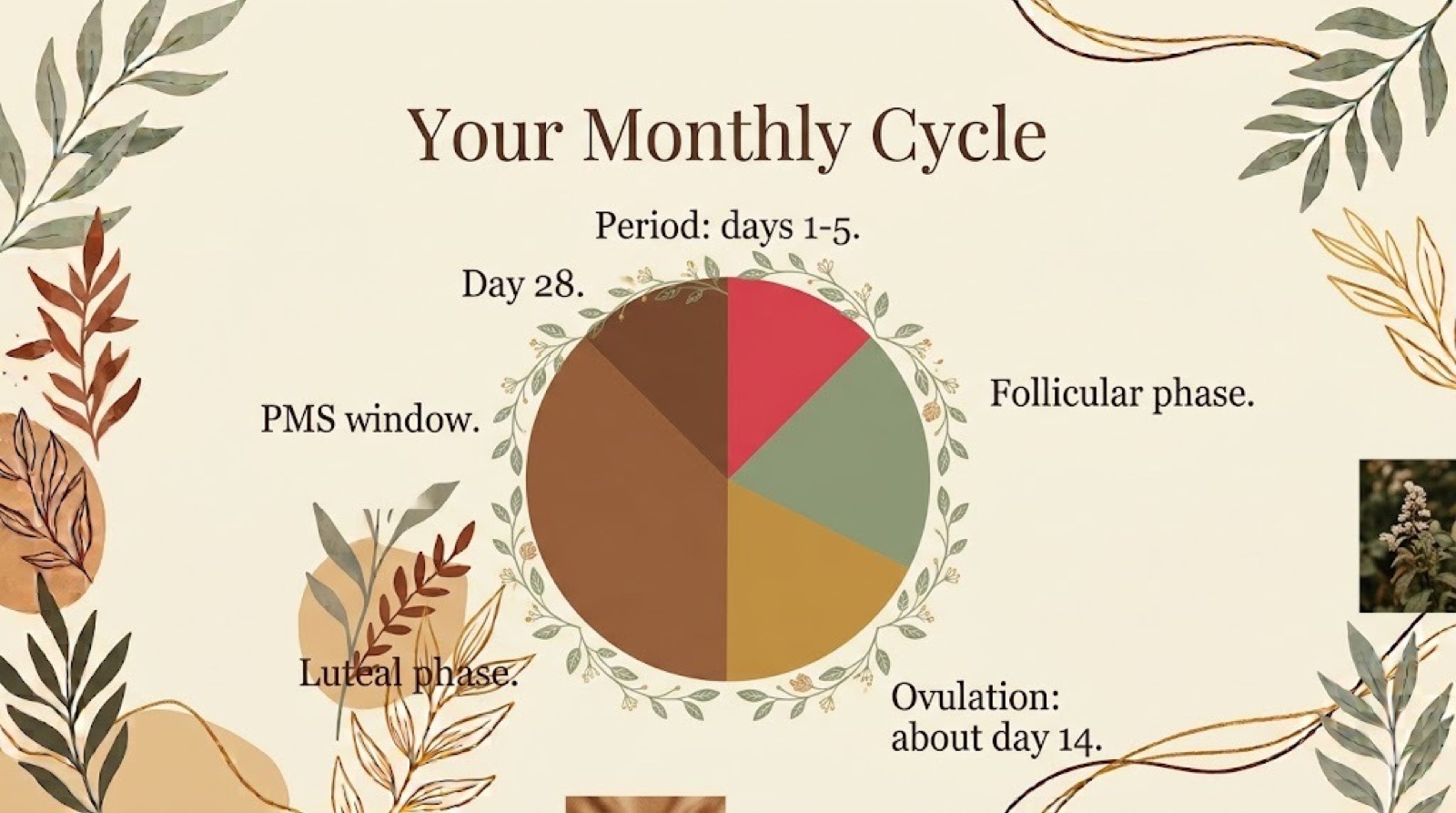
Your cycle in four parts
Day 1 is the first day of real bleeding. The cycle runs until the day before your next period starts. Hormones rise and fall like a tide, and you may feel the changes in energy, skin, appetite and mood.
Period
The lining of the uterus sheds. Estrogen and progesterone are at their lowest. Cramps are strongest in the first one to three days.
Follicular phase
The brain sends follicle-stimulating hormone. An egg ripens in the ovary and estrogen climbs, rebuilding the lining. Many women feel more energy.
Ovulation
A surge of luteinizing hormone releases the egg. Some feel a one-sided twinge or see clear, stretchy discharge. This is the most fertile time.
Luteal phase
Progesterone rises to prepare for a possible pregnancy. If none starts, hormones drop and the period comes. PMS lives here.
Sources: Cleveland Clinic, Menstrual cycle · Cleveland Clinic, Follicular phase · Cleveland Clinic, Luteal phase
Know your numbers
What's normal?
| Teens (first few years) | Adult women | Talk to a clinician if… | |
|---|---|---|---|
| Cycle length | 21 to 45 days | 21 to 35 days | Shorter than 21 days again and again, or more than 90 days without a period (not pregnant) |
| Bleeding days | 2 to 7 | 2 to 7 | More than 7 days |
| Amount | A few tablespoons over the whole period | Soaking through a pad or tampon every hour for several hours; changing every 2 hours or less; changing overnight | |
| Clots | Small, soft, now and then on heavy days | Clots the size of a quarter or bigger | |
| Pain | Cramps for 1–3 days that heat or an over-the-counter pain reliever helps | Pain that keeps you home, gets worse each year, or starts days before bleeding and lingers after | |
| Between periods | Clear or white discharge that changes through the month | Bleeding between periods or after sex; bleeding after menopause (always get checked) | |
Too many of us grew up hearing "women just suffer." No ma'am. Cramps that put you on the bathroom floor, bleeding through your clothes, being so tired you can't climb the steps: those are signs to get checked, not a badge of strength.
Sources: ACOG/AAP Committee Opinion 651 · ACOG, Heavy menstrual bleeding · CDC, Heavy menstrual bleeding · CDC, Signs of bleeding disorders
Primary dysmenorrhea
Why cramps happen
Before your period, the lining of the uterus makes chemicals called prostaglandins. They tell the uterus muscle to squeeze so the lining can leave. More prostaglandins mean stronger squeezes, and stronger squeezes mean more pain. Prostaglandins can also cause loose stools, nausea, headache and that low-back ache.
- Primary dysmenorrhea is regular period pain with no disease behind it. It usually starts within a year or two of the first period, peaks in the first one to three days, and often eases with age.
- Secondary dysmenorrhea comes from a condition such as endometriosis, fibroids or adenomyosis. Clues: pain that starts later in life, gets worse over time, begins before bleeding and lasts after it ends.
Sources: ACOG, Dysmenorrhea · MedlinePlus, Period pain · Cleveland Clinic, Dysmenorrhea
From the kitchen
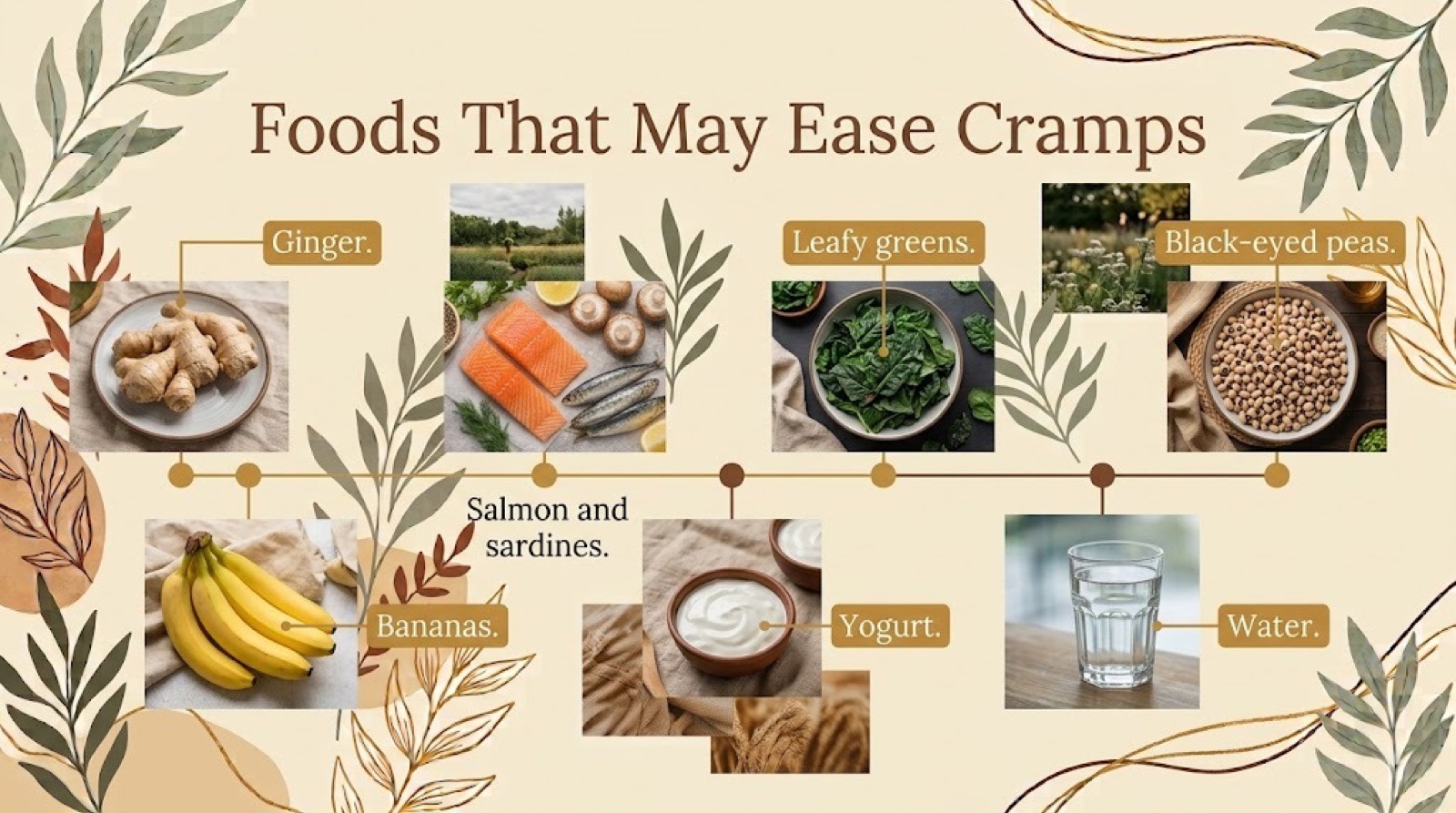
Foods that may help cramps
Food is not a cure, and the research is mostly small trials. But a few foods have real studies behind them, and the rest are good for you anyway. Here is the honest scoreboard.
Ginger
Several reviews of small trials found ginger eased period pain better than placebo, and about as well as NSAIDs in a few head-to-head trials. Studies used ginger powder capsules in the first days of the period. The trials were small and varied, so the evidence is promising, not proven.
Safety: may cause heartburn or gas; NCCIH notes it might interact with blood thinners; avoid with gallstones; ask in pregnancy.
Roots: ginger itself is Asian in origin, but it is the heart of Nigerian zobo, Ghanaian sobolo and ginger drink, and Caribbean ginger beer. Nigeria is now one of the world's big ginger growers.
Oily fish (omega-3)
Meta-analyses of fish-oil trials found less period pain and less need for pain pills, though the trials were small with quality problems. Food first: salmon, sardines, mackerel or trout twice a week.
Safety: fish-oil pills can add to blood thinners; ask your pharmacist.
Vitamin D
Pooled trials found vitamin D lowered primary period pain, and low vitamin D is linked to worse cramps in some studies. The trials used large, prescribed doses, and results varied. Ask your clinician for a blood test before taking high doses.
Food: salmon, sardines, eggs, fortified milk or plant milk.
Calcium
ACOG says 1,200 mg of calcium a day can help reduce physical and mood symptoms of PMS. Food: yogurt, fortified soy milk, sardines with bones, collard and turnip greens, calcium-set tofu.
Roots: benne (sesame) seeds came to the Carolinas with West Africans; tahini and benne wafers add calcium.
Magnesium foods
An older Cochrane review called magnesium "promising" for cramps, but the 2016 update found no high-quality evidence for any supplement. ACOG says magnesium may help bloating, breast tenderness and mood in PMS. Food: pumpkin seeds, almonds, peanuts, black beans, spinach, whole grains.
Safety: magnesium pills can cause diarrhea; avoid with kidney disease unless your doctor approves.
Leafy greens
No cramp trials, but greens bring magnesium, calcium, folate and iron, which you lose with bleeding. Roots: slow-cooked greens are a West African habit carried into collards, Nigerian ugu and efo riro, and Caribbean callaloo.
Bananas & potassium foods
Often recommended for bloating because potassium helps balance sodium. No direct cramp trials. Also: sweet potatoes, beans, oranges, avocado.
Beans & black-eyed peas
Fiber, magnesium and iron in one pot. Fiber keeps you regular, which matters because constipation makes cramps feel worse. Roots: cowpeas were domesticated in West Africa and crossed on slave ships as provisions. [Documented]
Water
It sounds backward, but drinking enough water helps the body let go of extra water and keeps stools soft. Sip all day; add lemon, cucumber or mint.
Fiber & whole grains
Oats, brown rice, millet and sorghum (both domesticated in Africa's Sahel) steady blood sugar and keep digestion moving.
Iron rich foods
Every period costs iron. Beans, lentils, lean beef, chicken, sardines, fortified cereal, greens. Pair with vitamin C for better absorption. Women 19 to 50 need 18 mg a day; girls 14 to 18 need 15 mg.
Vitamin B1 & zinc
Cochrane found only very limited evidence (often one trial) for vitamin B1, zinc, fenugreek and others. Not enough to recommend. Food sources are fine.
Sources: Negi 2021, ginger meta-analysis · Chen 2016, oral ginger review · NCCIH, ginger safety · Mohammadi 2022, omega-3 · Snipe 2023, omega-3 · Chen 2023, vitamin D · 2024 vitamin D meta-analysis · Cochrane 2016, Dietary supplements for dysmenorrhoea · ACOG, PMS · NIH ODS, Iron · research/07-african-roots.md
Ease up on these
Foods and habits that may make cramps or bloating worse
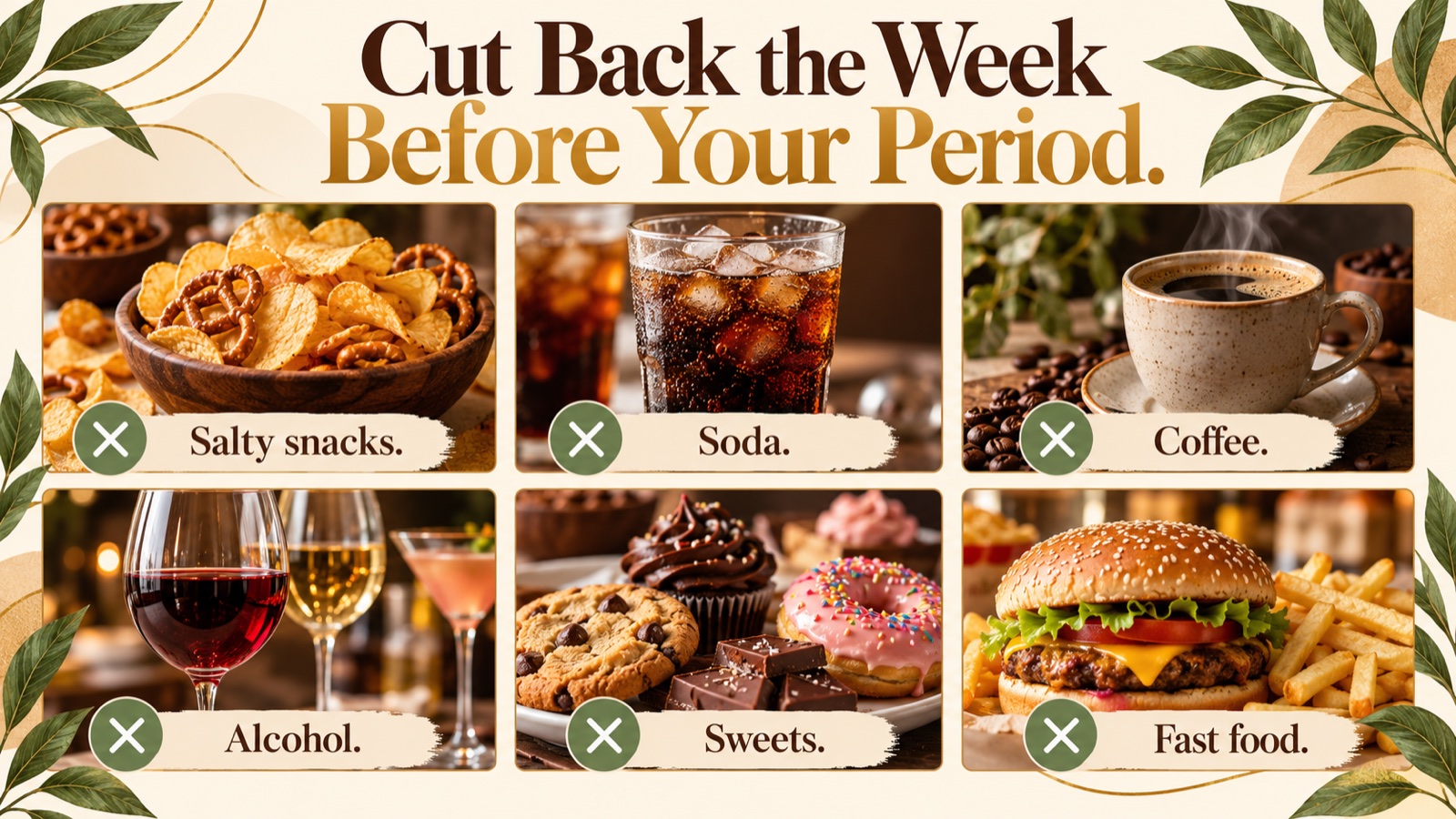
ACOG and the Office on Women's Health both suggest cutting back on salt, sugar, caffeine and alcohol, especially in the week or two before your period. The research behind each one is mixed, so here is the honest level.
| Food or habit | What may happen | What research shows | Evidence | Try instead |
|---|---|---|---|---|
| Salt (chips, seasoning salt, deli meat, canned soup, fast food) | Body holds onto water, so you feel puffy and bloated | Salt and water retention is basic body science; ACOG and OWH advise less salt for PMS | Some | Herb blends, lemon, garlic, onion, pepper; rinse canned beans |
| Caffeine (coffee, energy drinks, soda, strong tea) | May worsen breast tenderness, jitters, sleep | Studies conflict: some link more caffeine to worse cramps, others find none or the opposite | Weak | Half-caf, decaf, ginger or rooibos tea |
| Alcohol | Dehydration, poor sleep, low mood; can worsen PMS | ACOG advises avoiding it for PMS; also unsafe with acetaminophen in heavy use | Some | Sparkling water with sorrel or lime |
| Sugary and processed snacks (candy, pastries, soda) | Blood-sugar swings, cravings, mood dips | Small observational studies tie a "snack" eating pattern to worse period pain; cannot prove cause | Weak | Fruit, nuts, yogurt, a square of dark chocolate |
| Fried and fast food | Heavy, bloated feeling | Some student surveys link frequent fast food with more period distress | Weak | Oven-"fried" fish or chicken, roasted veggies |
| Fizzy drinks | Gas and belly swelling | General digestion advice | General | Still water, warm teas |
Sources: ACOG, PMS · Office on Women's Health, PMS · 2022 review, factors linked with menstrual symptoms · Najafi 2018, dietary patterns and menstrual pain · FDA, Acetaminophen
Over-the-counter medicine, used safely
Pain relievers and bloat pills
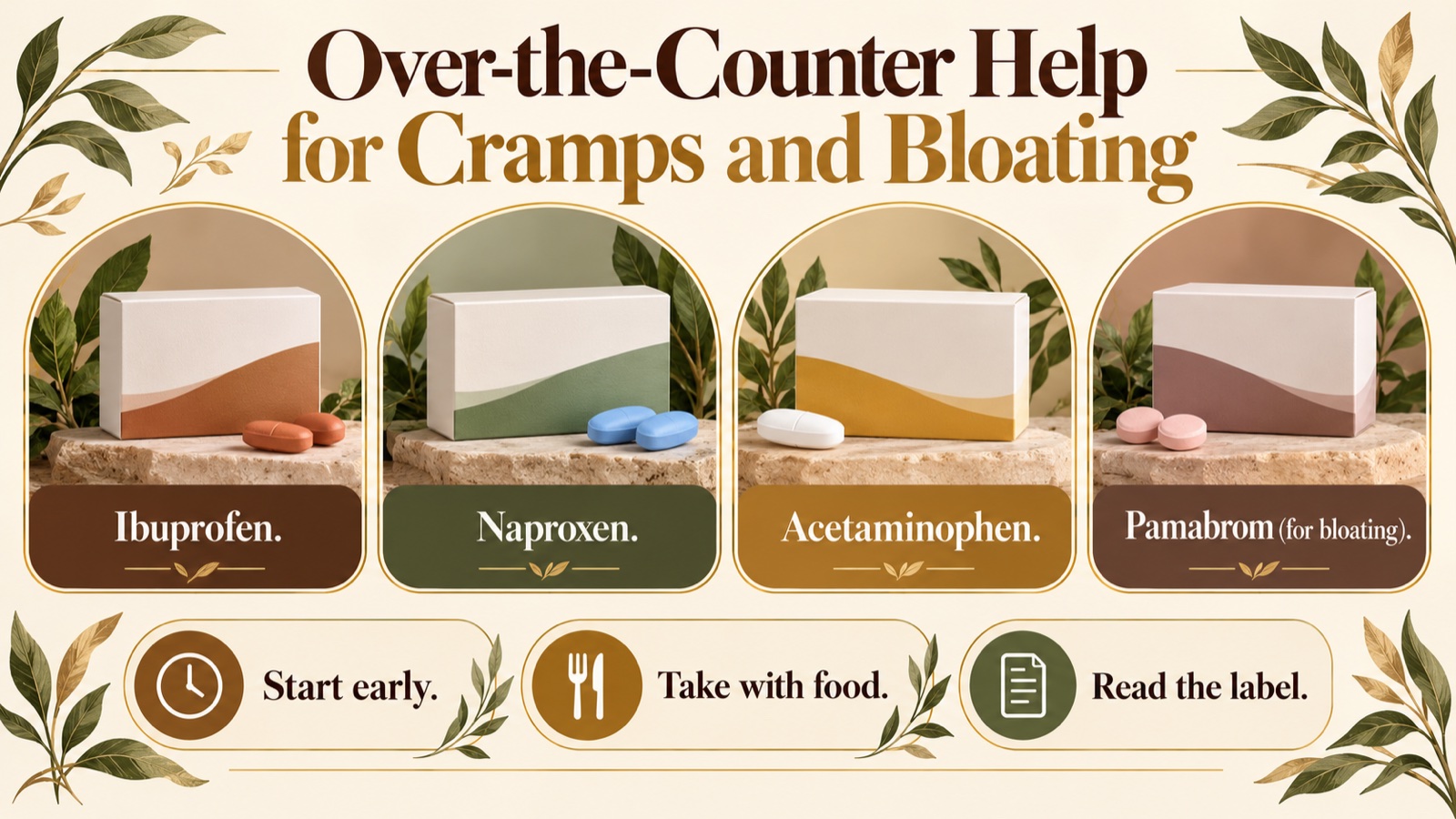
This is education, not a prescription. Always follow the Drug Facts label on the box for how much and how often, and ask a pharmacist if you take other medicines or have a health condition. Teens should use medicine with a parent's OK.
| Medicine | How it helps | Tips | Do not use, or ask a doctor first, if you… |
|---|---|---|---|
| Ibuprofen (an NSAID; brands like Advil, Motrin) | Lowers prostaglandins, so the uterus squeezes less. First choice for cramps for most people. | Start at the first sign of your period or pain, not when pain is at its worst; usually needed only 1 to 3 days. Take with food or milk. Follow label dose and timing. | Have had stomach ulcers or stomach bleeding · have a bleeding disorder or take blood thinners or steroids · have kidney disease, heart disease or high blood pressure · have had asthma, hives or a reaction after aspirin or any NSAID · are pregnant (FDA: avoid from 20 weeks on unless your doctor says) · are 60 or older (higher stomach-bleeding risk) · take a water pill (diuretic) · drink 3 or more alcoholic drinks a day · need it for pain more than 10 days. |
| Naproxen (an NSAID; brands like Aleve) | Same action as ibuprofen; lasts longer, so fewer doses a day. | Same timing tip. Take with food. Do not take with ibuprofen or aspirin at the same time. | |
| Acetaminophen (brands like Tylenol) | Eases pain but does not lower prostaglandins, so it is often weaker for cramps. A good option when NSAIDs are not safe for you. | Easy on the stomach. Check every label for "acetaminophen" or "APAP", because it hides in cold, flu, sleep and many period combo products. Never go over the label maximum. | Have liver disease · drink 3 or more alcoholic drinks a day · take warfarin · already take another product with acetaminophen. |
| Pamabrom (a mild water pill in "menstrual" combo products such as some Midol and Pamprin types) | A diuretic listed in the FDA's menstrual monograph for temporary bloating and water-weight gain. Combos usually pair it with acetaminophen, and some add an antihistamine (pyrilamine) that can cause drowsiness. | Read the whole ingredient list so you don't double up on acetaminophen. Don't drive if the combo makes you sleepy. Stop and ask a doctor if bloating lasts more than 10 days. | Are pregnant or breastfeeding · take other prescription medicines or have a long-term health condition (ask a pharmacist first). |
| Hormonal birth control (prescription: pill, patch, ring, shot, implant, hormonal IUD) | Thins the lining, so there are fewer prostaglandins, lighter bleeding and less pain. ACOG says most teens with regular period pain respond to NSAIDs, hormonal treatment or both. | Talk with your clinician about which type fits your health and goals. It is also used for heavy bleeding, PCOS and endometriosis. Compare every method on our Birth Control page. | Your clinician will check blood pressure, migraines with aura, smoking, clotting history and other conditions. |
Sources: ACOG, Dysmenorrhea · MedlinePlus, Period pain · MedlinePlus, Ibuprofen · FDA, NSAIDs in pregnancy at 20 weeks · FDA, Acetaminophen · NLM DailyMed, pamabrom labels · ACOG, Dysmenorrhea and endometriosis in the adolescent
No pharmacy needed
Heat, movement and sleep
Heat
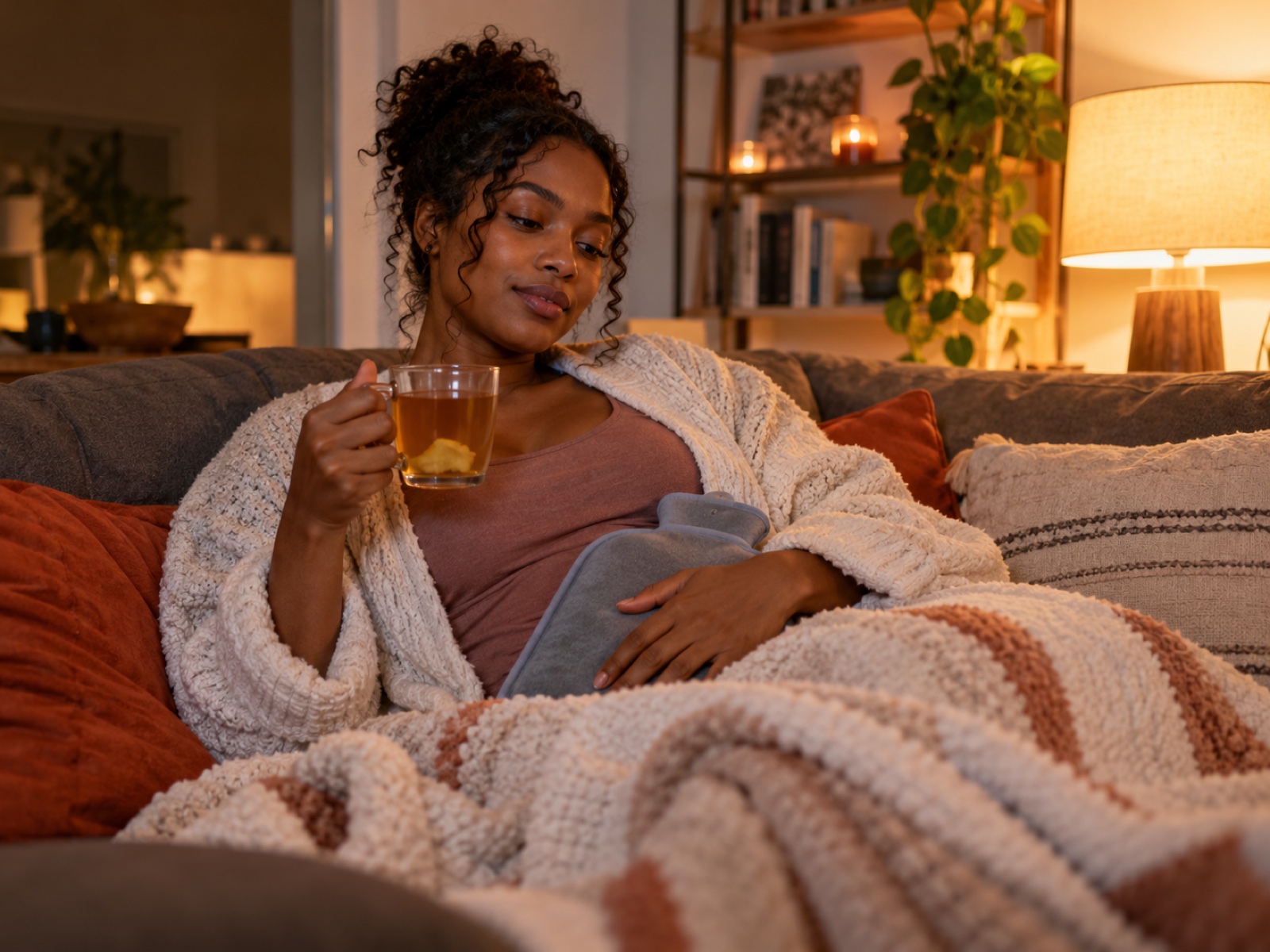
A review of six trials found heat on the lower belly eased cramps better than an unheated patch, and about as well as pain pills in small studies. Heating pad, hot-water bottle, warm bath or stick-on heat wrap. Use a cloth layer and don't sleep on a heating pad.
Movement
A 2019 Cochrane review of nine trials found regular exercise may cut period pain a lot, though the studies were low quality. Walking, dancing, stretching, yoga, about 45 to 60 minutes, three or more times a week, works best when it's a habit all month.
Sleep
Pain feels bigger when you're tired. Aim for 8 to 10 hours for teens, 7 to 9 for adults. Lie on your side with knees bent, or on your back with a pillow under your knees.
Gentle massage
Slow circles on the lower belly and lower back, with a little shea butter or plain oil. Feels good, low risk.
Breathe
Slow belly breathing (in for 4, out for 6) relaxes tight muscles and calms the nervous system.
Stay regular
Constipation adds pressure. Water, fiber and movement help.
Sources: Jo 2018, heat therapy meta-analysis · Cochrane 2019, Exercise for dysmenorrhoea · 2024 network meta-analysis of non-drug treatments
A warm cup
Herbal teas for cramps: what's real
A hot cup is comforting no matter what is in it. Here is what each tea brings, how strong the evidence is, and who should skip it.
| Tea | Evidence for cramps | Safety notes | Where it comes from |
|---|---|---|---|
| Ginger | Some Trials used ginger powder capsules, not tea, but fresh ginger tea is a reasonable, gentle way to get some. | Heartburn; ask if you take blood thinners, have gallstones or are pregnant. | Asian plant; central to West African and Caribbean drinks (zobo, sobolo, ginger beer). |
| Chamomile | Weak Small studies only. Calming at bedtime. | NCCIH: likely safe as a tea; allergy risk if you react to ragweed; interacts with warfarin. Ask in pregnancy. | Europe and western Asia. |
| Peppermint | Weak Soothes the stomach; little cramp research. | Can worsen heartburn and acid reflux (NCCIH). | Europe; grown worldwide. |
| Red raspberry leaf | Traditional use Folk "womb tonic"; research is mostly on pregnancy and labor and is under-developed. No good cramp trials. | Avoid in pregnancy unless your midwife or doctor approves. | Europe and North America. |
| Hibiscus (sorrel, bissap, zobo) | Not a cramp herb Loved for flavor and blood pressure research, not period pain. | Can lower blood pressure; avoid in pregnancy; ask if on BP or diabetes medicine. | African: native to West and Central Africa. Senegal's bissap, Nigeria's zobo, Ghana's sobolo. [Documented] |
| Rooibos | General Caffeine-free swap for black tea. | Generally well tolerated as a tea. | African: South Africa's Cape; traditional knowledge of the Khoi and San peoples. |
Sources: NCCIH, Chamomile · NCCIH, Peppermint oil · Bowman 2021, raspberry leaf review · Negi 2021, ginger · research/07-african-roots.md (ginger, hibiscus, rooibos)
Mind and mood
PMS and PMDD
PMS is a group of body and mood changes in the week or two before a period that go away once bleeding starts. PMDD is a severe form that can wreck work, school and relationships. It is real, it is medical, and it is treatable.
PMS: common signs
- Bloating, sore breasts, headache, pimples
- Food cravings, tiredness, trouble sleeping
- Irritable, teary, anxious, low mood
What helps (ACOG): regular aerobic exercise most days, less salt, sugar and fat, no caffeine or alcohol, complex carbs, calcium-rich foods, and good sleep. Hormonal birth control or other medicines can help when lifestyle is not enough.
PMDD: when it's more than PMS
Up to 5% of women of childbearing age have PMDD, says the Office on Women's Health. Signs, starting a week or two before the period:
- Deep sadness or hopelessness, sometimes thoughts of suicide
- Rage or irritability that hurts relationships
- Anxiety, panic attacks, feeling out of control
- Losing interest in things you enjoy
Treatment: antidepressants called SSRIs (some approved by the FDA for PMDD), certain birth control pills, therapy, and lifestyle steps. Track symptoms for two cycles and bring the chart.
We are taught to be strong for everybody. Sister, if every month you turn into somebody you don't recognize, that's not weakness. Write it down, show it to your doctor, and say the word "PMDD" out loud in that room.
Sources: ACOG, PMS · Office on Women's Health, PMDD · MedlinePlus, PMDD · 988 Lifeline
Know the line
Heavy periods and red flags
Heavy bleeding is common, and many women think theirs is normal because their mother's was too. The CDC points out that heavy periods can come from a bleeding disorder that runs in families, from fibroids, from hormone changes or from other causes. Heavy bleeding also drains iron.
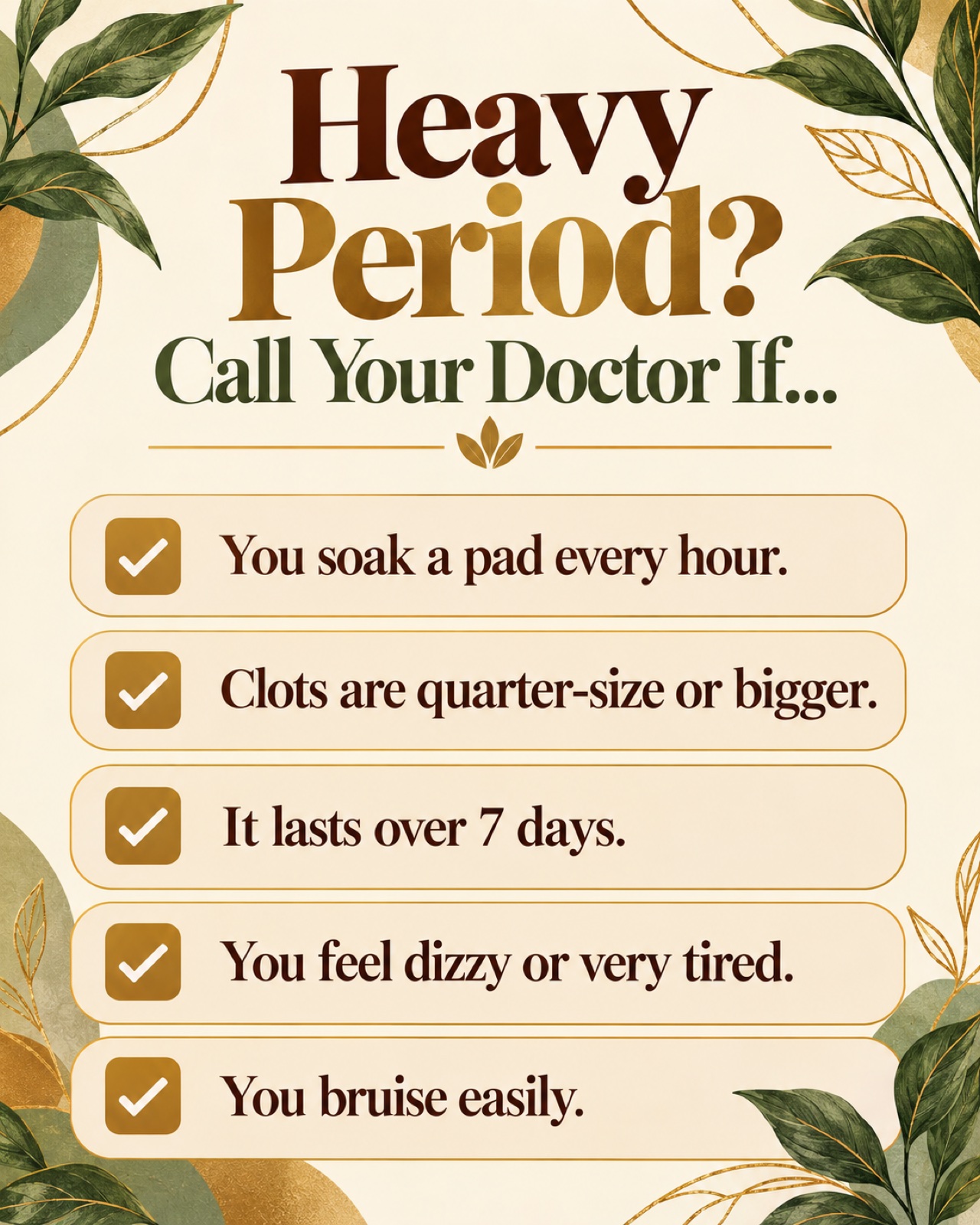
Call your clinician if you…
- Soak through a pad or tampon every hour for several hours in a row
- Need to change every 2 hours or less, or double up pads
- Wake up at night to change, or bleed through the sheets
- Pass clots the size of a quarter or bigger
- Bleed for more than 7 days
- Feel tired, dizzy, short of breath, or crave ice (signs of low iron)
- Have frequent nosebleeds, easy bruising, or long bleeding after dental work
- Skip school, work or church because of your period
Get emergency care for
- Soaking a pad every hour and feeling faint, dizzy or with a racing heart
- Sudden severe belly pain, especially one-sided, or with fever
- Heavy bleeding when you could be pregnant
- Signs of toxic shock (high fever, rash, vomiting) while using a tampon or cup
Iron check
Ask for a blood count and a ferritin (iron stores) test if your periods are heavy. Low iron can show up before anemia does. Don't start iron pills without testing: too much iron is harmful.
Sources: CDC, Heavy menstrual bleeding · CDC, Signs and symptoms of bleeding disorders · CDC, Von Willebrand disease · ACOG, Heavy menstrual bleeding · NIH ODS, Iron · FDA, Tampons and TSS
Say their names
Fibroids, endometriosis and PCOS
Three common conditions hide behind "bad periods." Black women carry a heavier load of fibroids and wait longer for an endometriosis diagnosis. Knowing the signs is how we get seen sooner.
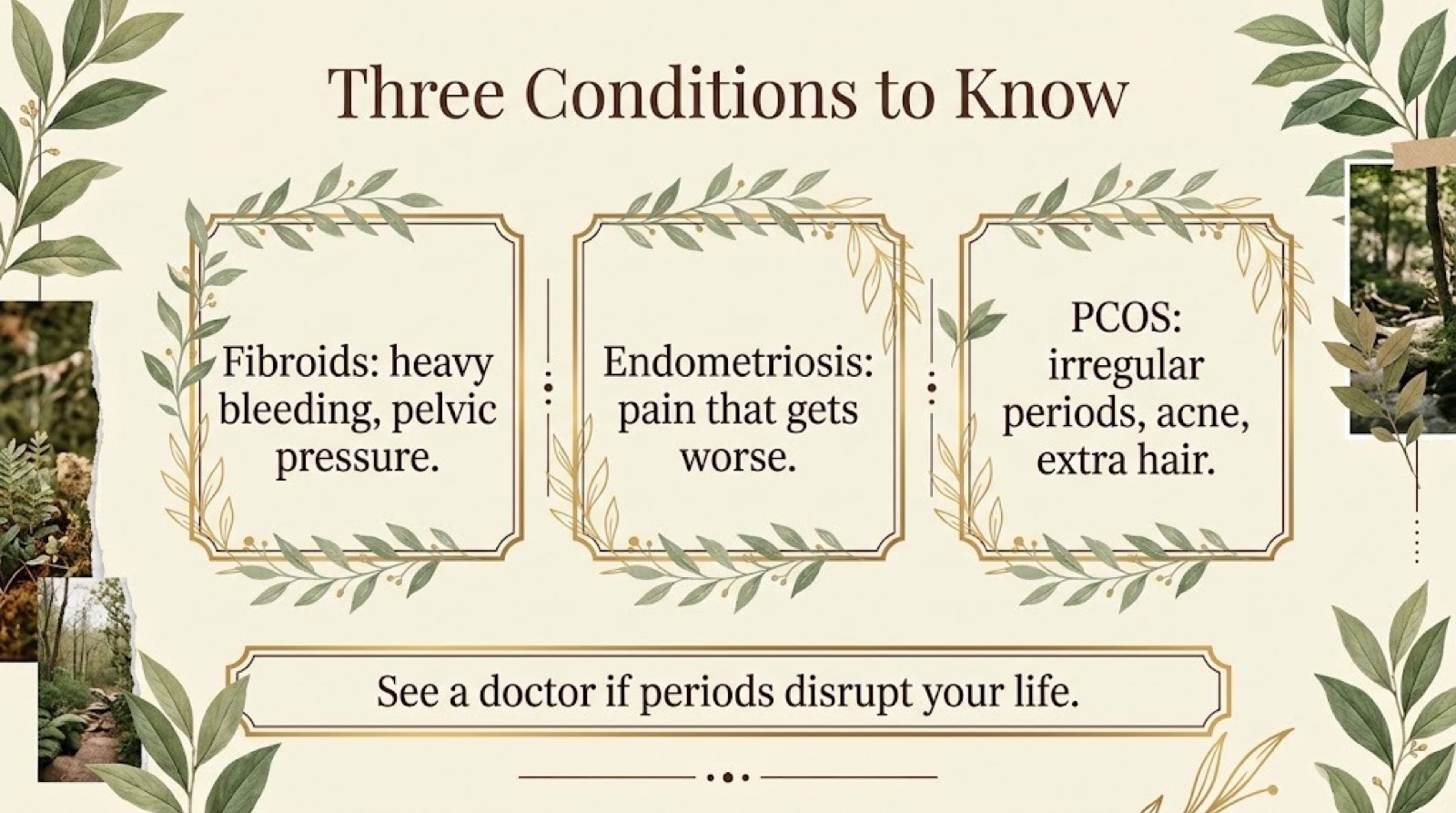
Uterine fibroids
Non-cancer growths in the muscle of the uterus.
- Signs: heavy or long periods, clots, pelvic pressure or fullness, peeing often, constipation, low-back pain, a growing belly, low iron.
- Who: NICHD says fibroids disproportionately affect Black women, who tend to get them younger and with more severe symptoms. A clinical review estimates about three times the risk, with up to 80% of Black women developing fibroids by age 50, versus 50% to 70% of white women.
- Care gap: Black women are 2 to 3 times more likely to have a hysterectomy for fibroids. Ask about every option: medicines, embolization, myomectomy (keeps the uterus), and more.
Endometriosis
Tissue like the uterine lining grows outside the uterus and bleeds and swells each month.
- Signs: cramps that get worse over the years, pain before and after the period, pain with sex, bowel or bladder pain, pelvic or low-back pain, trouble getting pregnant.
- Who: about 1 in 10 women of reproductive age (ACOG).
- Delay: diagnosis takes about 7 years on average worldwide. Studies find longer delays for Black patients, and an old, wrong belief that endometriosis is "rare in Black women" still shapes care. Black women in interviews describe pain being dismissed.
- Care: NSAIDs, hormonal treatment, and surgery when needed.
PCOS
Polycystic ovary syndrome: a hormone imbalance with higher androgens.
- Signs: fewer than 8 periods a year, or periods every 21 days or sooner; extra hair on face, chin or chest; acne that won't quit; thinning scalp hair; dark velvety skin in neck creases or under breasts; skin tags; weight gain.
- Who: about 1 in 10 women of childbearing age (OWH).
- Why it matters: linked to insulin resistance, type 2 diabetes, heart disease and infertility. Even a modest weight change, movement and treatment help.
How to be heard at the appointment
- Bring two or three months of period notes: days, pads per day, clots, pain score 0–10, missed school or work.
- Say the name: "I'm worried about fibroids / endometriosis / PCOS. What tests can rule it out?"
- Ask for a blood count, ferritin, and a pelvic ultrasound if bleeding is heavy.
- Ask, "If not this, what else could it be?" and "What are all my treatment options?"
- Bring a sister, friend or auntie. Ask for a second opinion if you feel dismissed.
I have sat in church with too many women who bled for years before anybody said "fibroids," and too many who were told "it's all in your head" before anybody said "endometriosis." Your pain is information. Bring your notebook and don't leave without a plan.
Sources: NICHD, Uterine fibroids and women's health · StatPearls (NIH), Uterine leiomyomata · NICHD Council, Health disparities in uterine fibroids · ACOG, Endometriosis · OWH, Endometriosis · Time to endometriosis diagnosis by race (2025) · Black women's experiences with endometriosis · OWH, PCOS · NICHD, PCOS symptoms
Your best evidence
Track your period
ACOG and the AAP call the menstrual cycle a vital sign. Tracking turns "my periods are bad" into facts a doctor can act on.
| Write down | Example |
|---|---|
| First day of bleeding | Oct 3 |
| Last day of bleeding | Oct 8 (6 days) |
| Pads or tampons per day, and size | Day 2: 7 super pads |
| Clots (size) | Two, quarter-size |
| Pain 0–10 and what helped | Day 1: 7, ibuprofen + heat |
| Mood, sleep, energy | Teary 2 days before |
| Missed school, work or plans | Missed work Oct 4 |
Sources: ACOG/AAP, Menstruation as a vital sign · OWH, PMDD (symptom diary)
Period poverty is real
Free period products in Philadelphia
No girl should miss school and no woman should use rags or paper because pads cost too much. The School District of Philadelphia reports that one in four U.S. students struggle to afford menstrual products. Here is free help we verified (October 2026). Programs change, so call ahead.
School District of Philadelphia, Menstrual Health Equity Program
92 public middle and high schools
Free pads, tampons and period underwear. After school or when buildings are closed, ask the school nurse for an "IRL Kit" (3 pads and 2 flushable wipes). Launched June 2025.
Phlow Philly free-vend dispensers
City libraries, recreation centers and schools
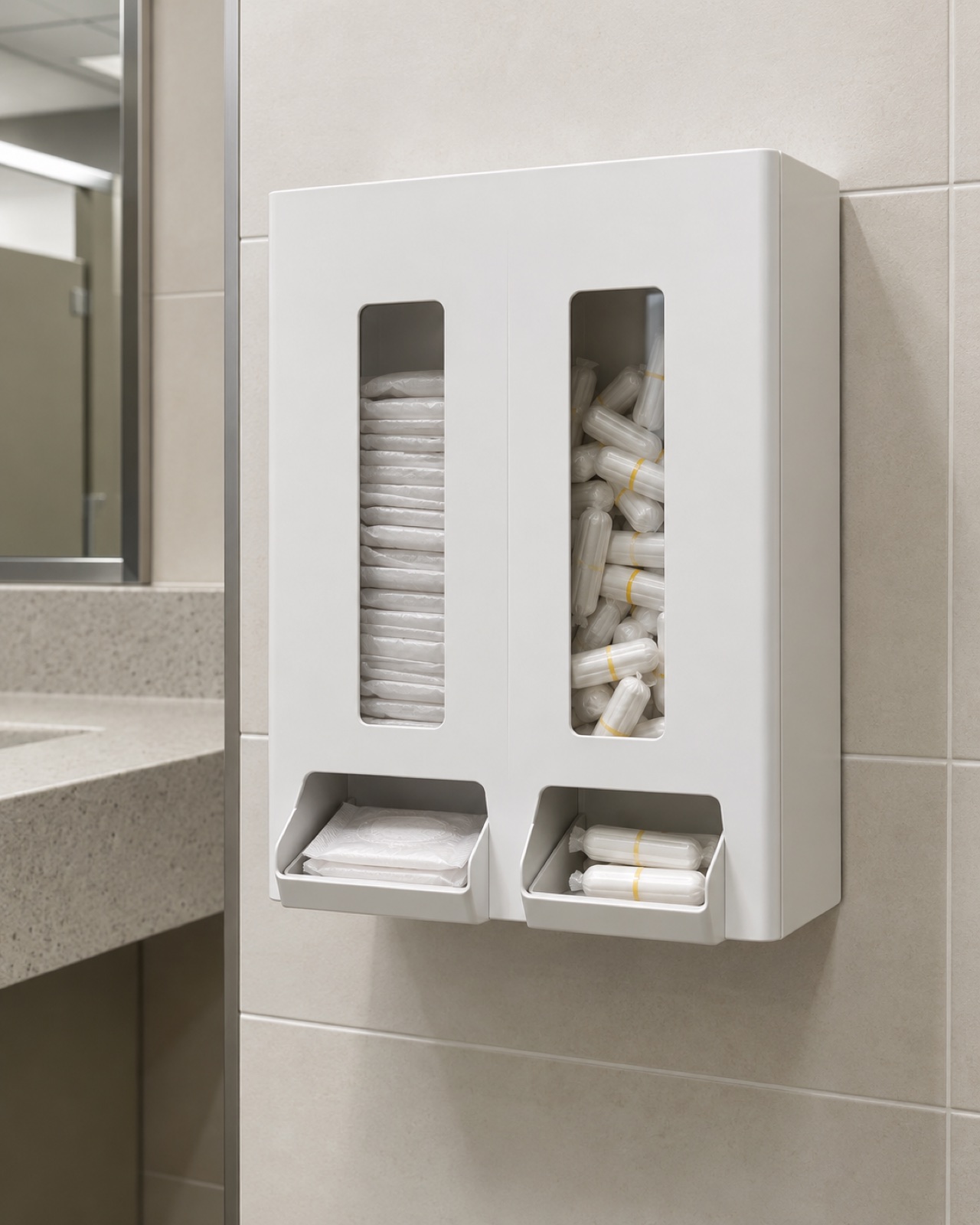
A City of Philadelphia program with Aunt Flow that installed free pad and tampon dispensers in public bathrooms beginning September 2025, plus free "Period Party" kits through community groups. Find the map at phlowphilly.org.
Joseph E. Coleman Library
68 W. Chelten Ave., Germantown
Listed as a Phlow Philly dispenser site.
Belfield Recreation Center
2109 Chew Ave., Germantown
Listed as a Phlow Philly dispenser site.
PA Feminine Hygiene Product Grant
Public schools statewide
The 2024–25 state budget set aside three million for free period products in K-12 schools, paid to every district and charter that did not opt out. Ask your school's front office or nurse.
Ask where you already go
Food pantries, churches, health centers
Many pantries and community health centers keep pads on hand even if they don't advertise it. SNAP and WIC cannot be used for period products, so pantries matter. See our Philly Guide for pantries and clinics.
Ladies, put an extra pack of pads in your church bag and your car. When a girl whispers "do you have something?" you will be the auntie who says "Of course, baby," with no questions asked.
Sources: School District of Philadelphia, Menstrual Health Equity Program · Resolve Philly, Phlow Philly in Germantown · Aunt Flow, Phlow Philly launch · Phlow Philly · WHYY, PA free period products in schools · PA Governor's Office, 2025 · USDA, SNAP eligible items
Keep going
Raising a girl through puberty?
First-period kits, bras, skin, talking scripts and coming-of-age traditions.
Growing Up: Puberty & Your First Period The Talk Birth Control Herbs & Teas Body