
Skin & Nails
Glow that lasts a lifetime
Melanin is a gift, and it comes with its own care manual. Sunscreen, dark spots, bumps, keloids, eczema, nails that talk, and the creams and chemicals to leave on the shelf.
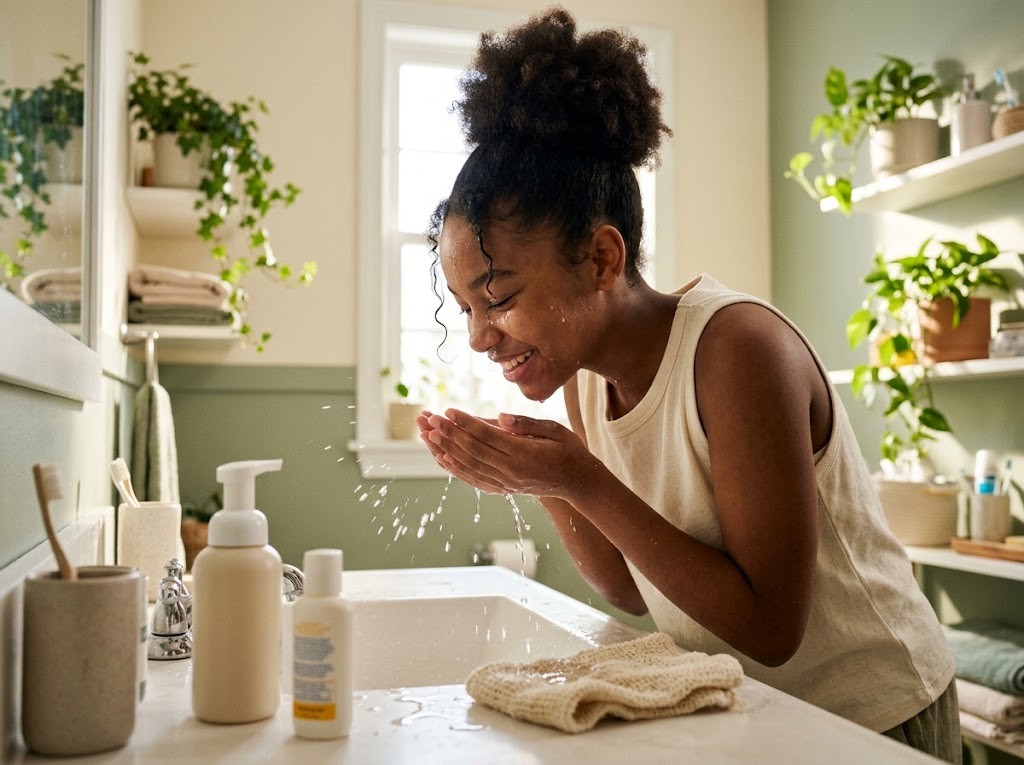
Melanin-rich skin
What makes our skin special, and what it needs
- Melanin is a shield, but a partial one. It gives some natural protection from the sun, not enough to prevent sunburn, skin cancer or darker spots.
- It reacts fast. Any irritation, a pimple, a bug bite, a rash, a burn from a harsh product, can leave a dark mark (post-inflammatory hyperpigmentation) that lasts months.
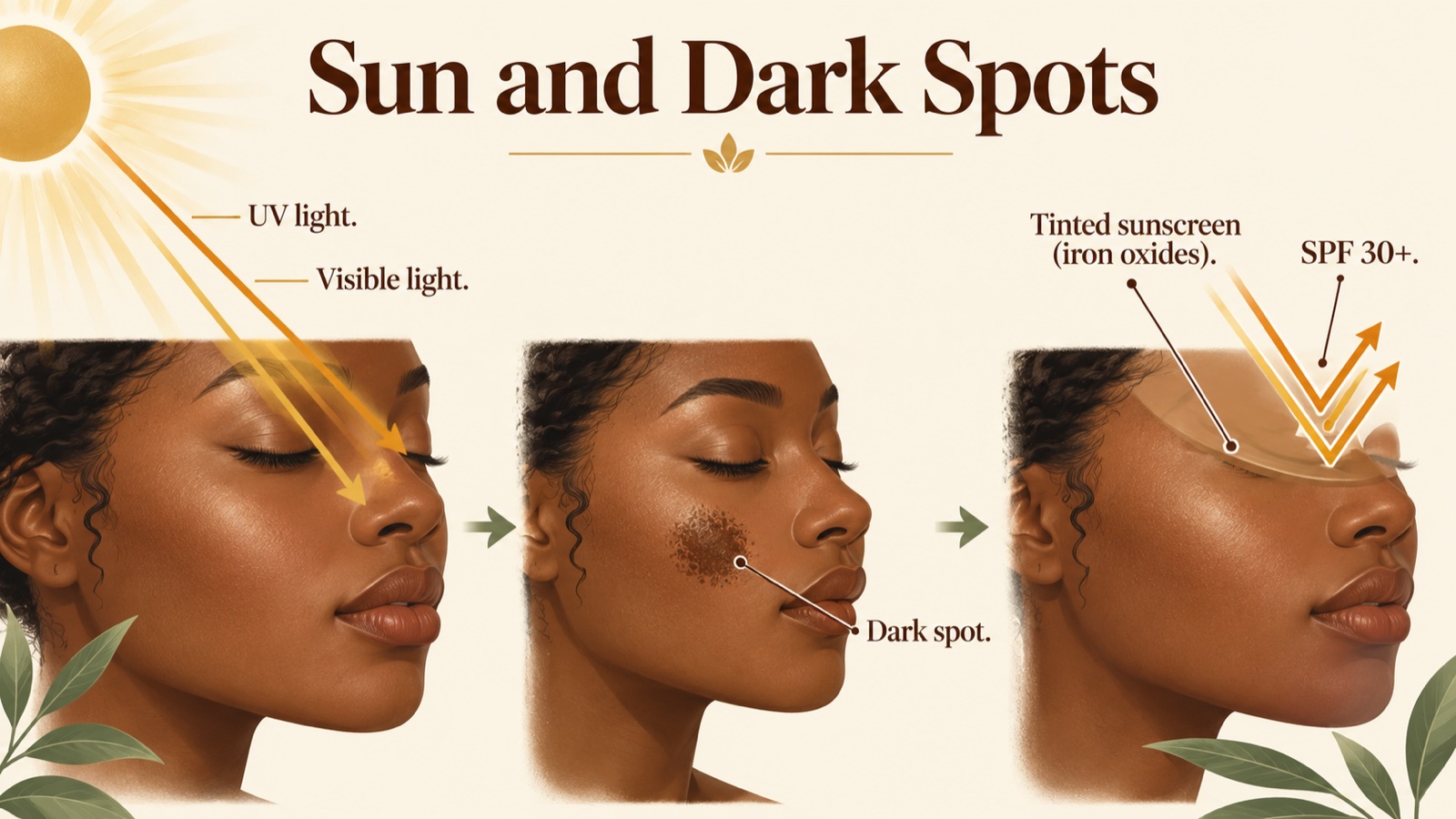
- Light makes marks darker. Both sunlight and visible light deepen dark spots and melasma.
- Less vitamin D from the sun. More melanin means the skin makes less vitamin D from the same sunshine. Black Americans are more often low.
- Rashes can look different. Eczema and other rashes may look brown, purple or grey instead of red, which can delay diagnosis.
- Scars can overgrow. Keloids are more common in darker skin, especially with a family history.
- "Ashy" is dry. Dry skin shows up as grey or white flaking. Moisturize right after bathing.

Gentle wins. Every time we scrub, pick or bleach a spot, we make it darker. Treat your face like you are washing a baby's face, then put your sunscreen on.
Sources: AAD, Fade dark spots · AAD, Melanoma in skin of color · NIH ODS, Vitamin D · National Eczema Association · AAD, Keloids · AAD, Dry skin tips
Sunscreen for dark skin
Yes, sis. You need sunscreen.
Skin cancer in Black patients is often found later, when it is harder to treat. Sunscreen also keeps dark spots from getting darker, which may be the reason that gets you to wear it.
The basics
- Broad-spectrum, SPF 30 or higher, water-resistant (AAD).
- Every day on face, ears, neck, and hands, even in winter and through car windows.
- About a nickel-to-quarter-sized amount for the face; reapply every two hours outside or after sweating.
Tinted is your friend
Visible light worsens melasma and dark spots in darker skin. Tinted sunscreens with iron oxides block visible light better than untinted mineral sunscreens. Labels rarely list the iron oxide amount, so look for "tinted" in a shade that blends into your skin.
Finding one you'll wear
- Chemical (organic) filters usually go on clear.
- Tinted mineral formulas blend on deeper skin.
- Sheer gels, sticks or SPF moisturizers count if they say broad-spectrum SPF 30+.
- Lips: SPF lip balm.
Sources: AAD, Sunscreen FAQs · AAD, Melanoma in skin of color · EMJ Dermatology, visible light blockers in melanated skin (2026 review) · AAD, Fade dark spots
Common concerns
Dark spots, acne, keloids, eczema and razor bumps
Tap each one to open it.
Hyperpigmentation (dark spots and melasma)
Dark marks after acne or irritation, and melasma (brown patches on cheeks, forehead, upper lip, often with hormones or pregnancy), are very common in darker skin.
| Ingredient | What it does | Evidence | Notes |
|---|---|---|---|
| Daily sunscreen (tinted) | Stops spots from getting darker | Strong | Nothing else works without it |
| Niacinamide | Calms and evens tone | Some | Gentle, good for most skin |
| Azelaic acid | Fades marks, helps acne | Some | Often used in pregnancy, ask your doctor |
| Vitamin C serum | Antioxidant, brightens | Some | Can sting; start slowly |
| Retinoids (adapalene, tretinoin) | Speed skin turnover; treat acne | Strong for acne | Not in pregnancy (tretinoin); can irritate and cause dark marks if overused |
| Hydroquinone | Lightens dark spots | Strong under a dermatologist | Prescription only; never from unlabeled jars (see below) |
Avoid harsh scrubs, lemon juice, toothpaste and "bleaching" creams. They irritate, and irritation makes more pigment.
Acne
- Wash twice a day with a gentle cleanser, fingertips only. Do not scrub.
- Do not pick. In our skin, the dark mark often outlasts the pimple by months.
- Look for "non-comedogenic" and be careful with heavy hair oils and pomades near the forehead and hairline ("pomade acne").
- Over-the-counter adapalene and benzoyl peroxide help; start every other night.
- Food: some studies link high-sugar, high-glycemic diets and, less consistently, milk (especially skim) to acne. Some
- Deep, painful or scarring acne: see a dermatologist early to prevent scars and keloids.
Keloids
Keloids are raised scars that grow beyond the original wound. They are more common in darker skin and run in families.
- If you or family get keloids, think twice about extra piercings and tattoos.
- Treat acne early so it does not scar.
- See a dermatologist early: steroid injections, silicone sheets and other treatments work better on newer keloids.
- No food, oil or cream cures keloids.
Eczema
On dark skin, eczema may look dark brown, purple or grey, and may show up as small bumps around hair follicles. It often leaves dark marks behind.
- Short, lukewarm showers; pat dry.
- Thick, fragrance-free cream or ointment within three minutes of bathing.
- Fragrance-free laundry soap.
- Adults: avoid cutting out whole food groups without allergy testing. Food triggers matter mainly for some children with confirmed allergies.
Razor bumps (pseudofolliculitis)
When a razor cuts a coarse, curly hair short, the hair can curve back into the skin and form a bump. Many women get them on the underarms, bikini line, legs and chin.
- Shave with the direction of hair growth with a sharp, clean razor.
- Soften hair with warm water and a shaving gel first; moisturize after.
- An electric trimmer that leaves a little stubble often helps most.
- Do not pluck ingrown hairs or pick bumps; it darkens the skin.
- Chin hair plus irregular periods? Ask about PCOS.
- Ongoing bumps can scar: see a dermatologist about laser or prescription options.
Sources: AAD, Fade dark spots · AAD, Acne and diet · AAD, Keloids · National Eczema Association, Eczema in skin of color · AAD, Razor bump remedies · NIH ODS, Vitamin A (retinoids in pregnancy)
Skin-lightener dangers
Leave the "fade cream" jar at the store
The FDA warns consumers to avoid over-the-counter skin lighteners. Its testing has found mercury in some products, and there are no FDA-approved over-the-counter skin-lightening products.
- Mercury can damage the kidneys and nervous system. It can pass to babies in the womb and to family members who touch the skin or towels. Children and pregnant women are most at risk.
- Over-the-counter hydroquinone is not FDA-approved. It has caused rashes, swelling, and ochronosis, a permanent blue-black darkening of the skin, the very opposite of what you wanted.
- Label red flags: "mercurous chloride," "calomel," "mercurio," "mercurie," "Hg"; handmade or foreign-language-only labels; no ingredient list; sold at beauty supply counters or online with "bleaching," "whitening" or "anti-spot" promises.
Have a cream like this at home? Stop using it, wash your hands, and ask your local health department how to throw it away safely.

Somebody sold our grandmothers the idea that lighter was better. Let us not sell it to our daughters. Even out a dark spot with a doctor if you want, but love the brown underneath it.
Routines by age
Morning and night, decade by decade
Simple beats fancy. Three or four products used every day will do more than ten used now and then.
| Age | Morning | Night | Watch for |
|---|---|---|---|
| Girls (to 12) | Rinse, fragrance-free lotion, sunscreen outdoors | Bath, then lotion while damp | Eczema patches; teach "no picking" |
| Teens | Gentle cleanser, light non-comedogenic moisturizer, SPF 30+ | Cleanser; adapalene or benzoyl peroxide on acne areas (start every other night) | Acne marks, pomade acne at the hairline, razor bumps; deep acne = dermatologist |
| 20s and 30s | Cleanser, vitamin C or niacinamide, moisturizer, tinted SPF 30+ | Cleanser, retinoid (not in pregnancy) or azelaic acid, moisturizer | Melasma with pills or pregnancy; keloids; check new moles |
| Pregnant or nursing | Gentle cleanser, moisturizer, tinted mineral SPF | Cleanser, moisturizer; ask your OB before any active | No retinoids, no hydroquinone without your doctor; melasma is common |
| 40s and 50s | Cleanser, antioxidant serum, richer moisturizer, tinted SPF | Cleanser, retinoid as tolerated, rich cream; body cream after shower | Drier skin in menopause; dark spots; acrochordons (skin tags) and dermatosis papulosa nigra (small dark bumps) are common and harmless, but let a dermatologist remove them, never a home remedy |
| 60 and up | Mild non-soap cleanser, thick cream, SPF | Ointment-style moisturizer on hands, shins and feet | Thin skin bruises easily; new or changing spots on palms, soles and nails; slow-healing sores |
Sources: AAD, Fade dark spots · AAD, Sunscreen FAQs · AAD, Dry skin · NIH ODS, Vitamin A · Crowned & Rooted history brief (shea, black soap, baobab)
Food for skin
Eat your glow
Diets rich in vegetables, fruit and fish are linked with healthier skin in observational studies. No food erases a scar or a keloid, but your plate builds the skin you grow next month.
| Food | Key nutrients | What it does for skin | Evidence |
|---|---|---|---|
| Peppers, citrus, guava, kiwi, berries | Vitamin C | Needed to build collagen; antioxidant | Strong (needed for collagen) |
| Sweet potato, carrots, squash, collards | Beta-carotene (vitamin A) | Skin cell turnover | Some |
| Salmon, sardines, mackerel, walnuts, flax | Omega-3 fats | Skin barrier, less inflammation | Some |
| Almonds, sunflower seeds, avocado | Vitamin E, healthy fat | Antioxidant; fats help absorb vitamins A, D, E, K | Weak |
| Oysters, beans, pumpkin seeds | Zinc | Wound healing; shortage causes rash | Some |
| Eggs, beans, fish, yogurt | Protein | Raw material for skin, hair and nails | Strong |
| Water, cucumber, watermelon, soups | Fluid | Hydration (dry skin still needs moisturizer) | Weak for skin itself |
| Fewer sugary drinks and white-flour snacks | Lower glycemic load | May help acne | Some |
Sources: NIH ODS, Vitamin C · Vitamin A · Omega-3 · Vitamin E · Zinc · AAD, Acne and diet · Crowned & Rooted history brief (African crops)
Nails
Your nails are talking
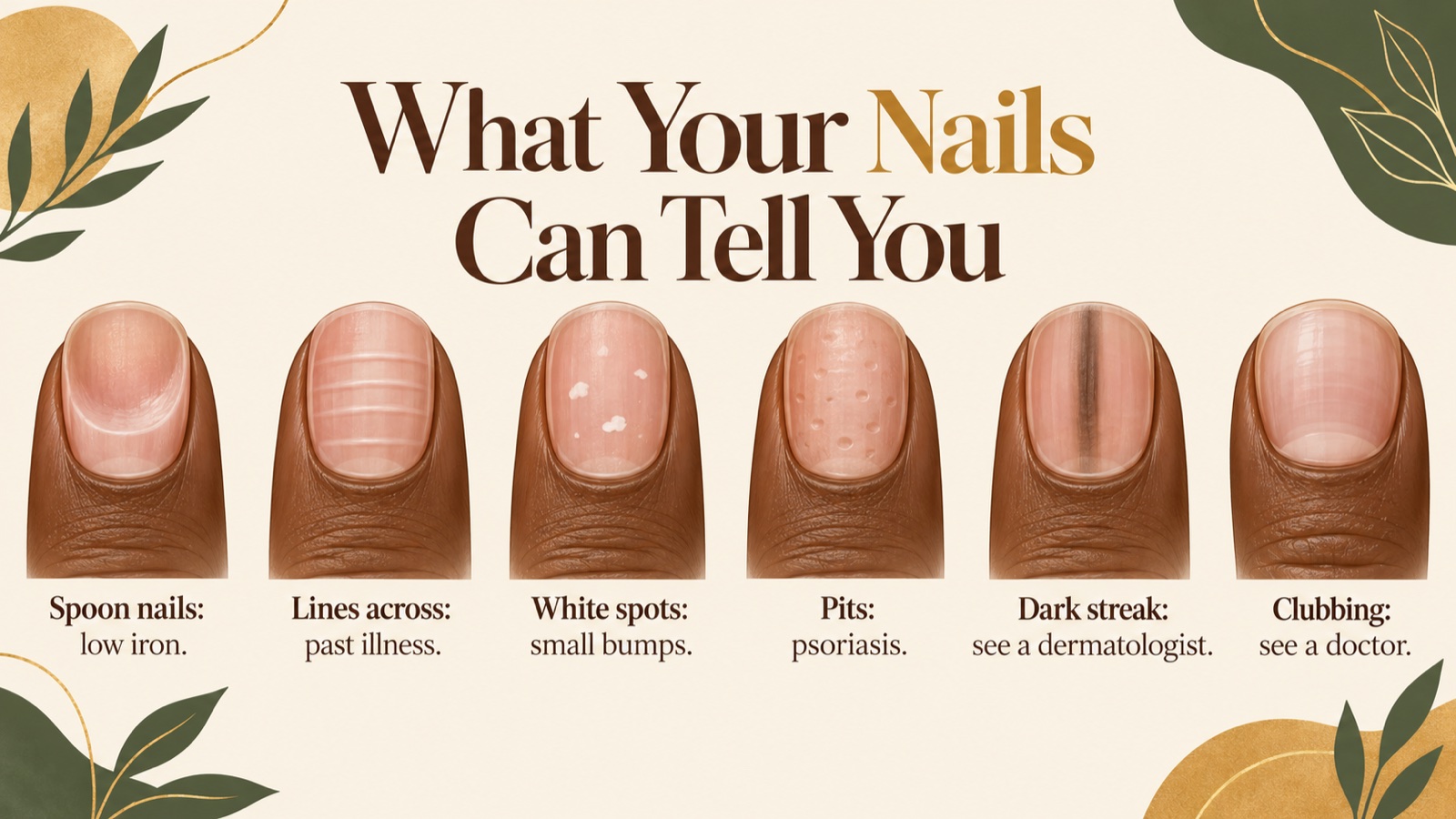
Most nail changes are harmless. Some are the first clue to low iron, a past illness, or something that needs a doctor quickly.
| What you see | Name | What it can signal | What to do |
|---|---|---|---|
| Thin nails that curve up like a spoon | Koilonychia | Iron-deficiency anemia | Ask for a blood count and ferritin |
| Dents or lines running across the nail | Beau's lines | A past illness, high fever, injury, chemotherapy or poor nutrition that paused growth | Usually grows out; mention it to your doctor |
| Small white spots | Leukonychia | Usually small bumps to the nail | Nothing, unless the whole nail turns white |
| Tiny pits in the surface | Pitting | Psoriasis, alopecia areata, eczema | See a dermatologist |
| Thick, yellow, crumbly nail | Fungal infection | Fungus, often toenails | Dermatologist or podiatrist |
| Fingertips widen, nails curve down | Clubbing | Can go with lung or heart disease | See your doctor |
| A dark brown or black streak down the nail | Melanonychia | Several even bands are often normal in darker skin, but a new, single, widening or changing streak, or pigment spreading onto the skin, can be melanoma | See a dermatologist promptly |
Healthy nail habits
- Keep nails short-to-medium and file in one direction.
- Rub cream or oil into nails and cuticles after washing hands.
- Wear gloves for dishes and cleaning.
- Do not cut or push cuticles hard; they seal out infection.
- Give nails a break between gel or acrylic sets.
- Do not use your nails as tools.
- Brittle nails? Check protein and iron first. Biotin pills have weak evidence and can throw off lab tests.
Nails are built at the table
Protein, iron foods with vitamin C, and enough calories. Crash diets and big illness show up as weak nails and lines months later.
Sources: MedlinePlus, Nail abnormalities · NIH ODS, Iron · AAD, Melanoma in skin of color · NIH ODS, Biotin
Nail salon safety
Pretty hands, safe hands
Gel dryers
A 2023 lab study in Nature Communications found UV nail-dryer light damaged DNA and caused mutations in human and mouse cells. It was done in dishes, not people, with longer exposures than one manicure, and it does not prove gel manicures cause cancer. The FDA calls these lamps low risk when used as directed.
Simple steps: broad-spectrum sunscreen on hands 20 minutes before, or fingerless UV-blocking gloves; fewer gel sets; regular polish sometimes.
Acrylics and strong smells
Nail products can contain chemicals such as acrylates, solvents and, in some polishes and hardeners, formaldehyde, toluene and dibutyl phthalate. Strong fumes can irritate eyes, nose and lungs, and acrylates cause skin allergies in some people.
- Choose a salon with good ventilation; you should not be choking on the smell.
- Pregnant or have asthma? Limit acrylic visits and sit near fresh air.
Clean tools, healthy skin
- Tools should come out of a sterilizer or a sealed pouch. Or bring your own.
- Foot baths should be cleaned and disinfected between clients.
- Do not shave your legs within about 24 hours before a pedicure; tiny nicks let germs in.
- Skip it if you have an open cut or hangnail.
- No cutting cuticles; no razor "callus shavers."
- Messy salon? Leave.
Sources: Zhivagui et al., Nature Communications 2023 · FDA, Nail care products · University of Miami Health, Nail salon safety · Forefront Dermatology, Nail salon safety
Read the label
Ingredients worth a second look
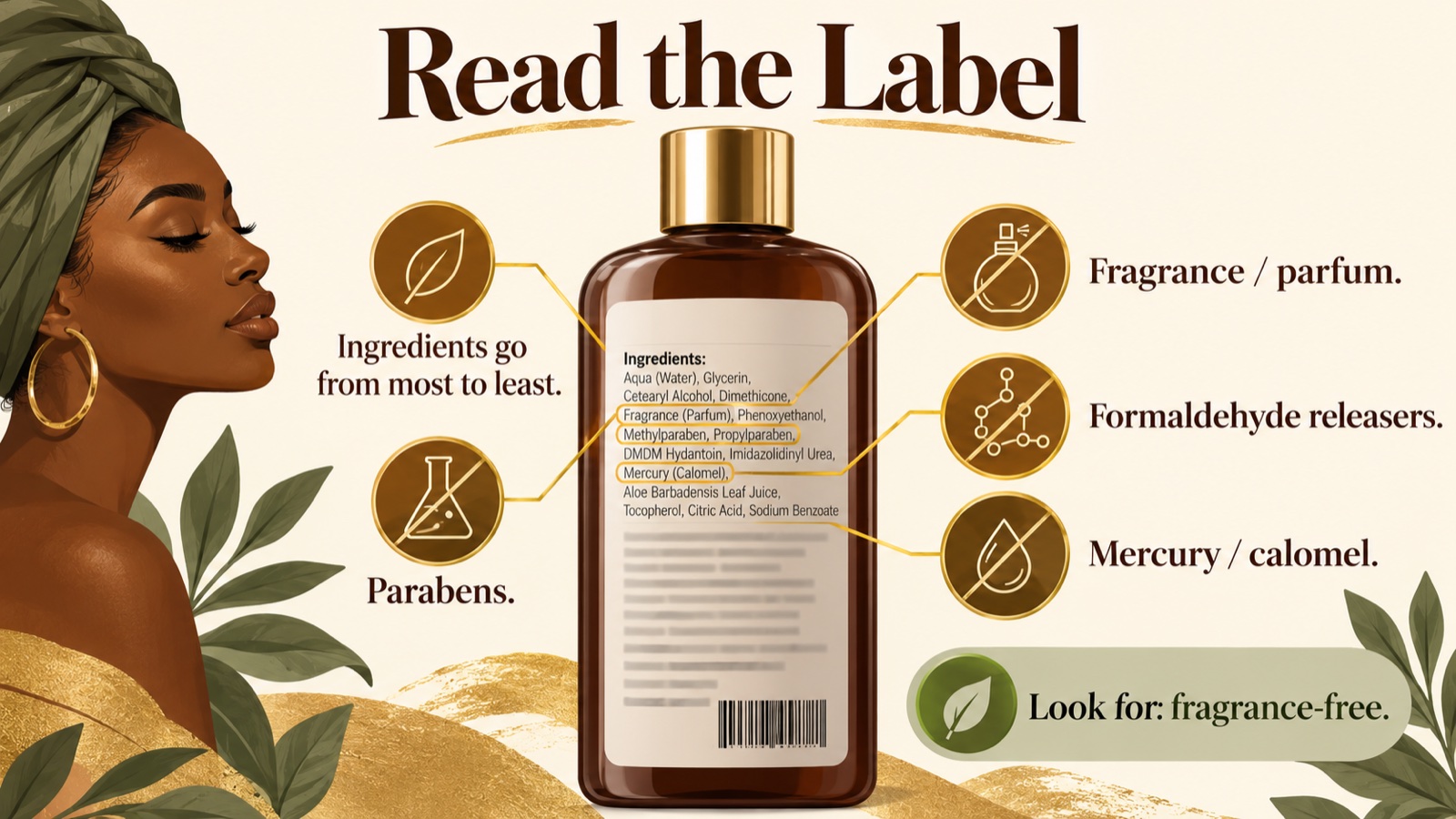
Some ingredients in personal products are studied as endocrine disruptors, chemicals that may interfere with the body's hormones. Research on what they do in everyday products is still developing, so we say "may" and "linked," not "causes." The practical step is simple: fewer products, fragrance-free when you can, and read the label.
| Label words | What it is | Why people watch it | What to do |
|---|---|---|---|
| methylparaben, propylparaben, butylparaben | Parabens (preservatives) | Studied for weak hormone-like effects; FDA says it has no information showing harm at cosmetic levels but keeps reviewing | Choose paraben-free if you want to cut exposure |
| "fragrance," "parfum," DEP, DBP | Phthalates often hide inside "fragrance" | Some phthalates are endocrine disruptors; fragrance is also a top cause of skin allergy | Fragrance-free (not just "unscented") products |
| formaldehyde, formalin, methylene glycol, DMDM hydantoin, quaternium-15 | Formaldehyde or formaldehyde releasers | Known carcinogen when inhaled; skin allergy | Avoid heated smoothing treatments; choose other preservatives |
| "placenta," "hormone," "estrogen" | Hormone-containing hair and skin products | Discussed by researchers as a concern, especially for children | Avoid, especially on children |
| mercurous chloride, calomel, mercurio, Hg | Mercury | Toxic to kidneys and nerves | Do not use. Ever. |
| hydroquinone (no prescription) | Skin lightener | Not FDA-approved over the counter; can cause ochronosis | Only with a dermatologist |
| No ingredient list at all | Unknown | You cannot judge safety | Put it back |
Count how many products touch your skin before you leave the house. If it is more than you have fingers, it is time to clean out the cabinet.
Sources: NIEHS, Endocrine disruptors · FDA, Parabens in cosmetics · FDA, Phthalates in cosmetics · FDA, Fragrances in cosmetics · FDA, Formaldehyde in hair smoothing products · FDA, Mercury and hydroquinone